


A UNESCO report covering 19 Arab states finds that nearly 15 million students are now enrolled in higher education, while youth unemployment remains at 26% and shorter technical and professional programmes account for a small share of enrolment.
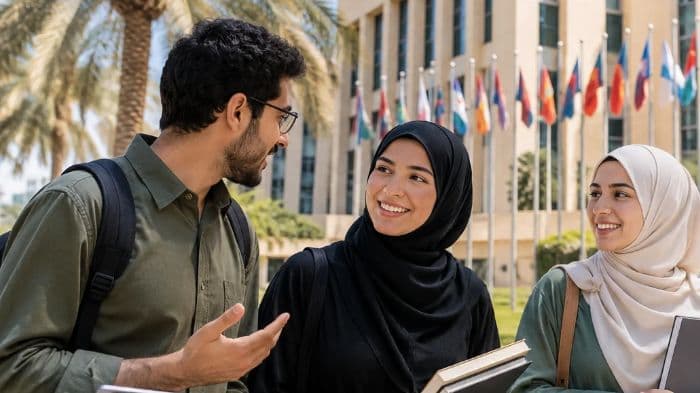
Higher education enrolment across the Arab states has nearly tripled over the past 25 years, reaching almost 15 million students. However, the expansion has not resolved concerns over access, graduate employability and the alignment of higher education pathways with labour-market needs, according to a new UNESCO report.
The report, The State of Higher Education in the Arab States, reviews higher education systems and policies across 19 countries. It identifies youth unemployment at 26% across the region, roughly twice the global average, as graduates continue to face difficulties entering the workforce.

Despite the growth in student numbers, the higher education enrolment rate stood at 37% in 2024, below the global average of 44%. The report also points to considerable differences in participation across individual countries.
Women lead in enrolment and STEM graduation
Women have enrolled in and graduated from higher education at higher rates than men in the region since 2007, the report found. The Arab states also have a relatively high share of graduates in science, technology, engineering and mathematics (STEM) disciplines.
STEM fields account for 28% of graduates in the region, compared with 23% globally. Women make up nearly half of all STEM graduates across the Arab states, against just over one-third worldwide.
Shorter higher education programmes remain limited
The report identifies a concentration of students in bachelor's degree programmes, which account for 81% of higher education enrolment across the region.
By comparison, only 7% of students are enrolled in shorter higher education programmes, including technical and professional diplomas. The corresponding global share is 19%.
UNESCO suggests that expanding these programmes could diversify learning opportunities and strengthen links between higher education and the world of work, particularly as graduates face difficulties securing employment.
Arab states attract international students
The region is also becoming an increasingly important destination for international students. Arab states host nearly 600,000 of the world's 7.3 million international students.
Both inbound and outbound student mobility rates are above the global average. The inbound mobility rate in the region is 4.2%, while the outbound rate is 4.7%, compared with a global average of 2.7%.
Students from the region are also increasingly choosing to study within Arab states, with the United Arab Emirates and Egypt emerging as major regional education hubs.
The revised UNESCO Arab States Convention, which entered into force in April 2026, is expected to support cross-border recognition of qualifications and facilitate academic mobility and cooperation between higher education systems.
Research output and digital transformation
Scholarly publication output from the Arab states increased by 576% between 2010 and 2024, according to the report. UNESCO said stronger research partnerships and joint programmes could build on this growth and improve research quality and impact.
The report also highlights the need to invest in teaching capacity as enrolment expands. There are an average of 25 students per academic staff member in the region, compared with 18 globally.
More than 70% of Arab states have incorporated digitalisation objectives into their national higher education plans. However, UNESCO cautions that advances in artificial intelligence are outpacing institutional policies and quality assurance frameworks.
The report sets out 10 recommendations, including widening access through more diverse learning pathways, strengthening student support and employment prospects, investing in academic and research capacity, promoting responsible digital transformation and deepening regional cooperation.
HABIT Foundation Hosts INNOVATE 2026 in Mumbai to Showcase Student Innovations and Prototypes

Want to prepare for married life? Goa college introduces a certificate course on relationships

Vedanta Power Wins Two India CSR Awards 2026 for Healthcare and Agricultural Development

University of Cumbria appoints Susan Foyle as honorary Professor of Practice

NCTE forms panel to include ITEP graduates in CTET, STET eligibility criteria
Want to prepare for married life? Goa college introduces a certificate course on relationships
NCTE forms panel to include ITEP graduates in CTET, STET eligibility criteria

Australia to introduce Holocaust and Jewish history lessons in 2027 curriculum overhaul

India Launches Three Homegrown AI Models; Dhīr 2B and 5B Can Work Without Internet
IIT Delhi announces new measures to strengthen student mental health support system

HABIT Foundation Hosts INNOVATE 2026 in Mumbai to Showcase Student Innovations and Prototypes
Want to prepare for married life? Goa college introduces a certificate course on relationships
Vedanta Power Wins Two India CSR Awards 2026 for Healthcare and Agricultural Development
University of Cumbria appoints Susan Foyle as honorary Professor of Practice
NCTE forms panel to include ITEP graduates in CTET, STET eligibility criteria
Want to prepare for married life? Goa college introduces a certificate course on relationships
NCTE forms panel to include ITEP graduates in CTET, STET eligibility criteria
Australia to introduce Holocaust and Jewish history lessons in 2027 curriculum overhaul
India Launches Three Homegrown AI Models; Dhīr 2B and 5B Can Work Without Internet
IIT Delhi announces new measures to strengthen student mental health support system
Copyright© educationpost.in 2026 All Rights Reserved.