


Zeus Lalani’s two initiatives provide accessible learning resources and connect students with volunteer scribes, addressing barriers that extend beyond classrooms and textbooks.
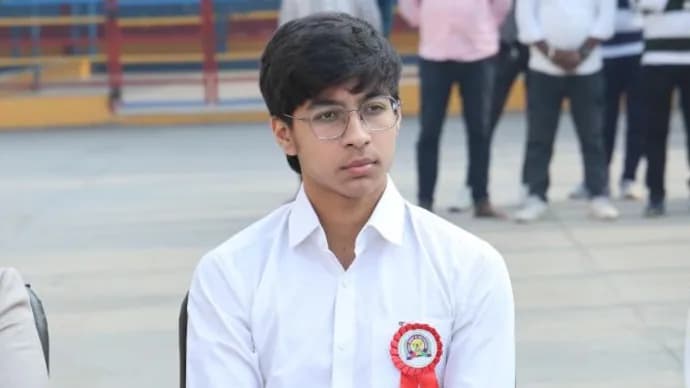
For students with visual impairments, access to education can involve challenges that go far beyond textbooks. Even when learning materials are available, finding someone to write their answers in an examination can become another hurdle.
In Vadodara, Gujarat, Class 12 student Zeus Lalani is working to address these barriers through two initiatives that combine accessible learning resources with practical examination support.

Studying at Navrachana International School, Lalani launched Project Eklavya and Project Saksham after recognising that visually impaired students need more than access to educational content. They also need reliable support systems that help them participate in learning and examinations with greater independence.
Project Eklavya takes learning beyond textbooks
Lalani’s first initiative, Project Eklavya, focuses on making education more accessible through tactile learning materials, books, small libraries and workshops for parents.
The initiative has reached more than 500 people across three districts of Gujarat, helping expand access to educational resources for students with visual impairments and their families.
However, Lalani identified another obstacle. Access to study materials does not necessarily translate into equal opportunities in examinations, where students may struggle to find a suitable person to write their answers.
That realisation led to Project Saksham.
Project Saksham connects students with volunteer scribes
Project Saksham aims to bridge the gap by connecting visually impaired students with volunteers who can act as scribes during examinations.
The initiative has enrolled more than 50 scribes and attracted over 100 users. It has also been tested with several national non-governmental organisations, according to the details shared about the project.
Lalani has also proposed a system to train and certify scribes, emphasising the need to prepare volunteers for the responsibility before they assist students in examinations.
The approach seeks to make examination support more organised and dependable, rather than leaving students and their families to search for help whenever an examination approaches.
Turning the focus to gaps in inclusive education
Lalani’s work reflects a wider challenge facing inclusive education in India. While policies and provisions seek to improve access for students with disabilities, implementation remains critical. Shortages of special educators and inadequate facilities can make it difficult for schools to meet diverse learning needs.
His initiatives focus on practical interventions that can help bridge some of these gaps at the student level.
In August 2026, Lalani published a study on inclusive education in Gujarat. His earlier research into the challenges faced by visually impaired students received a CREST Gold Award.
He has also participated in Yale Young Global Scholars 2026 and presented his work at platforms including the UC Berkeley, the UN ECOSOC Chamber and NVIDIA headquarters.
A student-led effort with a wider ambition
Looking ahead, Lalani hopes to study economics and public policy and build partnerships that can help sustain and expand his initiatives.
His broader aim is to make educational resources and examination assistance easier for visually impaired students to access, reducing the uncertainty and repeated effort involved in finding support.
The two projects approach the problem from different but connected directions: Project Eklavya works to improve access to learning, while Project Saksham addresses the need for assistance in examinations.
Together, they underline an important point about inclusive education: access is not simply a matter of providing books or making school buildings accessible. It also means ensuring that students have the resources, trained support and practical arrangements they need to learn and demonstrate their abilities.
For Lalani, the effort begins with identifying these everyday barriers and building solutions around them. His initiatives show how student-led action can contribute to making education more accessible, one resource and one connection at a time.
Gujarat Class 12 student builds scribe network to support visually impaired students
Bihar’s classrooms go digital: 11 IT companies to train teachers in AI and technology
University of Liverpool’s Bengaluru campus eyes biosciences, competitive fees to attract students
Mubadala, Khalifa University launch life sciences research programme in UAE
Birla Open Minds, Burlington English Join Hands to Introduce Digital English Learning for Grades 1–8
Gujarat Class 12 student builds scribe network to support visually impaired students

Centre Amends Motor Vehicle Rules to Allow E100 Ethanol Fuel in Flex-Fuel Vehicles
Study in Malaysia for Indian Students 2026: Universities, Fees, Scholarships, Visa and Career Opportunities
Delhi BS6 Entry Ban From November 1 Could Affect Over 10 Lakh NCR Vehicles
Study in Indonesia for Indian Students 2026: Top Universities, Fees, Scholarships, Visa and Career Opportunities

Gujarat Class 12 student builds scribe network to support visually impaired students
Bihar’s classrooms go digital: 11 IT companies to train teachers in AI and technology
University of Liverpool’s Bengaluru campus eyes biosciences, competitive fees to attract students
Mubadala, Khalifa University launch life sciences research programme in UAE
Birla Open Minds, Burlington English Join Hands to Introduce Digital English Learning for Grades 1–8
Gujarat Class 12 student builds scribe network to support visually impaired students
Centre Amends Motor Vehicle Rules to Allow E100 Ethanol Fuel in Flex-Fuel Vehicles
Study in Malaysia for Indian Students 2026: Universities, Fees, Scholarships, Visa and Career Opportunities
Delhi BS6 Entry Ban From November 1 Could Affect Over 10 Lakh NCR Vehicles
Study in Indonesia for Indian Students 2026: Top Universities, Fees, Scholarships, Visa and Career Opportunities
Copyright© educationpost.in 2026 All Rights Reserved.