


The UK university has enrolled nearly 300 students at its Bengaluru campus across eight programmes, combining technology, business and biomedical sciences as foreign universities expand their presence in India.
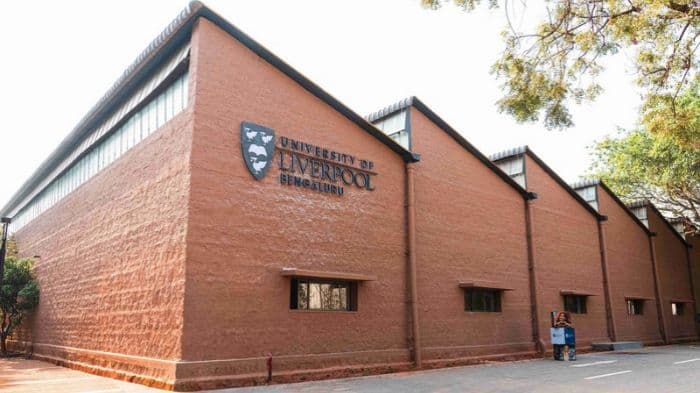
The University of Liverpool is looking to differentiate its new Bengaluru campus from other international universities entering India through a combination of technology-focused courses, biosciences and comparatively lower tuition fees.
The university has enrolled nearly 300 students across six undergraduate and two postgraduate programmes for its first intake. The enrolment comes as foreign universities increasingly establish campuses in India, allowing students to pursue overseas degrees without relocating to another country for their entire course.

Richard Grose, provost of the University of Liverpool Bengaluru, said the university had aimed to recruit around 300 students for its initial intake. Its admissions team had interviewed more than 1,000 applicants during the selection process.
The campus officially opened on Oct 15, marking the university's entry into India's higher education sector through a permanent international branch campus. Liverpool is the first Russell Group university to establish a campus in Karnataka, according to the university's announcement. The Russell Group is an association of research-intensive universities in the UK.
University of Liverpool Bengaluru courses and programmes
The university's initial academic portfolio combines computing, creative technology, business and biomedical sciences. Its six undergraduate programmes are:
-Computer Science BSc (Hons)
-Computer Science with Software Development BSc (Hons)
-Game Design BSc (Hons)
-Biomedical Sciences BSc (Hons)
-Business Management BA (Hons)
-Accounting and Finance BSc (Hons)
The two postgraduate programmes are MSc Computer Science and MSc Accounting and Finance. The university's published programme listings specify three-year durations for the undergraduate degrees and one year for the master's courses.
The inclusion of biomedical sciences is a significant part of Liverpool's strategy for distinguishing itself from other foreign university campuses, many of which also focus on technology, computing and business-related disciplines.
Grose, a professor of cancer cell biology, said the opportunity to develop biosciences in Bengaluru was one of the reasons the university chose the city. Liverpool already had research collaborations in India, including a longstanding partnership with the National Institute of Mental Health and Neuro Sciences (NIMHANS) that dates back to 2002, according to the report.
The university is seeking to build on these existing connections while developing its academic presence in India.
Bengaluru campus location and facilities
The University of Liverpool Bengaluru campus is located in Alembic City, Whitefield, in eastern Bengaluru. The two-acre campus is part of the larger 90-acre development, which includes residential and commercial spaces.
The location places the campus within Bengaluru's technology and business ecosystem. The surrounding area includes corporate offices and technology hubs, offering a potential setting for industry engagement and collaboration.
According to the university, its facilities include smart classrooms, research and innovation spaces, collaboration hubs, specialised laboratories and access to Bloomberg terminals.
The university has said its teaching approach will combine academic study with practical learning, research connections and industry engagement. Students enrolled at the Bengaluru campus will follow programmes offered by the University of Liverpool while studying in India.
The university has also outlined opportunities for students to gain international exposure through study at its UK campus, subject to the applicable programme arrangements. Its published information says students may spend a semester at the Liverpool campus or transfer there for their final year.
University of Liverpool Bengaluru fees compared with other campuses
Tuition fees are another part of the university's strategy to attract students. Liverpool has set the total tuition fee for its three-year undergraduate courses at approximately £27,200 (~₹34.56 lakh), equivalent to around £9,000 (~₹11.44 lakh) per year.
The report compared this with the University of New South Wales Bengaluru, where three-year undergraduate programmes cost approximately £35,300 (~₹44.85 lakh) in total. The comparison suggests that Liverpool has positioned its undergraduate tuition below that of at least one other international university operating in the city.
However, these figures represent tuition costs and should not be treated as the full cost of attending university. Students and families also need to consider accommodation, living expenses, additional charges and any changes to published fees.
The university's official website provides programme-specific information for prospective students. Applicants should consult the relevant course page for the applicable academic year, tuition schedule, admission requirements and scholarship conditions.
Regulatory approval and recruitment challenges
Liverpool received its Letter of Approval from India's University Grants Commission (UGC) in June 2026, allowing it to establish and operate its Bengaluru campus under the UGC regulations governing foreign higher education institutions in India.
The university had received a Letter of Intent in May 2025 before completing the preparations required for formal approval.
The timing of the final approval affected its recruitment schedule. Grose said that the university could not accept fees before receiving the approval letter, leaving it with a more constrained period to recruit students and academic staff.
Staffing the campus has also presented challenges, according to the report. Liverpool has recruited Indian academics with international experience alongside international faculty members, while academics from its UK campus are expected to spend periods teaching at the Bengaluru campus.
These arrangements will be important as the university develops its academic operations and seeks to establish its research and teaching activities in India.
Foreign universities expand their presence in India
Liverpool's entry into Bengaluru comes amid a broader expansion of international branch campuses in India under the country's regulatory framework for foreign higher education institutions.
The UGC's 2023 regulations provide a framework for eligible foreign universities to establish campuses in India, subject to approval and compliance requirements. The policy forms part of the wider effort to internationalise higher education under the National Education Policy 2020.
The University of Southampton opened its Delhi campus in 2025, while Australian universities Deakin and the University of Wollongong have established campuses at GIFT City in Gujarat. Other foreign institutions have also received approvals to establish campuses in Indian cities.
The growing number of institutions creates opportunities for students to access international university programmes without bearing the full costs of relocating overseas. At the same time, universities must compete for applicants, qualified faculty and partnerships with employers and research institutions.
Liverpool's initial intake of nearly 300 students across eight programmes compares favourably with the early enrolments reported for some other campuses. University of Southampton's Delhi campus began with 120 students across six programmes in July 2025, while Deakin's GIFT City campus started with 43 students across two programmes in July 2024.

Bihar’s classrooms go digital: 11 IT companies to train teachers in AI and technology

University of Liverpool’s Bengaluru campus eyes biosciences, competitive fees to attract students

Mubadala, Khalifa University launch life sciences research programme in UAE

Birla Open Minds, Burlington English Join Hands to Introduce Digital English Learning for Grades 1–8

Australian universities back student-feedback benchmark for education agents

Centre Amends Motor Vehicle Rules to Allow E100 Ethanol Fuel in Flex-Fuel Vehicles

Study in Malaysia for Indian Students 2026: Universities, Fees, Scholarships, Visa and Career Opportunities

Delhi BS6 Entry Ban From November 1 Could Affect Over 10 Lakh NCR Vehicles

Study in Indonesia for Indian Students 2026: Top Universities, Fees, Scholarships, Visa and Career Opportunities

Study in China 2027: Top Universities, Fees, Scholarships, Visas and Career Options for Indian Students

Bihar’s classrooms go digital: 11 IT companies to train teachers in AI and technology
University of Liverpool’s Bengaluru campus eyes biosciences, competitive fees to attract students
Mubadala, Khalifa University launch life sciences research programme in UAE
Birla Open Minds, Burlington English Join Hands to Introduce Digital English Learning for Grades 1–8
Australian universities back student-feedback benchmark for education agents
Centre Amends Motor Vehicle Rules to Allow E100 Ethanol Fuel in Flex-Fuel Vehicles
Study in Malaysia for Indian Students 2026: Universities, Fees, Scholarships, Visa and Career Opportunities
Delhi BS6 Entry Ban From November 1 Could Affect Over 10 Lakh NCR Vehicles
Study in Indonesia for Indian Students 2026: Top Universities, Fees, Scholarships, Visa and Career Opportunities
Study in China 2027: Top Universities, Fees, Scholarships, Visas and Career Options for Indian Students
Copyright© educationpost.in 2026 All Rights Reserved.