


Three scientists from D Y Patil Medical College have featured in Stanford’s global top 2% researcher listings, recognising their work in infectious diseases, traditional medicine and community health.
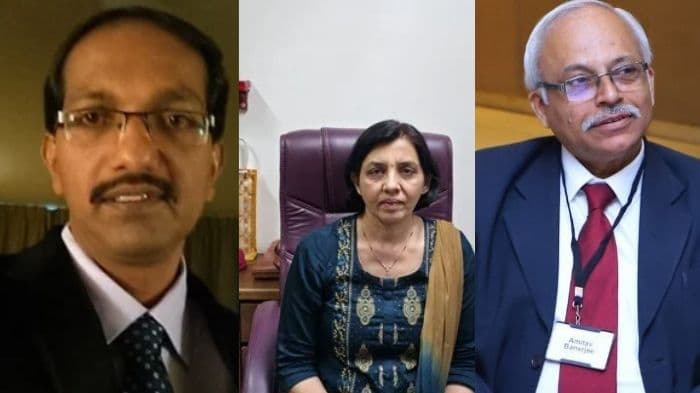
Three researchers affiliated with Dr D Y Patil Medical College, Hospital and Research Centre in Pimpri, Pune, have been included in the 2026 edition of the global top 2% scientists database associated with Stanford University and Elsevier.
Sarika Chaturvedi and Sachin Atre appear in the annual-impact category, while Amitav Banerjee, a professor emeritus at the college, is listed for his career-long research impact. The two categories assess different periods of scientific influence and should not be treated as interchangeable rankings.

Their work covers several areas of public health, from the study of infectious diseases to research on traditional medicine and the social factors affecting access to healthcare.
Banerjee has worked in epidemiology for more than four decades. His research has addressed infectious diseases, including typhoid and viral hepatitis, as well as malaria in tribal communities.
He led the Indian Armed Forces’ Mobile Epidemic Investigation Team between 2000 and 2004 and later continued his academic work at Dr D Y Patil Medical College. He also heads the Medical Journal of Dr D Y Patil Vidyapeeth as editor-in-chief.
Chaturvedi’s research centres on public health and traditional medicine. She earned her doctorate from Sweden’s Karolinska Institute and has investigated disease risks among different populations.
Her work includes controlled studies of traditional medicine interventions, including research examining the effects of the Government of India’s Common Yoga Protocol on brain functions in adults.
She is also associated with the Lancet Citizens Commission to Reimagine India’s Health System and the World Health Organization’s Global Traditional Medicine Centre.
Atre brings a medical anthropology perspective to public health research. His work includes tuberculosis, drug-resistant TB, nutrition, diabetes, leprosy and access to medicines. He holds a doctorate from the University of Pune and received a Fulbright-Nehru postdoctoral fellowship at Harvard Medical School. He has also worked as a technical consultant for the WHO’s Global TB Programme.
How the global scientists database works
The Stanford–Elsevier database uses standardised citation indicators drawn from Scopus author records. These include citation counts, the h-index, adjustments for co-authorship and the positions researchers hold on published papers, combined into a composite citation score.
The database provides separate assessments of career-long impact and performance during a single recent year. Its compilers caution that citation indicators measure research impact in particular ways and should not be interpreted as definitive measures of a scientist’s overall quality.
For the three researchers, inclusion reflects their position within the database’s citation-based assessment. It does not mean that they share the same research specialisation or have been recognised under the same category.
The medical college’s leadership has described the recognition as a reflection of its research activity and its work in public health. The researchers’ inclusion also highlights the range of disciplines contributing to medical and health research at the Pune institution.
Tamil Nadu School Holiday Today: Schools Closed in 3 Districts; Chennai Update
Jhansi School Headmaster Arrested Over Alleged ₹2 Lakh Mid-Day Meal Fund Fraud

Lincoln Tech Expands LeadSquared Partnership to Deploy AI Agents in Student Admissions
FinX, IIBF Join Hands to Expand BFSI Job Opportunities for Banking and Finance Candidates
SSC CHSL 2026 Applications Drop 49%: 15.71 Lakh Candidates Apply for 2,536 Posts

Australian schools record thousands of student sexual misconduct reports as child safety concerns grow
Egypt insists international schools include Arabic, history in final scores

China’s Chery unveils AI companion robot designed to ease loneliness

New Zealand reforms could leave more students without school qualifications

Alfred Nobel’s will created one of the world’s most recognised prizes. Here’s how

Tamil Nadu School Holiday Today: Schools Closed in 3 Districts; Chennai Update
Jhansi School Headmaster Arrested Over Alleged ₹2 Lakh Mid-Day Meal Fund Fraud
Lincoln Tech Expands LeadSquared Partnership to Deploy AI Agents in Student Admissions
FinX, IIBF Join Hands to Expand BFSI Job Opportunities for Banking and Finance Candidates
SSC CHSL 2026 Applications Drop 49%: 15.71 Lakh Candidates Apply for 2,536 Posts
Australian schools record thousands of student sexual misconduct reports as child safety concerns grow
Egypt insists international schools include Arabic, history in final scores
China’s Chery unveils AI companion robot designed to ease loneliness
New Zealand reforms could leave more students without school qualifications
Alfred Nobel’s will created one of the world’s most recognised prizes. Here’s how
Copyright© educationpost.in 2026 All Rights Reserved.