


The court stressed cooperative federalism and dialogue with the Centre, while the state cited concerns over the three-language policy, education policy powers and implementation costs.
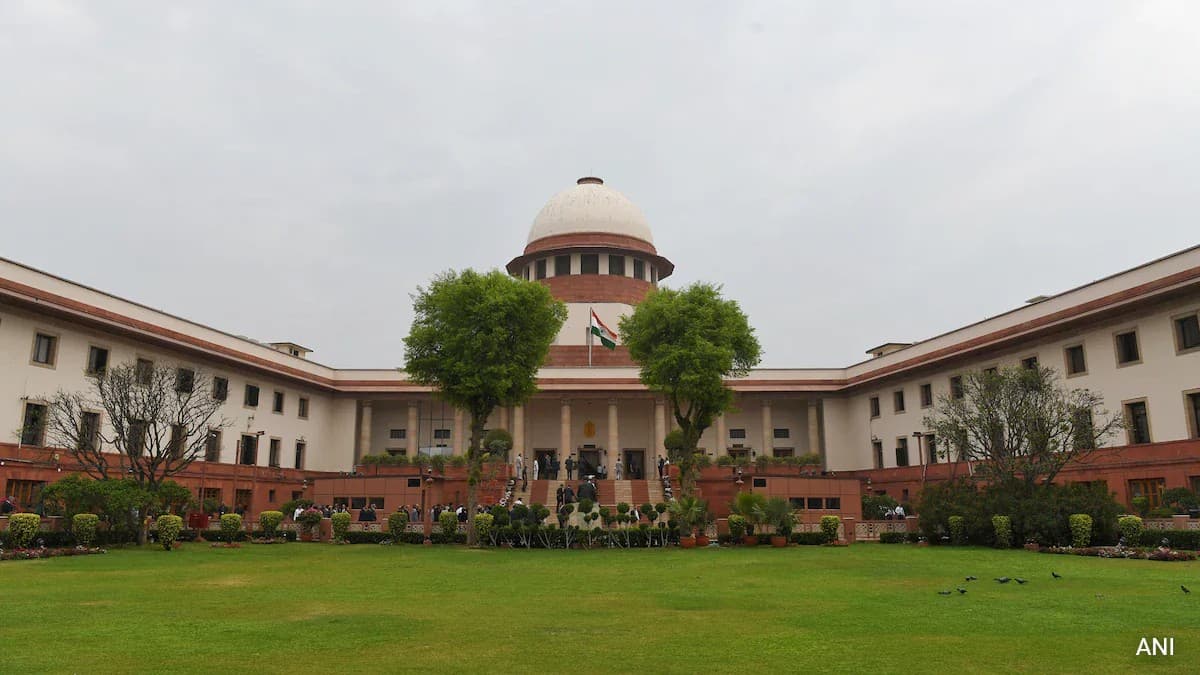
The Supreme Court gave Tamil Nadu three more months to identify land for Jawahar Navodaya Vidyalayas in every district while asking the state to reconsider its opposition to the centrally funded schools.
A Bench of Justices BV Nagarathna and Augustine George Masih declined to withdraw its earlier direction requiring the state to identify suitable land for the proposed schools.

The court also asked Tamil Nadu and the Centre to continue discussions over the dispute, particularly on language policy and the implementation of the Navodaya scheme.
During the hearing, the Supreme Court said Tamil Nadu's concerns should be addressed through dialogue and indicated that Hindi could not be entirely excluded from the state's education landscape.
“You have to change your mindset, it can’t be that Hindi will not be taught in the soil of Tamil Nadu,” Justice Nagarathna observed, according to the hearing proceedings.
The Bench also referred to the principles of cooperative federalism while considering the state's objections. It said the introduction of Navodaya schools could expand educational opportunities for students without affecting the standards of Tamil Nadu's existing institutions.
“People in Chennai should not alienate Delhi and vice versa,” the court remarked.
The judges said Tamil Nadu could continue operating its existing schools and implementing its education policies while treating the centrally funded Navodaya Vidyalayas as an additional option for students.
Tamil Nadu's concerns over three-language policy
Tamil Nadu has resisted the establishment of Jawahar Navodaya Vidyalayas because the schools follow a three-language framework that includes Hindi.
The state currently follows a two-language policy and has maintained that the Navodaya model conflicts with its approach to education and language.
Senior Advocate Jaideep Gupta, representing Tamil Nadu, told the court that the dispute extended beyond the question of Hindi. He said it also involved the state's authority to frame its own policies and raised issues concerning cooperative federalism.
Gupta argued that the Navodaya scheme was voluntary and contended that the judiciary could not require a state to implement a Central government programme. He also raised concerns about the financial implications of setting up the schools.
The Centre, however, submitted that Tamil Nadu's responsibility was limited to providing the required land. According to the Centre, the remaining expenditure for establishing the schools would be borne by the Central government.
Three-month extension for land identification
The Supreme Court had directed Tamil Nadu in December 2025 to identify land for setting up Navodaya Vidyalayas in every district. The state later approached the court seeking recall of that direction.
The Bench on Thursday rejected the request to recall the earlier order but extended the deadline by three months. The court clarified that Tamil Nadu was not being directed to acquire land immediately and only needed to identify suitable plots for the proposed institutions.
It also asked officials representing the Centre and the state to maintain discussions on the policy and language issues raised in the proceedings.
The matter will next be heard on December 14.
Jawahar Navodaya Vidyalayas are centrally funded, co-educational residential schools administered by the Navodaya Vidyalaya Samiti under the Union Ministry of Education.
Tamil Nadu's opposition is primarily connected to the three-language framework followed by the Navodaya system and the state's two-language policy. The state has maintained that decisions concerning its education policy fall within its constitutional sphere.
The legal dispute followed a Madras High Court direction requiring Tamil Nadu to facilitate the establishment of Navodaya schools in every district.
The High Court had held that the schools did not contravene the Tamil Nadu Tamil Learning Act and observed that a blanket refusal to establish them could limit students' access to educational options.

Southeast European teachers’ unions call for greater public education funding
Jammu and Kashmir Unemployment: Economic Growth Has Yet to Resolve Job Crisis

MIT-developed surgical adhesive could offer an alternative to stitches

China’s Chery unveils AI companion robot designed to ease loneliness

Varanasi Air Show 2026: Schools in Two Chandauli Blocks to Hold Online Classes on October 22, 24
China’s Chery unveils AI companion robot designed to ease loneliness
.jpg&w=256&q=75)
New Zealand reforms could leave more students without school qualifications

Alfred Nobel’s will created one of the world’s most recognised prizes. Here’s how

Pepperdine University earns Google recognition and Digital Education Council membership for AI initiatives
Dhirubhai Ambani International School breaks into global top 10 with record IB score

Southeast European teachers’ unions call for greater public education funding
Jammu and Kashmir Unemployment: Economic Growth Has Yet to Resolve Job Crisis
MIT-developed surgical adhesive could offer an alternative to stitches
China’s Chery unveils AI companion robot designed to ease loneliness
Varanasi Air Show 2026: Schools in Two Chandauli Blocks to Hold Online Classes on October 22, 24
China’s Chery unveils AI companion robot designed to ease loneliness
New Zealand reforms could leave more students without school qualifications
Alfred Nobel’s will created one of the world’s most recognised prizes. Here’s how
Pepperdine University earns Google recognition and Digital Education Council membership for AI initiatives
Dhirubhai Ambani International School breaks into global top 10 with record IB score
Copyright© educationpost.in 2026 All Rights Reserved.