


At the remote school, Harshit Sanguri balances five classes and diverse learning levels while introducing technology, practical activities and opportunities designed to expand children’s horizons.
The most rewarding moment for a teacher may not come with a certificate, a promotion, or a formal award. For 27-year-old Harshit Sanguri, it comes in a much simpler form, when one of his students looks at him and says that he wants to become a teacher like him.
For Sanguri, that moment carries a meaning that goes far beyond the classroom. He knows what it feels like to be a child sitting on the other side of the teacher's desk, waiting to be understood. He knows what it feels like when a child's mistakes are noticed before his feelings are.

And perhaps that is why, years later, standing in a remote government primary school in the hills of Uttarakhand's Nainital district, he has chosen to build the kind of classroom he once needed himself.
For many people, the mountains are places to visit, breathe in the fresh air, admire the scenery and return with photographs and memories.
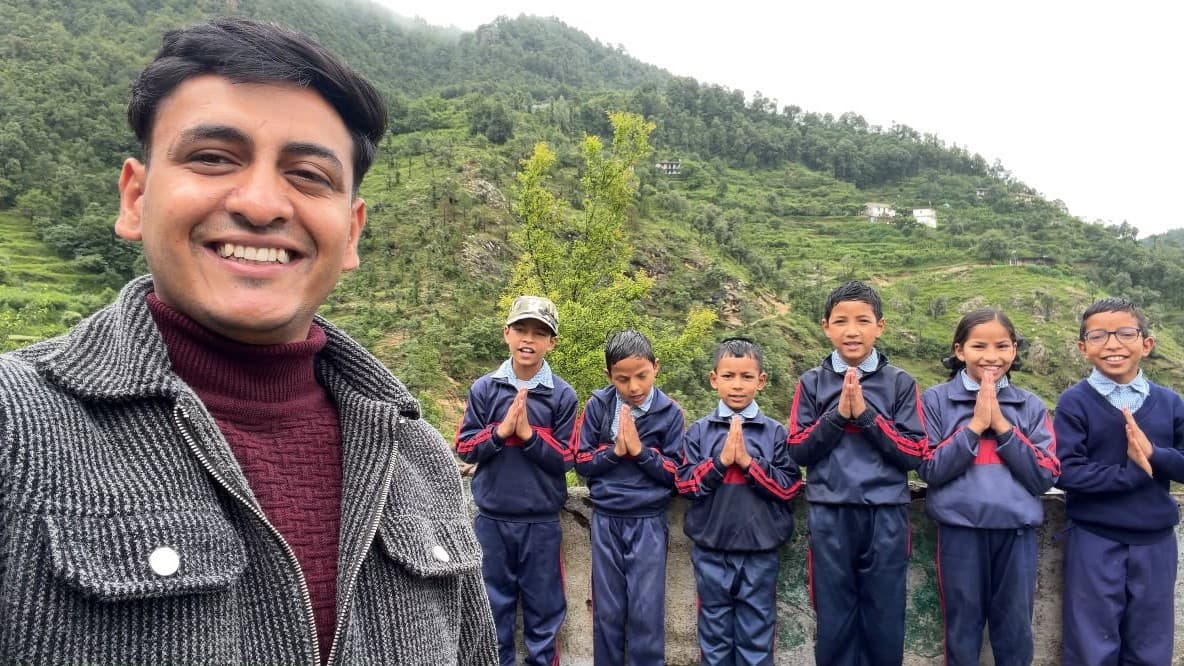
Sanguri looked at the same mountains differently. He saw nine children, a classroom, a responsibility and an opportunity. In a place where the landscape could easily become the most memorable part of the journey, he chose to make the children the most important part of his work.
Where the mountains became a responsibility
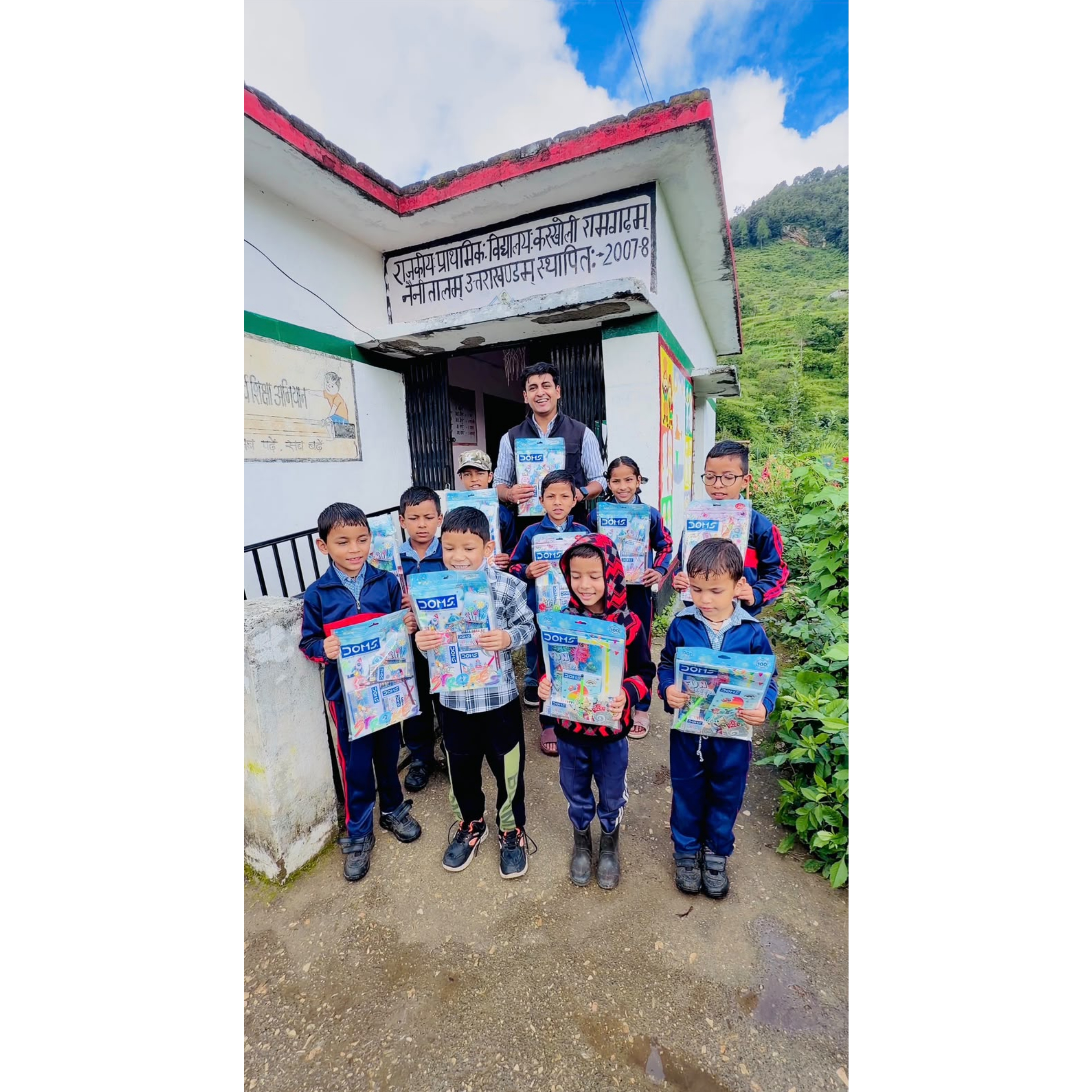
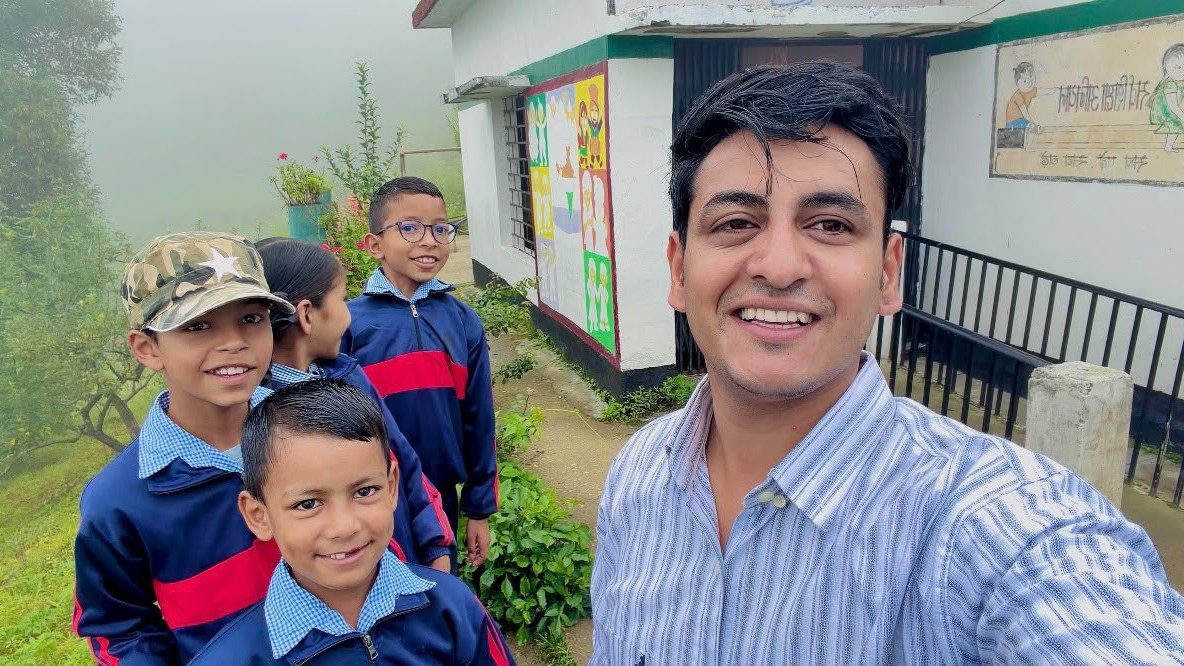
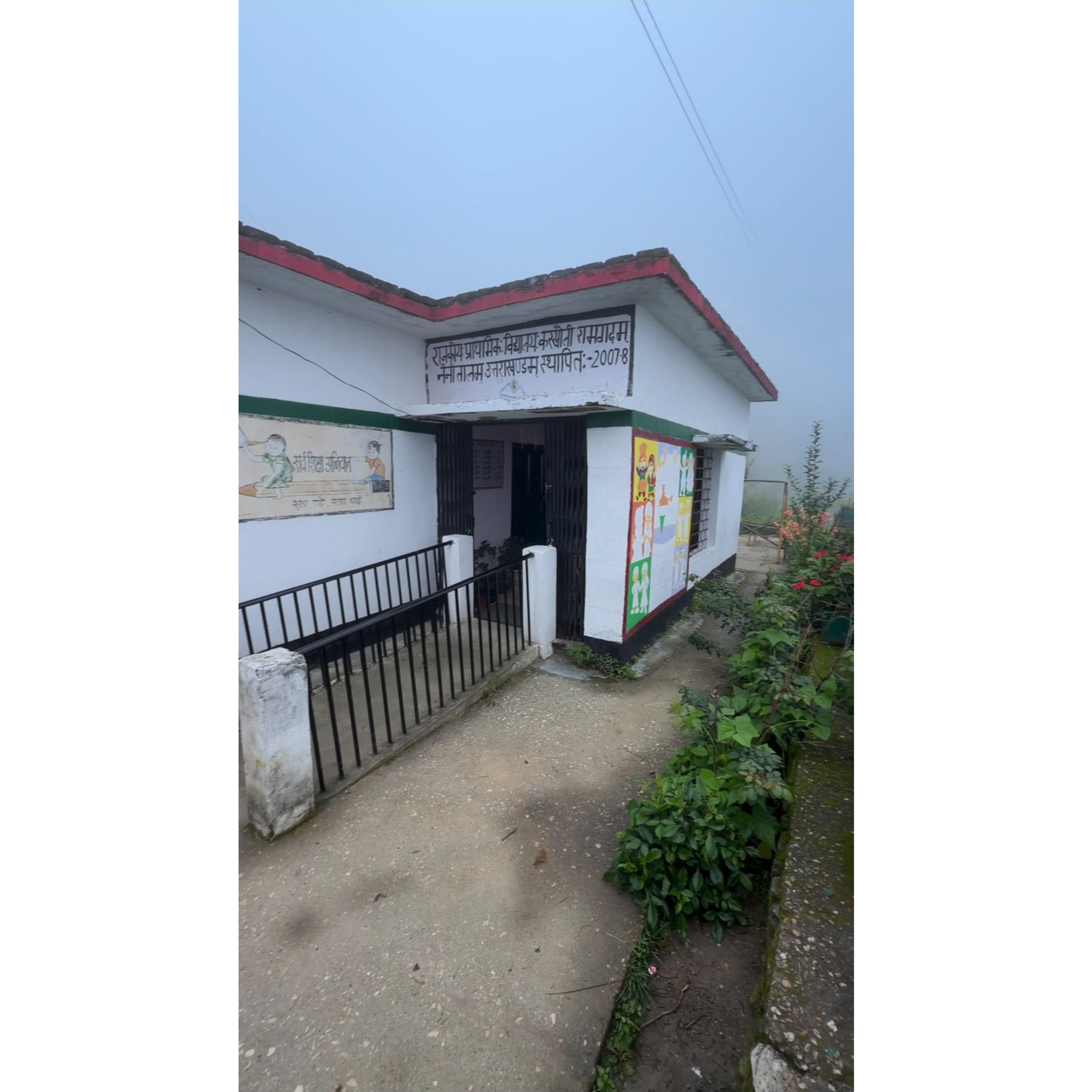
Originally from Bhimtal, Uttarakhand, Sanguri teaches at a remote government primary school in the Ramgarh block of Nainital district.
Reaching his school itself requires a small journey. From the roadside, he walks through a forested stretch to reach his room, and from there continues toward the school.
The journey is surrounded by the quiet of the hills, but the school is filled with the everyday sounds of childhood, questions, laughter, lessons, games and the curiosity of children discovering things that many others encounter much earlier in life.
The classroom he once wished he had
When Sanguri looks back at his own school years, however, childhood does not immediately bring back only happy memories. His memories are more complicated, shaped by times when he often felt unheard and misunderstood by the adults around him.
"There were occasions when I was scolded or beaten without fully understanding what he had done wrong. At times, I was called to the principal’s room and my parents were summoned. My father ran a shop close to the school, which made those moments even more embarrassing for me. I feel my teachers never paid attention, they were not bothered how kids felt, they didn't care! As a child, it was heartbreaking, sometimes,” he recalled.
Those memories have stayed with him. But instead of allowing them to remain only painful memories, Sanguri has carried them into his understanding of what a teacher can mean to a child.
His classroom today is shaped partly by the lessons he learned as a student, including the importance of listening, encouraging questions and giving children room to express themselves.
Nine children, one teacher, a school still full of possibility
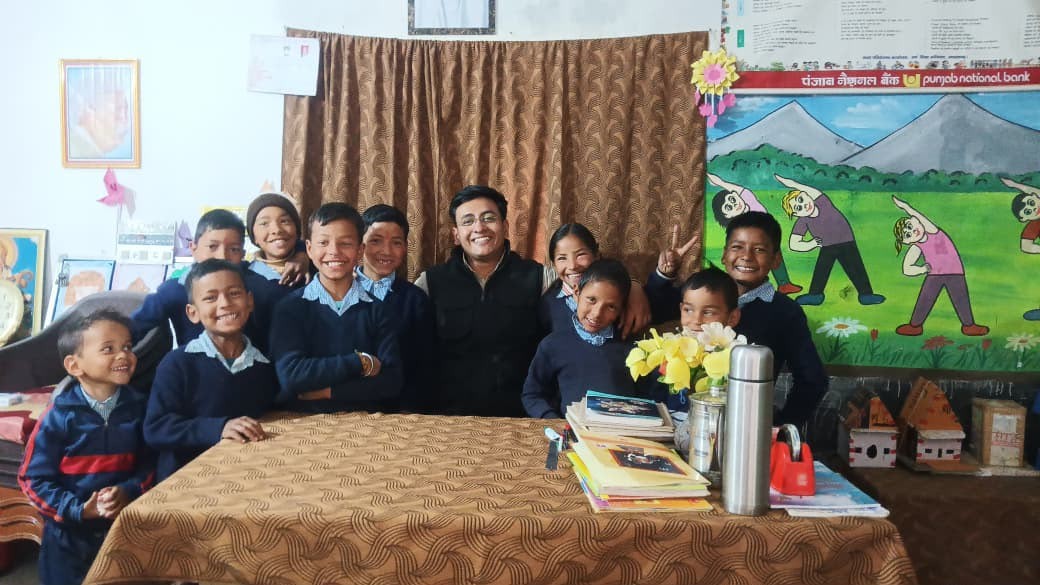
The school currently has nine students, eight boys and one girl, spread across Classes 1 to 5. Sanguri is the only teacher. The number may appear small on paper, but he has learned that a small enrollment does not translate into a small responsibility.
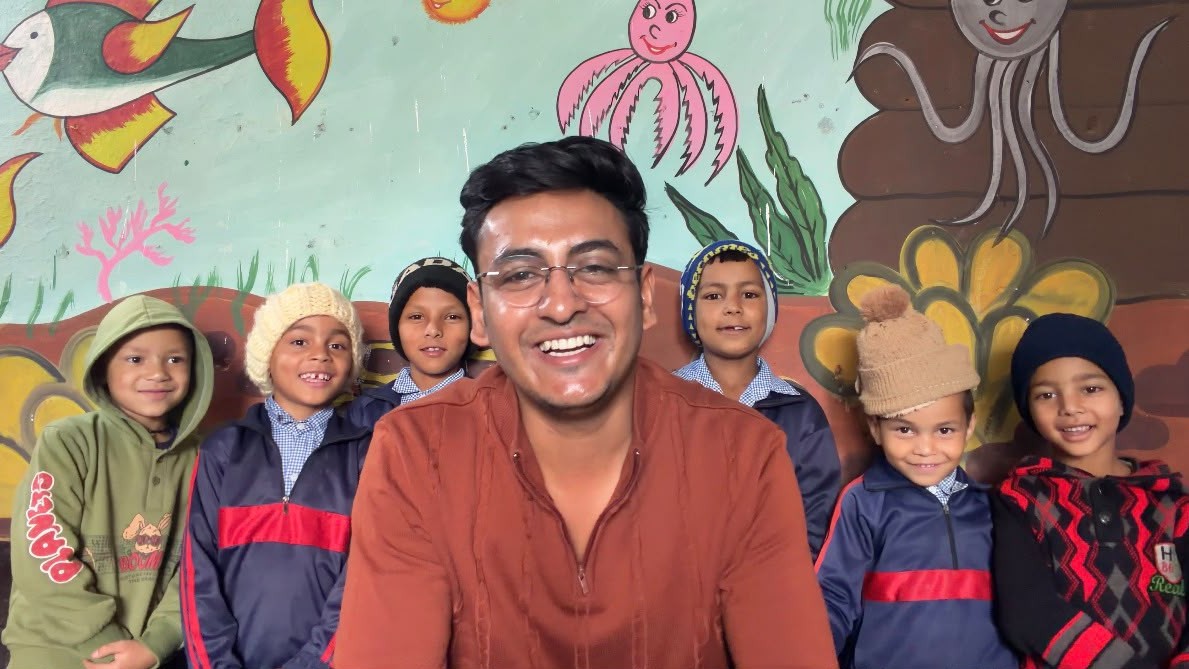
"But nine children do not mean nine times less work. As a primary teacher, I have to teach all the subjects, English, Hindi, mathematics, Environmental Studies and Sanskrit, across five classes. Whether there is one child in a class or four, the syllabus still has to be completed,” he explained. “You have to keep track of every child, every subject, who is falling behind and whether everyone is keeping up.”
The school is in a part of the hills where many families have moved away over the years, partly because of limited basic infrastructure and road connectivity. With fewer families remaining, the number of children in the local school has also declined.
Yet the nine children who remain are enough to keep the school alive. For Sanguri, each child represents an individual story, an individual pace of learning and an individual future.
He also sees clearly the circumstances from which many of them come. Coming from a middle-class family, he considers himself privileged in comparison with his students, many of whom belong to economically weaker families.
Some have worn the same uniform for years when government supplies have not arrived, while tattered shoes and insufficient clothing can become particularly difficult during the harsh weather.
The fact that he is the only teacher adds another layer to his responsibility. There is no colleague to take over his classes when he is absent, and finding a replacement willing to travel to such a remote location is not easy.
Weather conditions can make even taking leave difficult, while government duties add to the demands of the job.
Still, Sanguri does not speak about the school with resentment. He remains grateful that the authorities recognized the need for a teacher and posted one even for a school with only nine students.
"Actually most people are not willing to take up a job in remote areas, even the authorities face challenge here,” he added.
Even his daily routine requires adjustment. "It requires a lot of adjustment. I wake up early, get ready for school and manage my daily responsibilities. Since I am working for these children, sometimes I have to keep my personal priorities aside and give more time and attention to them,” Sanguri said.
He loves his job, and for him, being the only teacher is difficult, but it also means that he knows every child closely. That understanding has become one of the strongest parts of his teaching.
A government job journey that found its way to teaching
Sanguri did not begin his career with a plan to become a teacher. After Classes 11 and 12, he began graduation without being certain about what career he wanted to pursue. His parents wanted him to secure a government job, and he decided to follow that path.
"I was not very good in studies and was weak in several subjects and my parents wanted me to try for a government job. I did not want to disappoint them so I eventually travelled to Haldwani for several months of coaching for the Staff Selection Commission examinations. But I soon realised that MY basics were not strong enough. So I returned home and began studying on my own. For the next couple of years, my routine revolved almost entirely around preparation. I would wake up at around 5 am, study through much of the day and take breaks mainly for meals,” he recalled.
He appeared for several SSC and Uttarakhand government recruitment exams, clearing the mains of SSC CGL and CHSL, reaching the Uttarakhand Public Service Commission mains and clearing stages of the Patwari recruitment.
While preparing for government jobs, Sanguri appeared for D.El.Ed., secured a top rank and was allotted a DIET in Nainital. He completed the course in early 2025 and became a government school teacher in January 2026.
Only after entering the classroom did he discover that teaching was not merely another government job. He liked talking to children.
He enjoyed joking with them, understanding how they thought and watching them respond when they discovered something new. His own experience as a difficult and misunderstood student had, in an unexpected way, prepared him to see children differently.
When limitations stop being the lesson
The school itself is far from perfect, but Sanguri's approach has never been to allow limitations to become the definition of his classroom.
The school has electricity, drinking water and toilets, but several infrastructure and connectivity challenges remain. The roof and lintel are damaged in places, while classroom floors and windows need improvement. Rainwater also leaks through the roof, although the desks and blackboards remain usable.
Digital access is another challenge, as mobile network is unavailable inside the school and internet connectivity is weak.
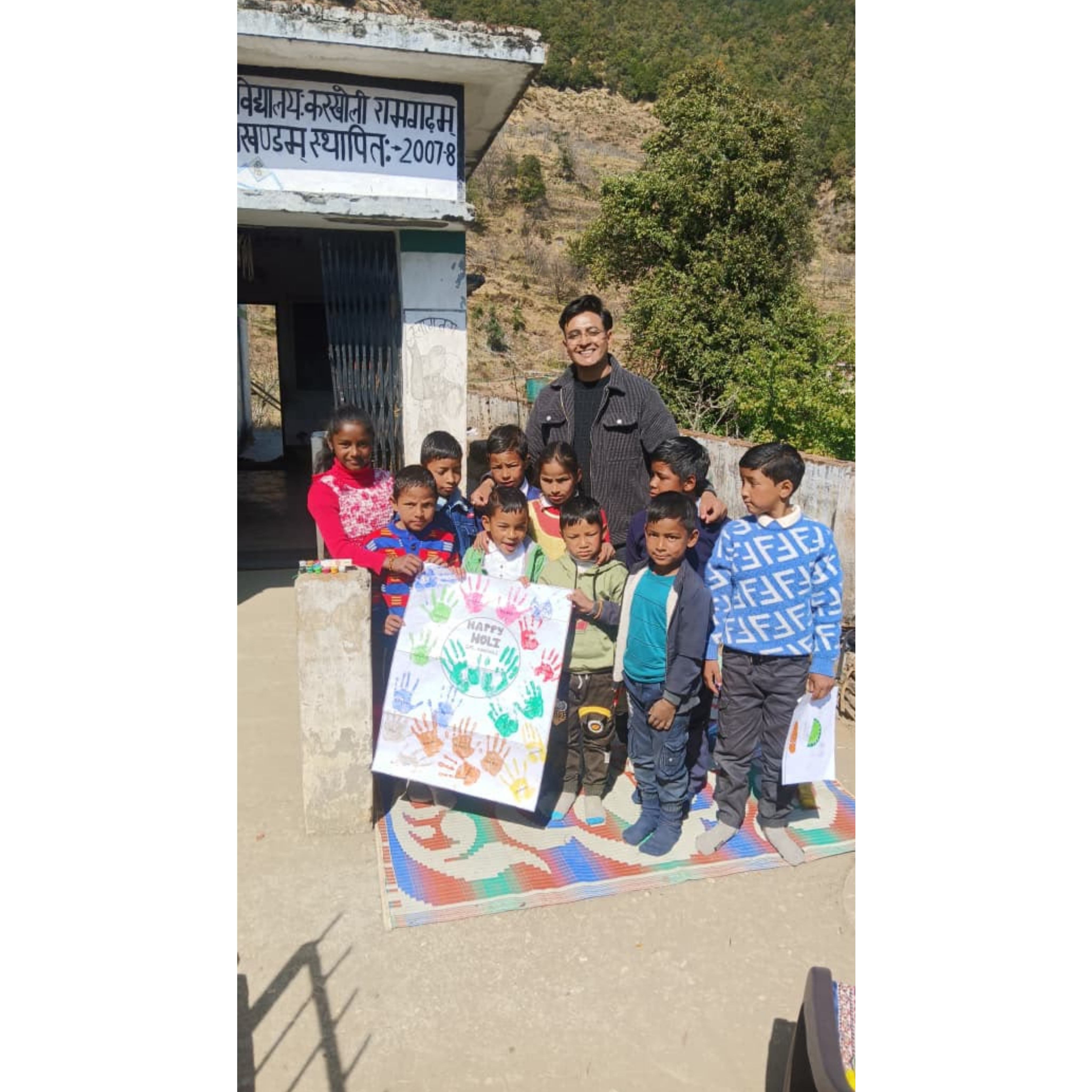
The school also lacks a proper playground and has limited open space for morning prayer, so Sanguri sometimes takes students to a nearby field for sports and other activities.
With only one teacher handling all five classes, classroom management requires careful planning. Sanguri teaches the classes one by one, moving from Class 5 to Class 1, while adapting to different learning levels. His biggest challenge is completing the syllabus on time while ensuring that every child receives individual attention.
"The biggest challenge is managing the complete syllabus and giving attention to every child. There is also pressure to complete everything on time. Since I am the only teacher, taking leave is also difficult, especially when the weather is bad,” Sanguri said.
Bringing the wider world into a small classroom
But if there is one thing Sanguri does not want his students to inherit from the limitations around them, it is a limited imagination.
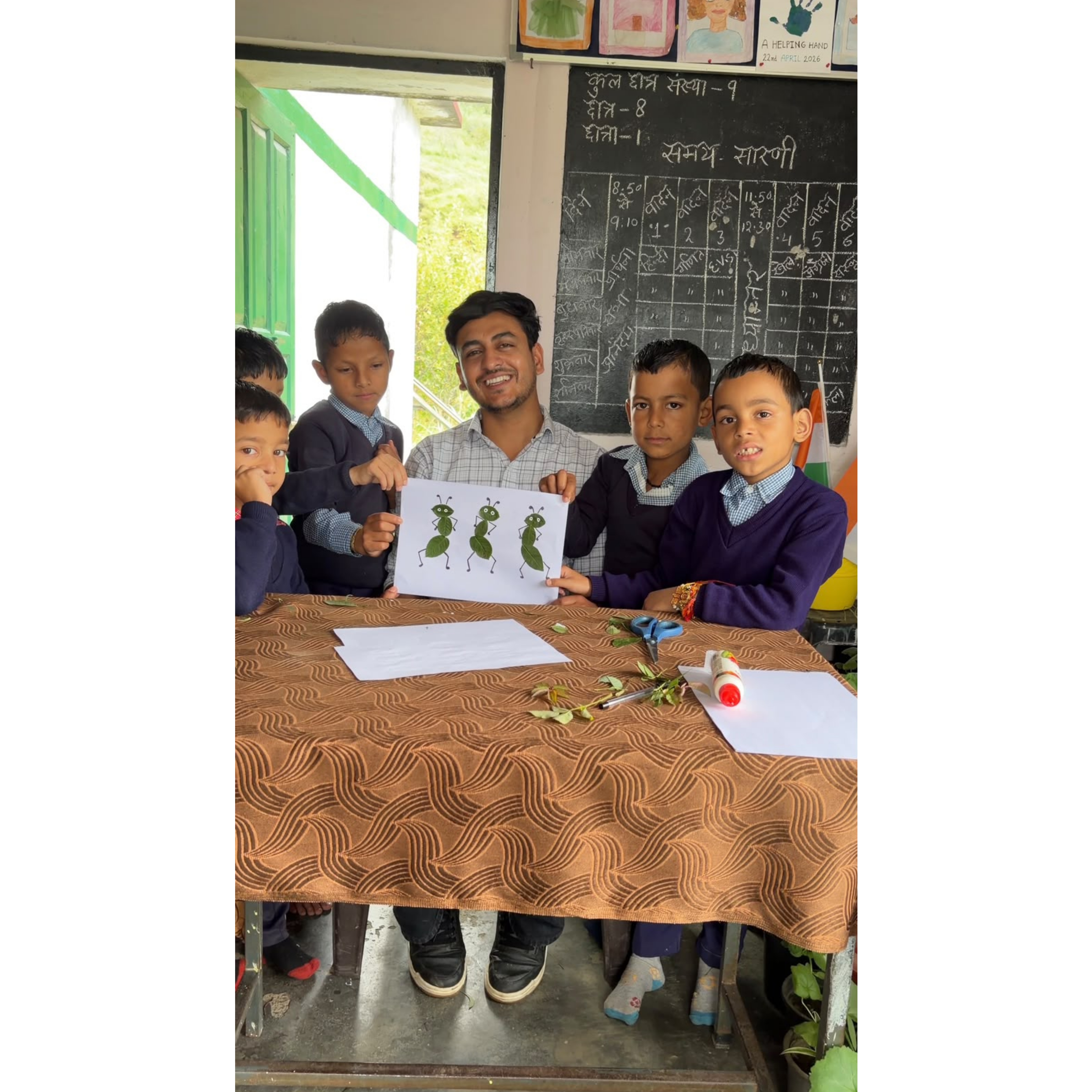
"The children learn basic concepts, but they often do not get enough exposure to advanced learning and technology. They have limited knowledge of things like digital tools and AI. Because of fewer opportunities and less exposure, they also get less chance to compete with children from other areas,” Sanguri said.
Rather than allowing that gap to define what his students can imagine, Sanguri has started bringing pieces of the wider world into their classroom.
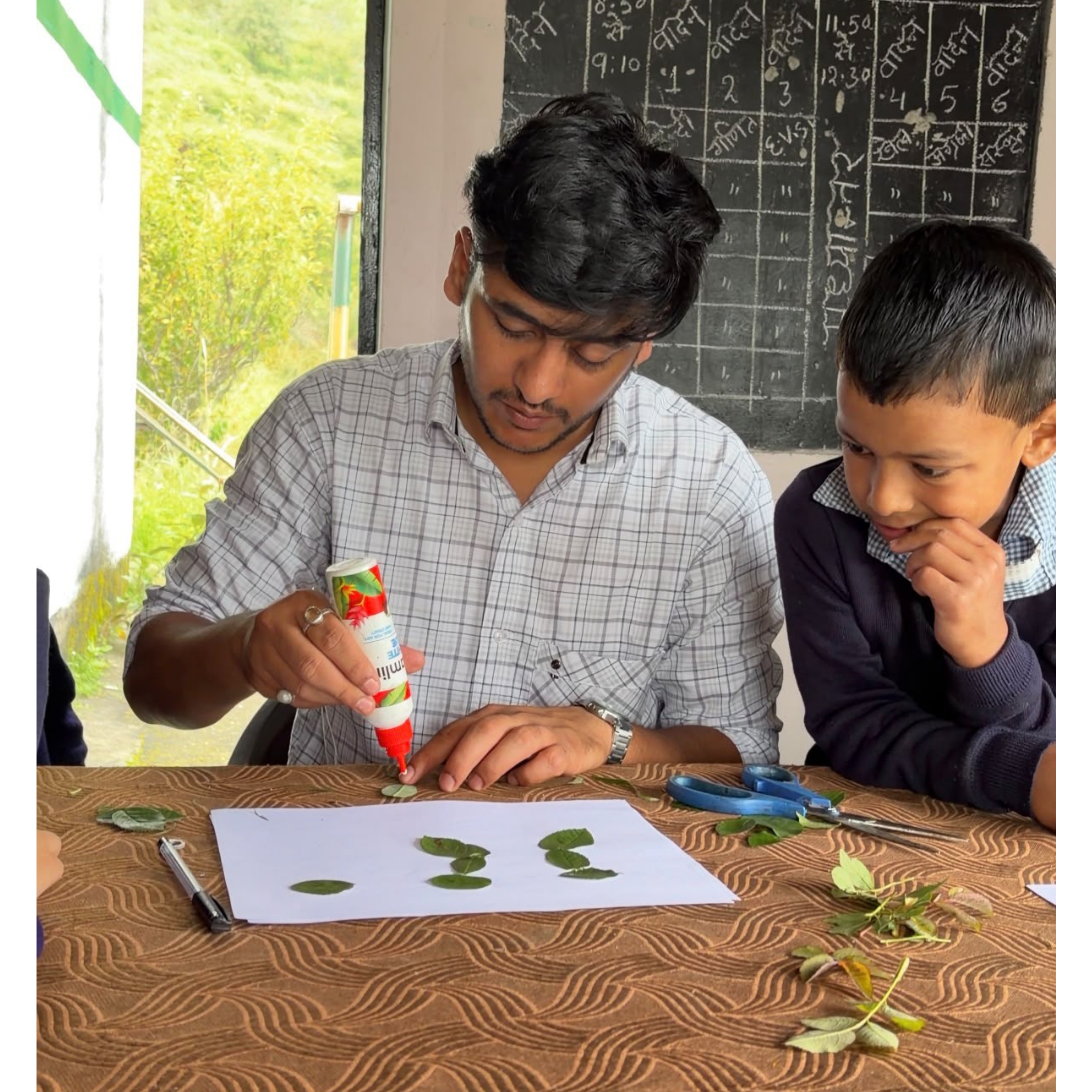
He has arranged laptops through his own contribution and is working toward arranging a projector. He is also teaching the children basic computer skills.
For Sanguri, a laptop is not simply a machine. It is a window. A drawing sheet is not simply paper. It can become the beginning of creativity. A question is not an interruption. It can be the beginning of learning.
"Learning should continue beyond the textbook.”
"Technology is very important because it gives children exposure beyond their village. Children in cities often get more opportunities to learn about technology. If children in remote areas also get access to it, they can explore more opportunities and prepare themselves for the future,” he said.
When learning leaves the textbook
That same philosophy extends to the way he approaches ordinary lessons. Instead of relying only on explanations, he encourages children to learn by doing. Games and thinking-based activities become part of the classroom, allowing children to learn while enjoying the process.
The approach is not identical for every child because the children themselves are not identical.
"I first teach the same topic to everyone. After that, I give questions according to their learning level. Children who learn quickly get slightly advanced questions, while those who need more support get simpler questions and extra guidance,” he said.
The changes may sound small to someone looking at them from far away. Inside the classroom, however, they are significant.
Children who were once hesitant about English, particularly reading and speaking, have started reading basic English and participating in English prayers. Sanguri has also seen greater confidence, better expression and growing curiosity about technology.
A laptop, a cricket field and the freedom to imagine
The classroom is also a place where learning does not always look like studying. There is room for games, sports, drawing, experiments and conversations.
Cricket, for instance, can become more than a game when children are learning to participate, communicate, work together and simply enjoy being children.
Sanguri believes creativity has no fixed boundary, particularly when children are given the freedom to explore. In a school with limited space, the nearby field can become a place for play.
In a classroom with limited digital connectivity, a laptop can become an introduction to a much larger world. In a school with nine students, every child's question can receive attention.
Teaching nine children, imagining futures beyond the hills
The parents have noticed his efforts as well. Their response, he said, has been positive, with families appreciating his teaching style and supporting new activities for the children.
His own family has also watched his journey with pride. His father, who once knew him as the schoolboy whose teachers would summon him to school, now sees his son returning home as a government teacher.
Relatives have encouraged Sanguri to think about higher examinations, additional academic qualifications and other government opportunities. But his present commitment to the nine children leaves little time for another major preparation cycle. For now, the classroom comes first.
The child he was, the teacher he became
There is a certain irony in that journey. As a young man, Sanguri spent years preparing for government examinations because he wanted to fulfill his parents' hopes. He eventually found his place in a government school not through the examination path he had originally imagined, but through teacher training.
And in the process, the child who once felt that teachers did not care how children felt began to understand what it means to care for children himself.
"Many of my students come from economically weaker families and have limited educational resources. I want to give them better opportunities and exposure so that they can go beyond their village and do something meaningful in life. That motivates me to continue,” he said.
For him, better opportunities do not necessarily begin with expensive resources. Sometimes they begin with exposure.
When the world outside the classroom becomes a lesson
He does not believe the responsibility belongs to the teacher alone. Parents and members of the School Management Committee can bring their own knowledge into the classroom, whether that knowledge comes from agriculture, electrical work, plumbing or another practical skill. Such experiences can give children lessons that no textbook can fully reproduce.
The wider community, too, can support the school by participating in activities, encouraging children and sharing skills. For Sanguri, education becomes stronger when the school and the community do not exist as separate worlds.
His vision of learning is therefore both modern and rooted in the surroundings. He wants children to understand technology and AI, but he also wants them to learn from agriculture, sports, their families and the community around them.
Even a kitchen garden can become part of that philosophy. Agriculture is not merely something children can read about in a textbook when they live in the hills.
It can become something they observe, participate in and understand through their own surroundings. Learning, for Sanguri, becomes richer when the world outside the classroom is allowed to enter it.
His hopes for the children are equally grounded.
"My hope is that children become strong in basic subjects, especially English, Mathematics and Hindi. I also want them to learn about technology, develop good habits and get opportunities beyond the village so that they can build a better future,” he said.
He also wants parents to understand that regular attendance matters, even when everyday life in remote areas can bring its own difficulties.
At the same time, he wants people living in cities to understand the different realities faced by children in remote communities.
"People in cities should understand that children in remote areas face very different circumstances. Many walk several kilometres to school and also have household responsibilities after returning home. They often have fewer educational resources and less guidance, so they need more opportunities and support,” he added.
What nine children taught their teacher
Sanguri's experience in the hills has changed his own perspective in much the same way.
Before becoming a teacher in a remote area, he had lived in a city where books, notebooks and other learning resources were readily available. Working with these children made him realize that even basic educational materials cannot be taken for granted everywhere.
"Earlier, I lived in a city where most educational resources were easily available. After coming to a remote area, I realized that many children do not even have basic things like books, notebooks and learning materials. This changed my perspective and motivated me to make extra efforts to provide them with better resources and opportunities,” Sanguri said.
Some of the most memorable moments for him have come from watching the children encounter something new. "One of my most memorable moments is when children experience something for the first time. Sometimes they say, ‘Sir, I have never seen this before.’ Whether it is a laptop, drawing materials or something new, their excitement makes those moments very special for me."
That sentence perhaps captures the heart of his classroom. The object itself may be ordinary to someone else. But for a child seeing it for the first time, it can make the world suddenly feel larger.
Sanguri has also begun seeing his students' confidence grow in ways that cannot always be measured by marks. A child who was hesitant to read English now participates in English prayers.
Children who once had limited exposure to technology are learning to use laptops. Questions are becoming more natural. Their expressions are becoming more confident.
Sanguri's dream for the school is to see more children enroll, more teachers join, stronger foundations in basic subjects and better access to technology.
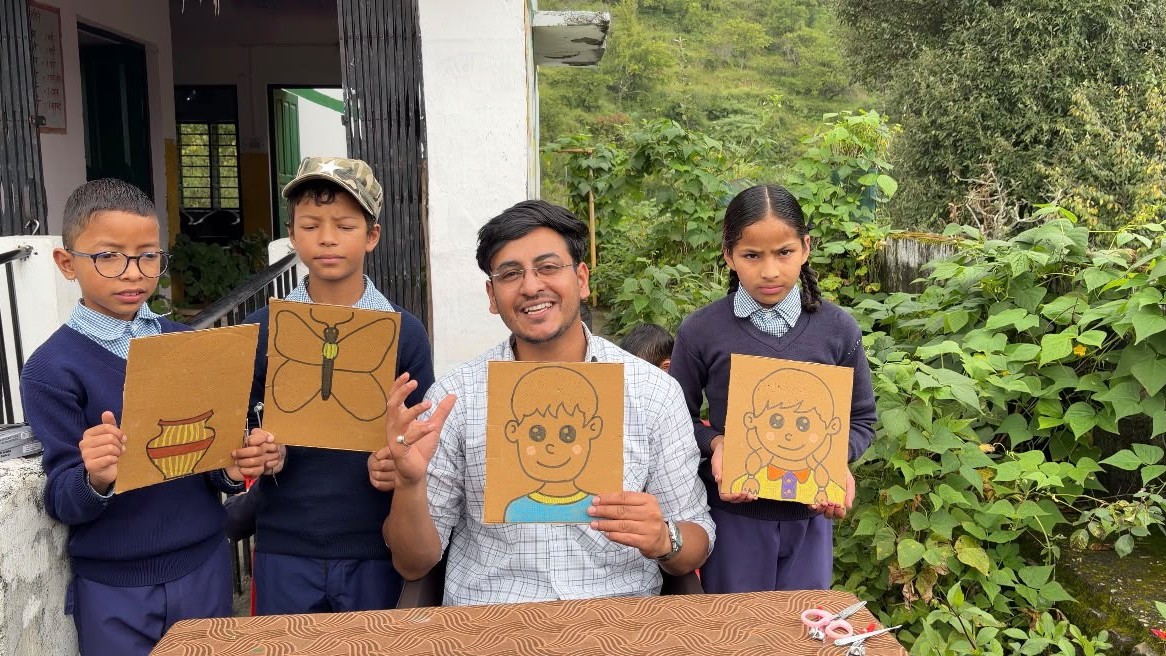
If given the opportunity to change three things, he would begin with the damaged infrastructure, improve teacher availability and bring more digital learning resources into the school. His larger dream, however, belongs entirely to the children.
"My biggest dream is to see our students do well in competitions and get opportunities beyond their village. I want them to build a good future, support their families and make their parents and village proud,” he said.
His message to teachers working in remote areas comes from experience rather than theory.
"Teachers working in remote areas are already putting in a lot of effort, and I truly respect their work. Children in these areas often need additional guidance and support. So, whenever possible, we should make an extra effort for their learning and growth,” he added.
And to the children themselves, he asks for curiosity without fear.
He continued, "My message to my students is to never be afraid of asking questions. Listen to your teachers, keep improving yourself and focus on your studies. At the same time, participate in sports and other activities and always try to give your best."
For Sanguri, the importance of education in a remote village is ultimately about widening the horizon available to a child. "Education is extremely important for children in remote areas because it opens opportunities beyond their village. It helps them gain awareness, learn new things and move forward in life. With proper education, they can contribute to their families, communities and the country."
That realization has also shaped his broader view of what the education system needs to do for remote communities. "I would focus on three basic things, better infrastructure, proper teacher availability and better transportation and connectivity. If good teachers are available and schools have proper infrastructure and accessibility, I believe education in remote areas can improve significantly."
The road ends, but their ambitions do not
Yet perhaps his most important lesson is not about infrastructure, technology or examinations. It is about reciprocity. Children walk through difficult terrain to reach a classroom. They carry their own responsibilities at home.
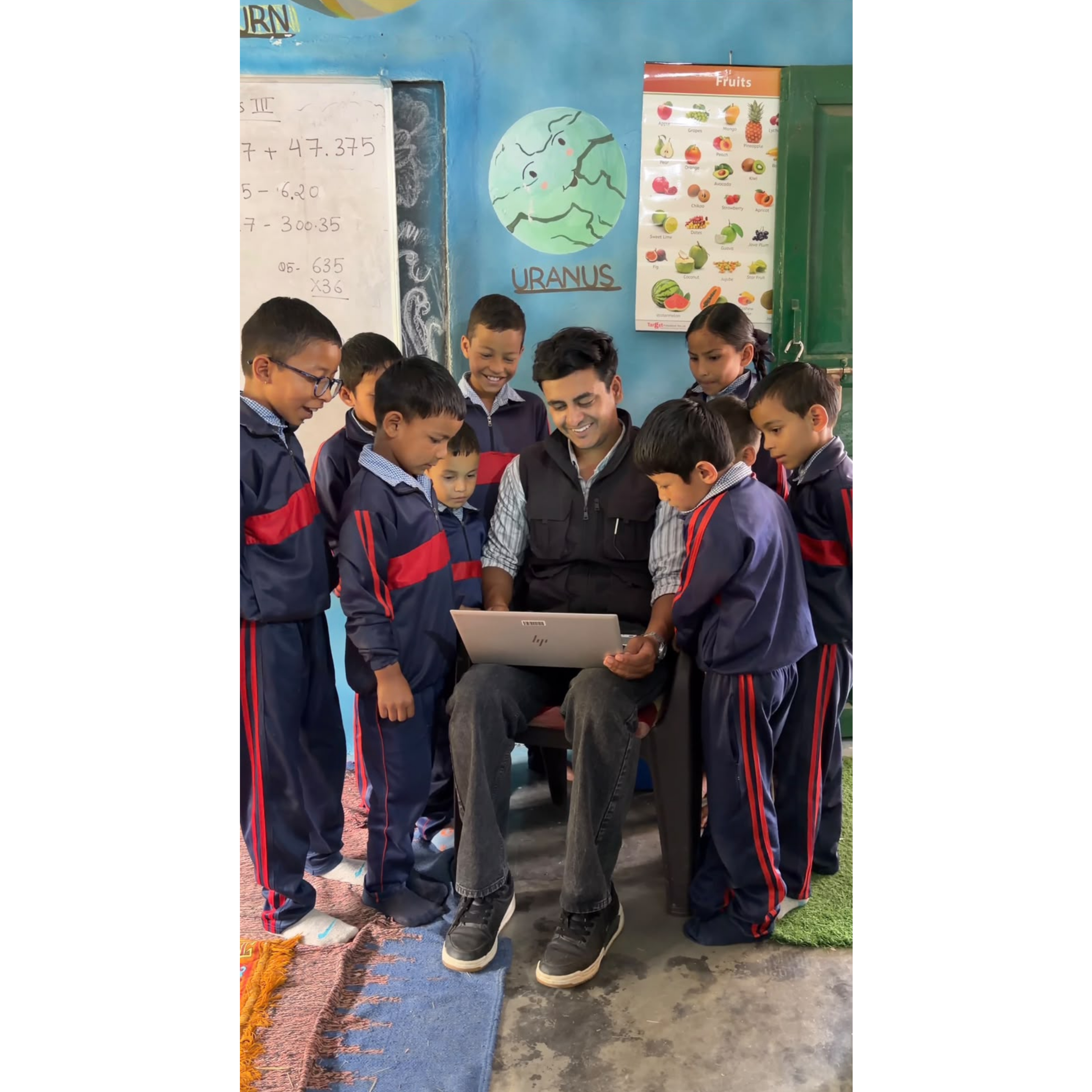
They come with different levels of exposure and different needs. If they are making the effort to arrive, Sanguri believes the adults responsible for their education must meet them with the same determination.
"The biggest lesson I have learned is that when children are making so much effort to come to school and learn, we should also make that extra effort for them. As teachers, it is our responsibility to create more opportunities and give them something beyond regular classroom learning,” he said.
That is what makes Sanguri's journey from an uncertain government-job aspirant to a teacher in a remote Himalayan school more than a career story. It is also a story about perspective.
He once stood in a classroom as a child who wanted to be heard. Today, he stands before nine children and tries to make sure they are heard.
He once looked at school through the eyes of a student who did not always understand why he was being scolded. Today, he looks at his students by asking how they learn, what they need and what might help them dream beyond the boundaries of their village.
And while many people may look at the mountains and see a destination, Sanguri has chosen to see a responsibility.
The road to his school may begin where the main road ends. But inside that small classroom, he is trying to make sure the children's ambitions do not end there.
And sometimes, there is that one sentence from a student that makes all the effort feel worthwhile, "Sir, I want to become like you."
For Sanguri, perhaps that is what learning beyond the classroom ultimately looks like: a child finding not just a lesson in a teacher, but a possibility for his own future.
Southeast European teachers’ unions call for greater public education funding
Jammu and Kashmir Unemployment: Economic Growth Has Yet to Resolve Job Crisis

MIT-developed surgical adhesive could offer an alternative to stitches
China’s Chery unveils AI companion robot designed to ease loneliness
Varanasi Air Show 2026: Schools in Two Chandauli Blocks to Hold Online Classes on October 22, 24
China’s Chery unveils AI companion robot designed to ease loneliness
.jpg&w=256&q=75)
New Zealand reforms could leave more students without school qualifications

Alfred Nobel’s will created one of the world’s most recognised prizes. Here’s how
Pepperdine University earns Google recognition and Digital Education Council membership for AI initiatives
Dhirubhai Ambani International School breaks into global top 10 with record IB score

Southeast European teachers’ unions call for greater public education funding
Jammu and Kashmir Unemployment: Economic Growth Has Yet to Resolve Job Crisis
MIT-developed surgical adhesive could offer an alternative to stitches
China’s Chery unveils AI companion robot designed to ease loneliness
Varanasi Air Show 2026: Schools in Two Chandauli Blocks to Hold Online Classes on October 22, 24
China’s Chery unveils AI companion robot designed to ease loneliness
New Zealand reforms could leave more students without school qualifications
Alfred Nobel’s will created one of the world’s most recognised prizes. Here’s how
Pepperdine University earns Google recognition and Digital Education Council membership for AI initiatives
Dhirubhai Ambani International School breaks into global top 10 with record IB score
Copyright© educationpost.in 2026 All Rights Reserved.