


The panel said boys and children who do not identify with a particular gender may choose their hairstyles, while schools can enforce basic hygiene and safety requirements.
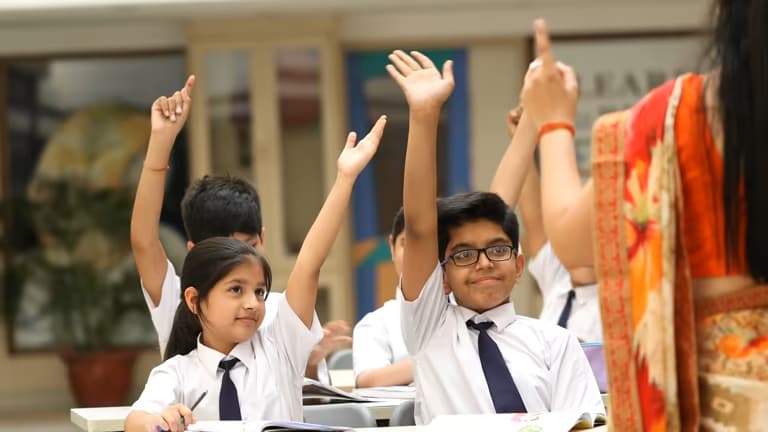
Schools in Kerala have been directed not to harass, exclude, discriminate against or penalize students over hair length or grooming preferences, following an order by the Kerala State Commission for Protection of Child Rights.
The commission said boys and children who do not identify with a particular gender can grow and maintain their hair according to their preferences, subject to basic hygiene and safety requirements.

The order was issued by commission member P Shajesh Bhaskar after the panel considered two petitions concerning school grooming rules and alleged discriminatory treatment based on students' appearance.
Under the commission's directions, students can maintain their hair as they choose as long as it is clean, properly maintained and does not obstruct their vision or cover their face.
Schools can require students to tie back or otherwise secure their hair with a hairband when necessary for safety. This would apply during laboratory activities, sports competitions and practical classes, where loose hair could create safety concerns.
The commission also advised students against using chemicals or hair colors that could be harmful to their health.
Along with hair, the commission said children who do not identify with a particular gender should have the freedom to choose their clothing according to their preferences.
Schools directed to prioritize education
The child rights panel said schools should focus on students' academic progress and personality development instead of placing undue emphasis on their physical appearance.
It directed school authorities not to mentally harass students, remove them from classrooms, discriminate against them or impose other punitive measures because of their hair length or grooming choices.
The commission also said it had not found specific guidelines issued by the Kerala Education Department or the Central Board of Secondary Education (CBSE) dealing with hair length and grooming requirements in this context.
It called for appropriate guidelines to be prepared urgently. The panel directed that boys and children who do not identify with a particular gender be included in the committee responsible for drafting the guidelines and that their views be considered before the rules are finalized.
The respondents have also been directed to submit a report on the action taken in response to the commission's recommendations within 45 days.
Petitions behind Kerala child rights commission order
The commission's directions followed its consideration of two separate petitions.
One petition was filed by Indu Menon, a resident of Ramanattukara, who alleged that some schools discriminated against boys and children who do not identify with a particular gender despite describing themselves as gender-neutral institutions.
The petition also alleged that boys with long hair were treated as though they were delinquent students because of their appearance.
The second petition was submitted by the principal of a private school in Kottakkal. The principal sought clarity on how the school should deal with an 11th-grade student who had repeatedly refused requests to cut his hair.
The cases prompted the commission to examine the issue of grooming requirements and the treatment of students who do not comply with school expectations concerning hair.
The commission's order seeks to distinguish basic hygiene and safety requirements from punitive or discriminatory treatment based solely on personal grooming choices.
While schools can enforce measures needed to keep students safe and maintain hygiene, the panel said students should not face humiliation, exclusion or discrimination because of their appearance.
The commission's proposed guidelines are intended to provide schools with a clearer framework for handling grooming-related issues while ensuring that students' educational development and rights remain central to school practices.

Southeast European teachers’ unions call for greater public education funding
Jammu and Kashmir Unemployment: Economic Growth Has Yet to Resolve Job Crisis

MIT-developed surgical adhesive could offer an alternative to stitches

China’s Chery unveils AI companion robot designed to ease loneliness
Varanasi Air Show 2026: Schools in Two Chandauli Blocks to Hold Online Classes on October 22, 24
China’s Chery unveils AI companion robot designed to ease loneliness
.jpg&w=256&q=75)
New Zealand reforms could leave more students without school qualifications

Alfred Nobel’s will created one of the world’s most recognised prizes. Here’s how

Pepperdine University earns Google recognition and Digital Education Council membership for AI initiatives
Dhirubhai Ambani International School breaks into global top 10 with record IB score

Southeast European teachers’ unions call for greater public education funding
Jammu and Kashmir Unemployment: Economic Growth Has Yet to Resolve Job Crisis
MIT-developed surgical adhesive could offer an alternative to stitches
China’s Chery unveils AI companion robot designed to ease loneliness
Varanasi Air Show 2026: Schools in Two Chandauli Blocks to Hold Online Classes on October 22, 24
China’s Chery unveils AI companion robot designed to ease loneliness
New Zealand reforms could leave more students without school qualifications
Alfred Nobel’s will created one of the world’s most recognised prizes. Here’s how
Pepperdine University earns Google recognition and Digital Education Council membership for AI initiatives
Dhirubhai Ambani International School breaks into global top 10 with record IB score
Copyright© educationpost.in 2026 All Rights Reserved.