


The guidelines require multidisciplinary representation across 11 patient safety domains, periodic reviews of protocols and standard operating procedures, and submission of committee composition and officer details to the national secretariat.
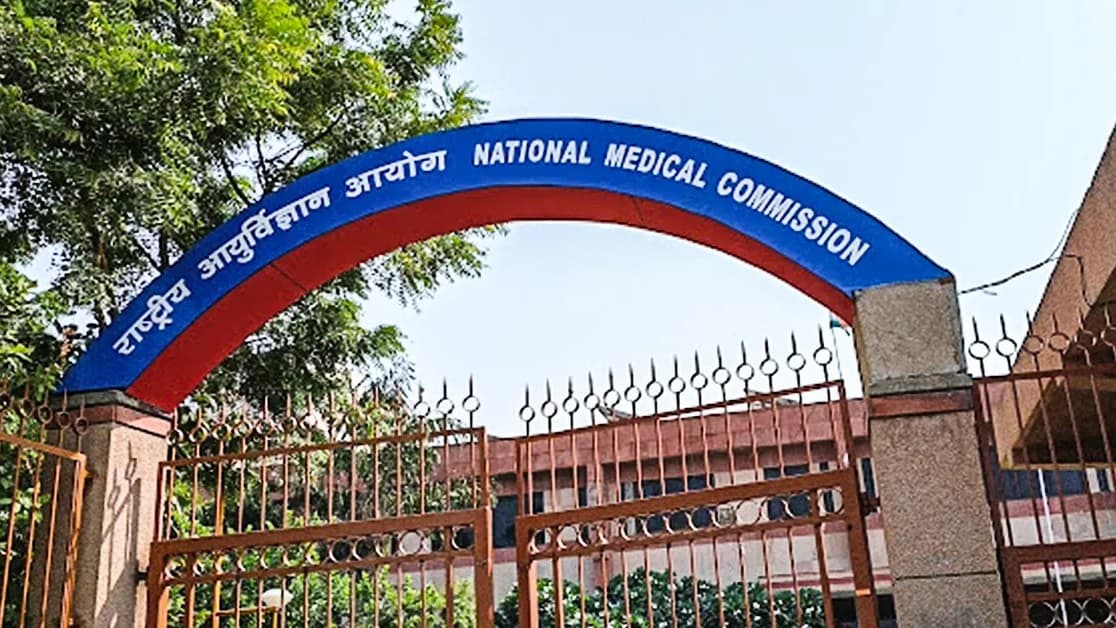
The National Medical Commission (NMC) has directed all medical colleges and medical institutions across India to establish a Patient Safety Committee or Cell and appoint a designated Patient Safety Nodal Officer to strengthen patient safety practices, improve healthcare outcomes, and ensure the implementation of appropriate protocols and standard operating procedures (SOPs).
The directive was issued through a public notice dated Oct 8, 2026, following a communication dated May 8, 2026, from the Additional Director General of Health Services (Addl. DGHS), Ministry of Health and Family Welfare, Government of India.

In its notice, the apex medical regulatory body asked the Deans, Principals, Directors and Heads of all medical colleges and medical institutions to designate a Patient Safety Nodal Officer for their respective medical colleges and associated hospitals.
It also instructed institutions to constitute a Patient Safety Committee or Cell comprising representatives from relevant medical specialties and all 11 domains of patient safety identified by the National Patient Safety Secretariat (NPSS).
The committee will be responsible for facilitating the implementation, monitoring and periodic review of patient safety practices, protocols and SOPs within the institution.
The measures are intended to institutionalize a culture of patient safety across healthcare facilities and establish systematic processes to minimize preventable risks associated with patient care and treatment.
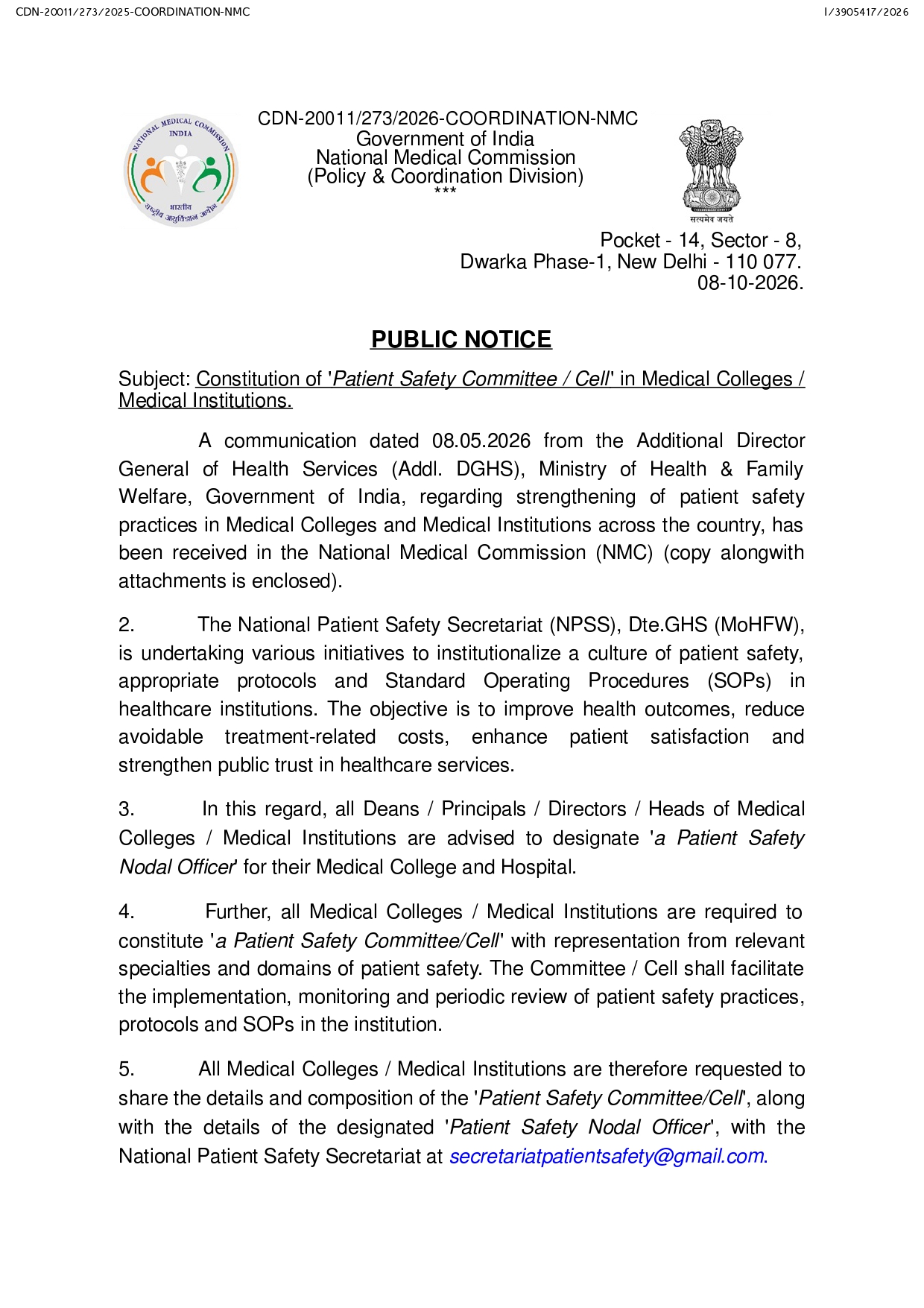
"The National Patient Safety Secretariat (NPSS), Dte.GHS (MoHFW), is undertaking various initiatives to institutionalize a culture of patient safety, appropriate protocols and Standard Operating Procedures (SOPs) in healthcare institutions. The objective is to improve health outcomes, reduce avoidable treatment-related costs, enhance patient satisfaction and strengthen public trust in healthcare services. In this regard, all Deans / Principals / Directors / Heads of Medical Colleges / Medical Institutions are advised to designate 'a Patient Safety Nodal Officer' for their Medical College and Hospital. Further, all Medical Colleges / Medical Institutions are required to constitute 'a Patient Safety Committee/Cell' with representation from relevant specialties and domains of patient safety. The Committee/Cell shall facilitate the implementation, monitoring and periodic review of patient safety practices, protocols and SOPs in the institution," the NMC notice stated.
The commission has also asked all medical colleges and institutions to submit the details and composition of their Patient Safety Committee or Cell, along with information about the designated Patient Safety Nodal Officer, to the National Patient Safety Secretariat. Institutions have been requested to send the information to [email protected].
Patient Safety Nodal Officer: Role and responsibilities
According to the May 8 communication from the Directorate General of Health Services (DGHS), each medical college and its associated hospital must appoint a Patient Safety Nodal Officer with sufficient seniority and authority to oversee and facilitate the implementation of patient safety measures.
The DGHS suggested that officials such as the Medical Superintendent (MS), Additional Medical Superintendent or Director could be considered for the position.
The requirement is intended to ensure that responsibility for coordinating patient safety initiatives is assigned to an appropriately senior official who can support the adoption of protocols and standard operating procedures across the institution.
The designated officer will be associated with the institution's broader efforts to improve patient safety and ensure that established practices are implemented and reviewed. The appointment is part of the NPSS's initiatives to promote a structured approach to patient safety in healthcare institutions.
Composition of the Patient Safety Committee or Cell
The DGHS communication also outlined the leadership and composition requirements for the Patient Safety Committee. The committee must be chaired by the Director, Head of Institution or Medical Superintendent and include members representing all 11 patient safety domains identified by the National Patient Safety Secretariat.
Medical colleges and institutions have been asked to ensure that the committee includes appropriate representation from relevant specialties and departments so that patient safety concerns can be addressed across different aspects of healthcare delivery. The committee's work will include facilitating the implementation of patient safety practices, monitoring their adoption and periodically reviewing the protocols and SOPs followed by the institution.
The communication identified several medical specialties and departments that could contribute to the committee's activities. These include Pharmacology, General Surgery, Anaesthesiology, Obstetrics and Gynaecology, Community Medicine, Internal Medicine, Paediatrics, Psychiatry, Hospital Administration, Radiology, Forensic Medicine and AYUSH. Nursing and engineering professionals may also contribute to relevant patient safety activities, depending on the requirements of the institution.
The inclusion of different specialties and professional groups is intended to support a multidisciplinary approach to patient safety, bringing together expertise relevant to clinical care, hospital operations, diagnostic services, infection control and healthcare infrastructure.
11 domains of patient safety identified by NPSS
The National Patient Safety Secretariat has identified 11 domains that medical colleges and institutions must take into account while constituting their Patient Safety Committee or Cell.
These domains cover clinical practices, diagnostic procedures, hospital operations, infection prevention, patient participation and the safety of healthcare facilities.
The domains include:
The communication also refers to facility safety, including biomedical waste management, fire safety, structural safety and environmental safety, as well as AYUSH, among the areas to be considered in patient safety activities.
Through the committee's multidisciplinary representation, institutions are expected to address the various risks associated with healthcare delivery and support the development and review of appropriate safety protocols and SOPs.
Focus on institutionalizing patient safety practices
The NMC's directive follows the DGHS initiative to strengthen patient safety practices in medical colleges and medical institutions throughout the country.
The National Patient Safety Secretariat, under the Ministry of Health and Family Welfare, is undertaking measures to establish a stronger culture of safety through appropriate protocols, standardized procedures and institutional oversight.
The initiative aims to improve health outcomes, reduce avoidable treatment-related expenses, enhance patient satisfaction and strengthen public confidence in healthcare services.
By requiring institutions to designate a nodal officer and establish a dedicated committee or cell, the directive seeks to assign clear responsibility for coordinating, monitoring and periodically reviewing patient safety practices.
All medical colleges and medical institutions have therefore been requested to share the composition and details of their Patient Safety Committee or Cell, along with the particulars of the designated Patient Safety Nodal Officer, with the National Patient Safety Secretariat at [email protected].
Ravi River’s Surface-Water Area Shrinks Fivefold After Reservoir Operations, IIT Gandhinagar Study Finds

AI can support learning, but the thinking, curiosity and final effort must belong to the student

SRM University-AP: 20 Faculty Members Named Among World’s Top 2% Scientists

NMC clarifies digital authentication of medical records: Key rules on liability, security and foreign experts
NMC patient safety directive explained: Medical colleges must appoint nodal officers, form committees
NMC clarifies digital authentication of medical records: Key rules on liability, security and foreign experts

‘Dear Italy, how much do you cost us?’ Students pitch tents over soaring rents

Australia passes bill to expand university access and support disadvantaged students
HBKU’s PlasmaPure advances to semifinals in global water desalination competition
Karnataka student elections return after 37 years: Why political restrictions and university polls remain contentious

Ravi River’s Surface-Water Area Shrinks Fivefold After Reservoir Operations, IIT Gandhinagar Study Finds
AI can support learning, but the thinking, curiosity and final effort must belong to the student
SRM University-AP: 20 Faculty Members Named Among World’s Top 2% Scientists
NMC clarifies digital authentication of medical records: Key rules on liability, security and foreign experts
NMC patient safety directive explained: Medical colleges must appoint nodal officers, form committees
NMC clarifies digital authentication of medical records: Key rules on liability, security and foreign experts
‘Dear Italy, how much do you cost us?’ Students pitch tents over soaring rents
Australia passes bill to expand university access and support disadvantaged students
HBKU’s PlasmaPure advances to semifinals in global water desalination competition
Karnataka student elections return after 37 years: Why political restrictions and university polls remain contentious
Copyright© educationpost.in 2026 All Rights Reserved.