JNU hunger strike ends with assurances, implementation remains the next test
The administration has agreed to withdraw FIRs and proctorial inquiries, review disciplinary rules, examine entrance exam reforms and address hostel infrastructure, scholarships and other student welfare concerns.
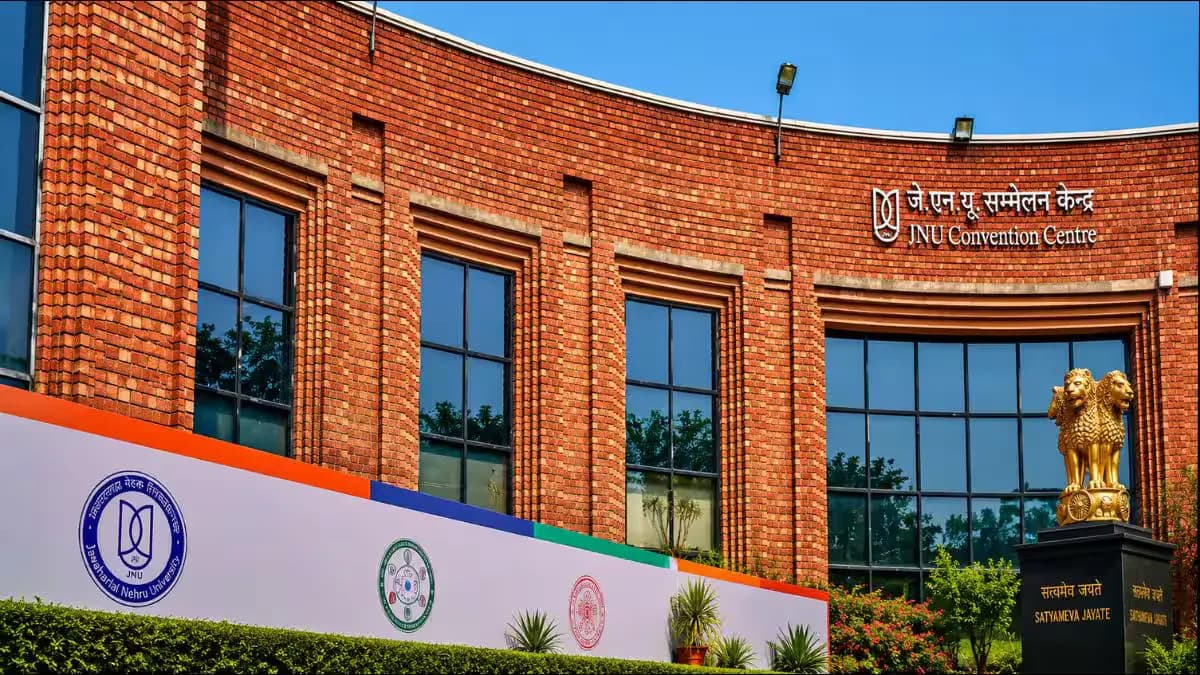
Jawaharlal Nehru University Students’ Union (JNUSU) called off its 17-day hunger strike on Oct 20 after the administration agreed to address several demands, including revoking the rustication of union office-bearers, withdrawing police complaints against students and reviewing the controversial Chief Proctor’s Office (CPO) manual.
The protest began on Oct 3, when 18 students started an indefinite hunger strike near Sabarmati T-point. Nine students remained on fast when the union announced the withdrawal after several rounds of negotiations with the administration.
According to the minutes of a meeting held on Oct 19, an administrative panel agreed to withdraw all FIRs registered against students. Proctorial inquiries initiated over protests against anti-rustication measures and University Grants Commission (UGC) regulations, as well as concerns about hostel infrastructure, will also be withdrawn.
The administration has also agreed to establish a committee comprising student representatives to examine the CPO manual and recommend amendments. The panel will meet again after 14 working days to discuss the demands and determine how they will be implemented.
The committee formed by the JNU administration is headed by Prof Vivek Kumar, dean of the School of Social Sciences. Its other members are Prof Sudheer Pratap Singh, Prof Sharad K Soni, Dr Poonguzhali N, Dr Jaikhlong Basumatary and Dr Fauzia Firdous.
JNUSU office-bearers and elected councillors will represent the students on the committee. The panel is expected to take forward discussions on the union’s demands and work out the modalities for implementing the agreed measures.
JNU to review controversial CPO manual
Approved by JNU’s Executive Council on Nov 24, 2023, the CPO manual establishes rules governing student discipline and conduct on campus. It has faced widespread criticism from student groups over provisions that they say restrict dissent and the right to protest.
The manual allows fines of up to ₹20,000, suspension and rustication for certain forms of protest, including demonstrations held within 100 meters of academic and administrative buildings. Student organizations have opposed these provisions, arguing that they curb campus demonstrations and freedom of expression.
The agreement to review the manual marks one of the key outcomes of the hunger strike, alongside the proposed withdrawal of FIRs and proctorial inquiries against students.
Committees to examine entrance exams, hostel reservation
The administration has also agreed to establish committees to examine the reinstatement of the JNU Entrance Examination in place of the Common University Entrance Test (CUET), hostel reservation policies and the functioning of the Equal Opportunity Cell.
An audit report on the Equal Opportunity Cell is to be submitted within a week. The committee will also recommend discontinuing the Siddhanta Knowledge Foundation’s role in the university curriculum.
These issues formed part of the wider set of demands raised during the agitation, which also addressed campus infrastructure, student welfare and access to university facilities.
Hostel facilities and student welfare measures
As part of the assurances given to the union, the administration agreed to conduct structural audits of hostels and teflas. It also committed to ensuring that functional geysers are available in all hostels within two weeks.
Other measures include reopening the canteen at the Centre for Spanish and Latin American Studies and extending school library hours until 9 p.m. The administration will also consider a 25% increase in the merit-cum-means scholarship.
The commitments cover several aspects of campus life, including hostel conditions, library access, food facilities and financial support for students. Their implementation will be taken up through the administrative process agreed upon during negotiations.
Rustication revoked as hunger strikers receive medical care
Following the revocation of rustication orders, five students named in a university notice were instructed to pay their respective fines immediately.
Meanwhile, the students participating in the hunger strike were hospitalized and provided medical assistance on Oct 20. The union's decision to end the agitation came after the administration agreed to address its demands through withdrawals, reviews and the formation of committees.
The next round of discussions is expected to take place after 14 working days, when the committee will continue deliberations on the outstanding demands and the steps required to implement the agreed measures.