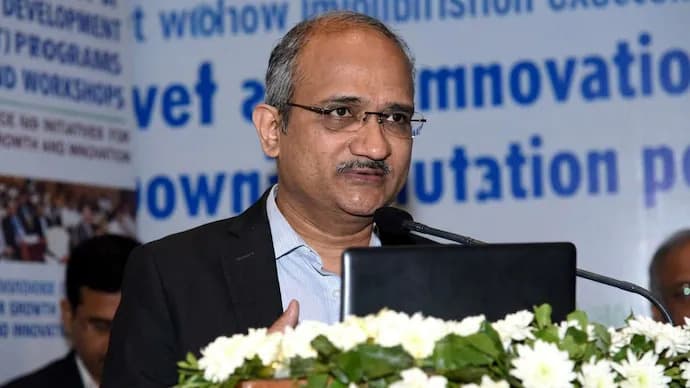
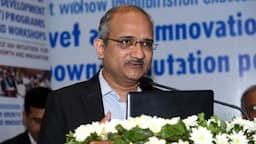
Former IIT Delhi director and BITS Pilani group vice-chancellor V Ramgopal Rao has proposed a five-year BTech structure at IITs, saying it could give students who need additional time greater academic support without singling them out.
Rao made the suggestion while discussing the challenges created by the wide variation in academic backgrounds among students entering IITs.

His comments came amid the controversy surrounding the death of IIT Bombay BTech student Sahil Wakode.
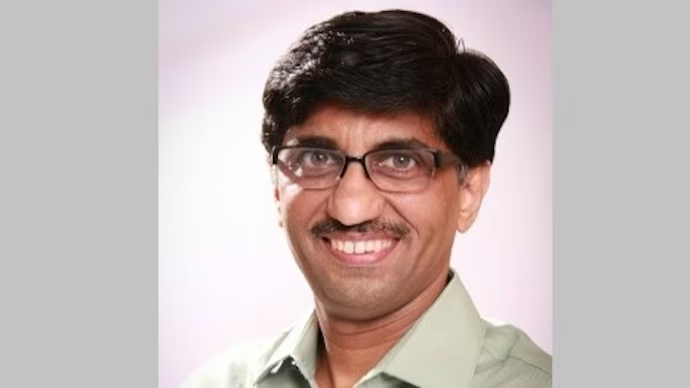
Rao also defended IIT Bombay professor Suryanarayana Doolla, who has been named in an FIR alleging abetment to suicide on grounds of caste discrimination. Doolla has been sent on leave to facilitate an impartial investigation.
“I am disturbed to see Prof Suryanarayana Doolla being vilified over the recent controversy at IIT Bombay. I know Surya personally. He is one of the finest faculty members I have known in the IIT system, and a gentleman of the highest integrity. Whatever concerns have been raised should be examined fairly. A public campaign against an individual serves no one,” Rao said in a post on X.
Rao, an IIT Bombay alumnus who has also worked at the institute, said the wider issue reflects the challenges created by the “one size fits all” approach in IITs.
“The problems we are seeing are all primarily because of the ‘one size fits all’ approach in IITs,” he said.
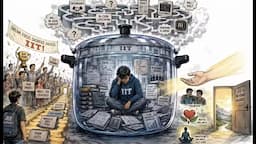
He said IIT classrooms now bring together students with significantly different academic profiles, including those whose JEE Advanced ranks can range from single digits to five digits. He also pointed to language differences as another factor affecting classroom learning.
“With students coming through an intensive coaching culture, and classrooms bringing together students whose JEE Advanced ranks range from single digits to five digits (in the same class—for example, CSE in IIT Delhi), we now have highly heterogeneous classrooms across the IIT system. Language also further adds to the challenge,” he said.
“The question to ask therefore is, with such heterogeneity, can we expect every student to learn at the same pace? There is nothing wrong with opening the doors of our best institutions to students from different backgrounds. The question is whether we have addressed this heterogeneity in our teaching-learning methods,” he added.
Rao said faculty members cannot realistically teach every class at several different levels simultaneously. A pace that works for one group of students can leave another group either struggling or disengaged.
“A faculty member cannot pitch every class at several levels at once. Move too slowly, and some students lose interest. Move too quickly, and others are left behind. In my classes, I have also seen students with excellent JEE Adv ranks struggle. Coaching had prepared them to solve familiar types of questions quickly,” Rao said.
“Many are lost when they see a question which they haven’t solved before. This is not a difficulty confined to any admission category. The move from coaching to independent learning can be hard for anyone,” he added.
Against this backdrop, Rao suggested that BTech programs could be designed as five-year courses, while allowing students who meet the required academic credits to graduate earlier.
“Those who meet the credit requirements could complete it in four years, or perhaps three and a half. Others could spread out their courses over five years and receive more academic help, including recorded lectures, online material and support with language where needed. The pace would be decided by performance within the IIT, not by a student’s admission category or entrance rank,” he continued.
“Calling it a five-year programme for everyone has a psychological advantage. Students who need more time would simply be following the programme as designed, while those who are ready could complete it sooner. No one would be singled out for taking a fifth year,” he added.
Under the model suggested by Rao, the additional year would therefore not function as a separate track for students who struggle academically. Instead, all students could be enrolled in a five-year BTech framework, with those meeting the credit requirements completing their degrees earlier.
The proposal would also allow students who require more time to access additional academic resources. Rao specifically mentioned recorded lectures, online learning material and language support as possible measures that could be provided during the extended period.
He argued that the pace of degree completion should be determined by a student's performance after entering an IIT rather than being linked to their admission category or JEE Advanced rank.
Meanwhile, IIT Bombay has constituted a 10-member high-level committee to examine the circumstances surrounding Wakode’s alleged suicide.
The second-year BTech student was found hanging in his hostel room on the evening of Sept 18, hours after he was allegedly caught using a mobile phone to access ChatGPT during a mid-semester examination.
The Mumbai Police Crime Branch is also investigating the student's death.