


Bridges, Tunnels, Expressways and Railways Drive India’s Visible Infrastructure Transformation
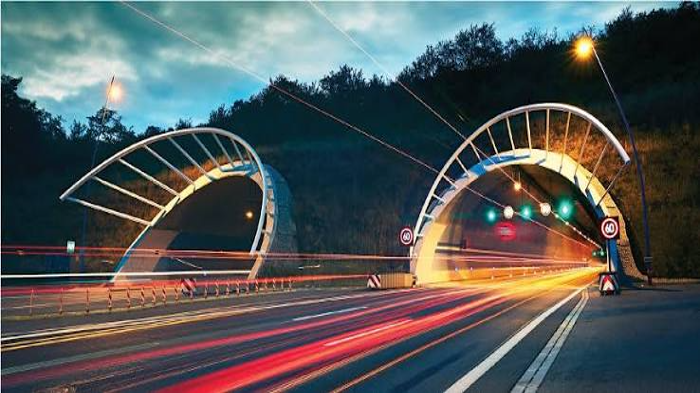
India’s expanding network of bridges, tunnels, expressways and modern rail services is reshaping connectivity across regions, cutting travel times and opening faster routes through challenging terrain, according to a government factsheet released on Thursday.
Major bridges have shortened journeys by replacing long river crossings with direct road and rail links. The rail-cum-road bridge over the Brahmaputra, for instance, has transformed connectivity between Dhemaji and Dibrugarh, reducing journeys that once took almost an entire day to around one to two hours.

The Mumbai Trans Harbour Link has established a direct connection between Mumbai and Navi Mumbai, bringing the journey time down to around 20 minutes.
Similarly, the Kosi Rail Mahasetu has reduced the rail journey between Nirmali and Saraigarh from around eight hours to just 30 minutes. The rail distance has also been brought down from approximately 300 km to 22 km.
The 200-metre Sisseri River Bridge has cut travel time between Pasighat and Roing by around five hours, improving connectivity between the Dibang Valley and Siang regions.
Tunnels are also enabling more direct routes through some of the country’s most difficult geographical terrain.
The 9.02-km Atal Tunnel bypasses the Rohtang Pass and reduces the Manali-Sarchu distance by 46 km, providing all-weather connectivity to Lahaul-Spiti.
The 9-km Dr Syama Prasad Mookerjee Tunnel bypasses challenging terrain, cutting the travel distance by about 30 km and reducing travel time between Jammu and Srinagar by nearly two hours.
In Arunachal Pradesh, the Sela Tunnel, constructed at an altitude of around 13,000 feet, provides all-weather connectivity along the strategically important Tezpur-Tawang route.
Expressways are similarly changing inter-city travel through shorter alignments, controlled access and higher travel speeds.
The 82-km Delhi-Meerut Expressway has reduced the journey between Delhi and Meerut from around two and a half hours to about 50 minutes. The 213-km Delhi-Dehradun Economic Corridor is expected to bring travel time between Delhi and Dehradun down from more than six hours to around two and a half hours.
The Delhi-Mumbai greenfield expressway is being developed with the aim of reducing travel time between the two cities from roughly 33 hours to around 12 hours.
Rail connectivity is also undergoing a major transformation, with services such as the Vande Bharat Express and India’s first Vande Bharat Sleeper aimed at reducing journey times and improving passenger travel.
The 508-km Mumbai-Ahmedabad High-Speed Rail Corridor, designed for an operational speed of 320 kmph, will connect 12 stations and include India’s first undersea rail tunnel, extending for about 7 km beneath Thane Creek. The first service is targeted for August 2027.
According to the government factsheet, the Union Budget 2026-27 has announced seven High-Speed Rail corridors spanning nearly 4,000 km, with an estimated investment of Rs 16 lakh crore.
Together, these projects are reshaping India’s transport infrastructure by reducing travel distances and journey times while improving connectivity between urban centres, remote regions and strategically important areas.

FUEL to Celebrate 20th Foundation Day and 2nd Convocation in Pune on October 24

Former Russian Test Cosmonaut Nikolai Tikhonov Discusses Space Exploration at Chennai Science Festival

Promised in 30 days, pending after 42: J&K medical interns resume strike

UAE parents urged to check if children truly learn from AI homework

Chennai School Holiday Today: Schools Closed in 5 Tamil Nadu Districts Due to Heavy Rain

Sharjah schools set boundaries for AI use in homework and exams

Former MIT scientist wins $6 million defamation verdict in misconduct dispute

McMahon highlights Trump’s push to return education powers to states

Could smarter energy solutions make data centres more sustainable?

Cambridge and AstraZeneca extend joint PhD programme for three years

FUEL to Celebrate 20th Foundation Day and 2nd Convocation in Pune on October 24
Former Russian Test Cosmonaut Nikolai Tikhonov Discusses Space Exploration at Chennai Science Festival
Promised in 30 days, pending after 42: J&K medical interns resume strike
UAE parents urged to check if children truly learn from AI homework
Chennai School Holiday Today: Schools Closed in 5 Tamil Nadu Districts Due to Heavy Rain
Sharjah schools set boundaries for AI use in homework and exams
Former MIT scientist wins $6 million defamation verdict in misconduct dispute
McMahon highlights Trump’s push to return education powers to states
Could smarter energy solutions make data centres more sustainable?
Cambridge and AstraZeneca extend joint PhD programme for three years
Copyright© educationpost.in 2026 All Rights Reserved.