


AI Growth Must Deliver $6 Trillion Annual Revenue to Match Infrastructure Spending
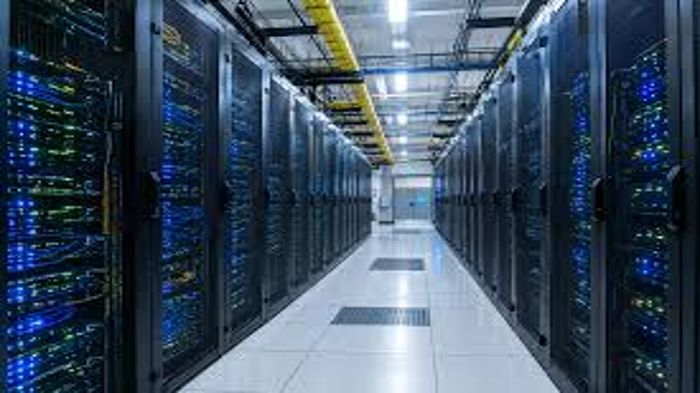
The rapid expansion of artificial intelligence infrastructure could require the AI industry to generate around $6 trillion in annual revenue by 2031 to support the scale of capital being invested, with productivity gains alone unlikely to sustain the economics of the current investment cycle, according to a Bain & Company report.
The report estimates that existing AI applications across consumer and enterprise markets could generate between $1.2 trillion and $1.8 trillion in annual revenue. This would leave a potential gap of around $4.2 trillion that would need to be filled through new AI-driven categories and applications.

Bain identified four broad areas with significant potential for generating additional AI revenue: search and advertising; autonomous vehicles and drones; robotics and digital twins; and emerging applications in areas such as medicine, mental health and energy.
“Access to AI is no longer the differentiator, absorption is,” said Gurpiar Sibia, Partner and India Head of AI, Insights and Solutions Practice at Bain & Company.
Sibia said Indian companies have access to the same frontier AI models as their global counterparts, but competitive advantage would increasingly depend on how quickly businesses redesign workflows, modernise data infrastructure and deploy AI at scale.
David Crawford, chairman of Bain’s global technology practice, said the industry’s focus on employee productivity represented only part of the economic opportunity created by AI.
“The economics of AI infrastructure demand trillions in new revenue beyond productivity gains,” he said, adding that sustaining AI investments could require an increase of around 1 per cent in annual global GDP growth.
The report also highlighted the impact of rising AI computing demand on the hardware and semiconductor industries.
Hardware and semiconductor stocks grew at a compound annual growth rate of 24 per cent between 2020 and 2026, compared with 6 per cent growth for software stocks, according to the analysis.
Custom chips, high-bandwidth memory and advanced packaging have emerged as key growth areas as companies seek to meet the growing computational requirements of AI systems.
At the same time, the rapid adoption of AI is creating new cybersecurity challenges. The report said AI is reducing the time required to execute a typical cyberattack from around four weeks to approximately 18 hours.
The findings underline the scale of the economic transformation expected from AI, while highlighting the need for new applications and revenue streams beyond productivity improvements to support the infrastructure investments being made across the technology ecosystem.

FUEL to Celebrate 20th Foundation Day and 2nd Convocation in Pune on October 24

Former Russian Test Cosmonaut Nikolai Tikhonov Discusses Space Exploration at Chennai Science Festival

Promised in 30 days, pending after 42: J&K medical interns resume strike

UAE parents urged to check if children truly learn from AI homework

Chennai School Holiday Today: Schools Closed in 5 Tamil Nadu Districts Due to Heavy Rain

Sharjah schools set boundaries for AI use in homework and exams

Former MIT scientist wins $6 million defamation verdict in misconduct dispute

McMahon highlights Trump’s push to return education powers to states

Could smarter energy solutions make data centres more sustainable?

Cambridge and AstraZeneca extend joint PhD programme for three years

FUEL to Celebrate 20th Foundation Day and 2nd Convocation in Pune on October 24
Former Russian Test Cosmonaut Nikolai Tikhonov Discusses Space Exploration at Chennai Science Festival
Promised in 30 days, pending after 42: J&K medical interns resume strike
UAE parents urged to check if children truly learn from AI homework
Chennai School Holiday Today: Schools Closed in 5 Tamil Nadu Districts Due to Heavy Rain
Sharjah schools set boundaries for AI use in homework and exams
Former MIT scientist wins $6 million defamation verdict in misconduct dispute
McMahon highlights Trump’s push to return education powers to states
Could smarter energy solutions make data centres more sustainable?
Cambridge and AstraZeneca extend joint PhD programme for three years
Copyright© educationpost.in 2026 All Rights Reserved.