Canadian writer Anne Carson has been awarded the 2026 Nobel Prize in Literature for her distinctive literary work, which combines classical traditions with innovative forms of contemporary writing. A poet, essayist, classicist and translator, Carson has spent more than four decades challenging conventional boundaries between literary genres.
The Nobel recognition honours her “bold and inventive oeuvre” that engages playfully with classical literature while creating new forms for contemporary writing. Throughout her career, Carson has drawn inspiration from ancient Greek literature to explore themes such as desire, love, distance, identity and human relationships.

Born in Toronto in June 1950, Carson spent her childhood in several small Canadian towns, including Stoney Creek, Port Hope and Timmins. Frequent changes of school did not prevent her from developing a lasting interest in literature. She has credited Alice Cowan, her Latin teacher at Port Hope High School, with significantly influencing her intellectual and personal development.
Carson initially became interested in learning Greek because she admired the writer Oscar Wilde. That curiosity developed into a lifelong engagement with classical literature. She later studied Classics at the University of Toronto and completed her doctoral dissertation on the ancient Greek poet Sappho in 1981.
Her first book, Eros the Bittersweet, published in 1986, emerged from her academic research. The work examines the nature of desire through classical literature and presents longing as something shaped by distance, imagination and the gap between what people want and what they can attain.
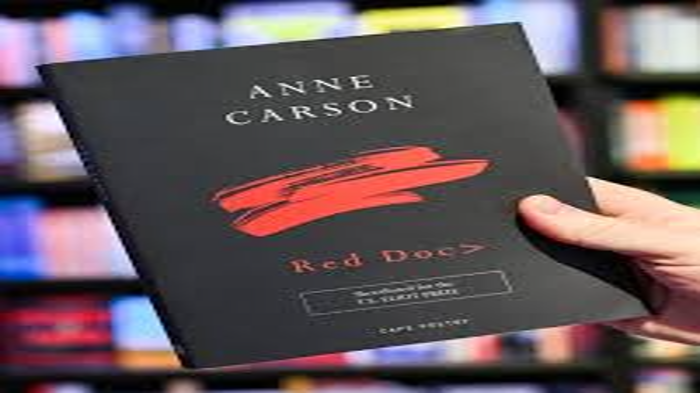
Carson further established her reputation with Autobiography of Red, published in 1998. Described as a novel in verse, the work reimagines the ancient Greek myth of Geryon, a red-winged monster killed by Herakles. Carson transforms the myth into a coming-of-age story involving adolescence, love, sexuality and heartbreak.
Her writing frequently moves between poetry, fiction, scholarship and personal reflection, resisting conventional genre classifications.
Carson’s Nobel recognition highlights how classical literature can remain relevant to contemporary readers when approached through experimentation and fresh perspectives. Her work demonstrates how ancient myths and ideas can be reinterpreted to explore enduring questions about human experience.






.jfif&w=256&q=75)





.webp&w=256&q=75)
