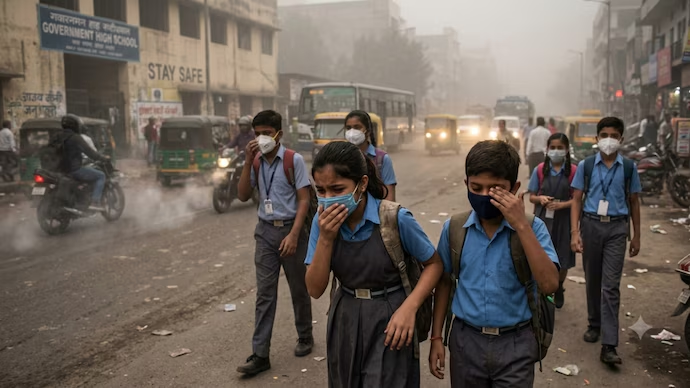
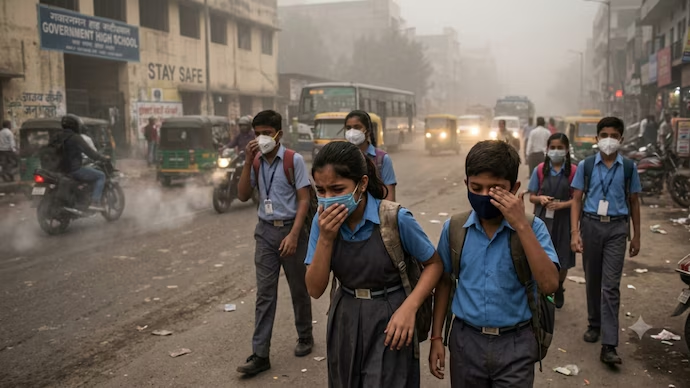
Road-traffic pollution in Gurugram is taking a toll on children’s health and education, with vehicle emissions linked to 94,859 missed school days in 2025, according to a study by the International Council on Clean Transportation (ICCT).
The study estimated that pollution-related illnesses caused children and adolescents aged 5 to 18 to miss a combined 94,859 school days, equivalent to an entire academic year for 431 students. It also attributed 89 new asthma cases to vehicle emissions, or roughly one case every four days.

The findings highlight how traffic pollution affects children beyond their exposure to dirty air, disrupting school attendance and reducing the time they spend in classrooms.
Pollution takes a toll on classroom attendance
Every day missed because of illness can mean lost lessons, disrupted routines and additional pressure on students trying to keep up with their studies.
By measuring school absences alongside health outcomes, the ICCT study has quantified an often-overlooked consequence of air pollution: the loss of learning time.
Road transport accounted for an estimated 6% of PM2.5 exposure and 20% of nitrogen dioxide exposure within the Municipal Corporation of Gurugram area in 2025, the study found.
The report also estimated that 41% of the municipal area exceeded the World Health Organization’s annual guideline for PM2.5 from all sources.
Children are particularly vulnerable to air pollution because their lungs and immune systems are still developing. Their exposure can have consequences for both their immediate health and long-term well-being.
“Children are particularly vulnerable to health impacts of air pollution, with road transport an important contributor,” said Moorthy Nair, an ICCT researcher and co-author of the study.
Private cars account for a major share of emissions
Private cars emerged as the largest source of road-transport emissions in Gurugram. The city had 323 cars for every 1,000 residents, according to the study.
More than 80% of vehicle emissions came from newer Bharat Stage IV and Bharat Stage VI vehicles, indicating that the pollution burden is not confined to older vehicles.
The researchers also accounted for vehicles entering Gurugram from outside the city, highlighting the role of regional traffic in shaping local air quality.
Cleaner transport could reduce health risks
The study assessed several scenarios involving zero-emission school buses, two-wheelers and three-wheelers, as well as a broader transition to zero-emission vehicles.
Electrifying all vehicles registered in Gurugram could deliver about three-quarters of the potential health gains identified in the study, the researchers estimated.
However, the challenge extends beyond vehicles registered within the city. Around 500,000 vehicles enter Gurugram daily from Delhi and other parts of the National Capital Region, making regional coordination important to efforts to reduce transport-related pollution.
The findings underline the educational cost of polluted air. When children fall ill and miss school, they lose valuable classroom time, making cleaner transport not just an environmental priority but also an investment in children’s health and learning.









.webp&w=256&q=75)