


BRICS Summit Puts India at the Forefront of Digital Economic Transformation
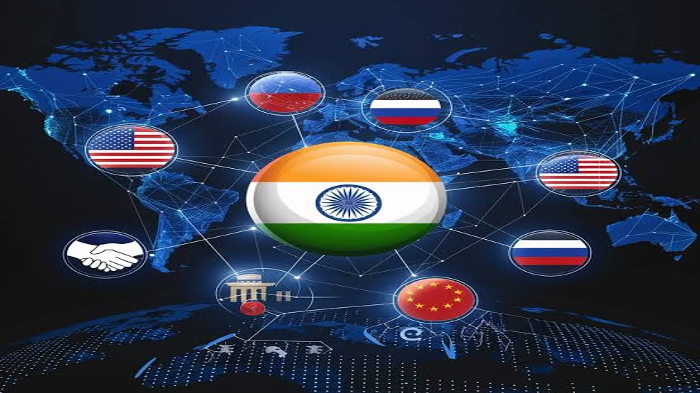
India has emerged as a key proponent of a multipolar digital economy at the 2026 BRICS Summit, promoting a model in which countries retain control over their national digital systems while making them increasingly interoperable.
The New Delhi Declaration highlighted the importance of sovereign digital ecosystems, interoperable Digital Public Infrastructure (DPI) and artificial intelligence (AI) within the BRICS development agenda. It also welcomed work on a BRICS DPI repository and pilot projects, while recognising the Digital BRICS Forum and the Focus Group on Digital Public Infrastructure.

The approach is particularly significant for emerging economies seeking access to foreign technologies without becoming dependent on a single supplier or technology ecosystem. Interoperability would allow countries to maintain their own systems while using common standards and interfaces to connect with others.
India's DPI ecosystem, including Aadhaar, UPI, DigiLocker and consent-based data-sharing systems, provides an example of nationally governed digital infrastructure that can support both public and private-sector services.
India’s digital diplomacy strengthens strategic autonomy
India has increasingly promoted its DPI approach internationally. The government has said it has signed cooperation agreements on India Stack and DPI with 24 countries, covering areas such as digital identity, payments, data exchange and public-service delivery.
The model gained wider multilateral recognition during India's G20 presidency in 2023 and is now receiving greater attention within BRICS. The grouping brings together countries with different political systems, currencies and technological capabilities, making complete digital harmonisation difficult.
Instead, interoperability could allow national payment systems to connect without replacing one another, while digital credentials could potentially be verified across borders and data could be exchanged under agreed governance frameworks.
Such an architecture also aligns with India's emphasis on strategic autonomy. India can maintain control over critical national digital infrastructure while cooperating with different technology ecosystems, including those associated with the US, China, Europe and other partners.
For developing economies, this flexibility could be particularly valuable as they increasingly rely on foreign providers for cloud computing, semiconductors, AI models and telecommunications equipment. The emerging BRICS approach therefore seeks to promote digital cooperation without requiring countries to surrender technological or national control.

Delhi Police may seek further custody of CJP leaders Saurav Das, Ashutosh Ranka

SBI probes data leak after personal details in 3,897 customer records surface on dark web

Chennai Government Schools Face Drug Abuse Concerns as Teachers Call for Stronger Action

FUEL to Celebrate 20th Foundation Day and 2nd Convocation in Pune on October 24

Former Russian Test Cosmonaut Nikolai Tikhonov Discusses Space Exploration at Chennai Science Festival
Delhi Police may seek further custody of CJP leaders Saurav Das, Ashutosh Ranka
SBI probes data leak after personal details in 3,897 customer records surface on dark web

Sharjah schools set boundaries for AI use in homework and exams

Former MIT scientist wins $6 million defamation verdict in misconduct dispute

McMahon highlights Trump’s push to return education powers to states

Delhi Police may seek further custody of CJP leaders Saurav Das, Ashutosh Ranka
SBI probes data leak after personal details in 3,897 customer records surface on dark web
Chennai Government Schools Face Drug Abuse Concerns as Teachers Call for Stronger Action
FUEL to Celebrate 20th Foundation Day and 2nd Convocation in Pune on October 24
Former Russian Test Cosmonaut Nikolai Tikhonov Discusses Space Exploration at Chennai Science Festival
Delhi Police may seek further custody of CJP leaders Saurav Das, Ashutosh Ranka
SBI probes data leak after personal details in 3,897 customer records surface on dark web
Sharjah schools set boundaries for AI use in homework and exams
Former MIT scientist wins $6 million defamation verdict in misconduct dispute
McMahon highlights Trump’s push to return education powers to states
Copyright© educationpost.in 2026 All Rights Reserved.