


The state will introduce age-based admission criteria in phases, requiring children to meet prescribed age limits by June 30, with the Class 1 rule taking effect in 2030–31.
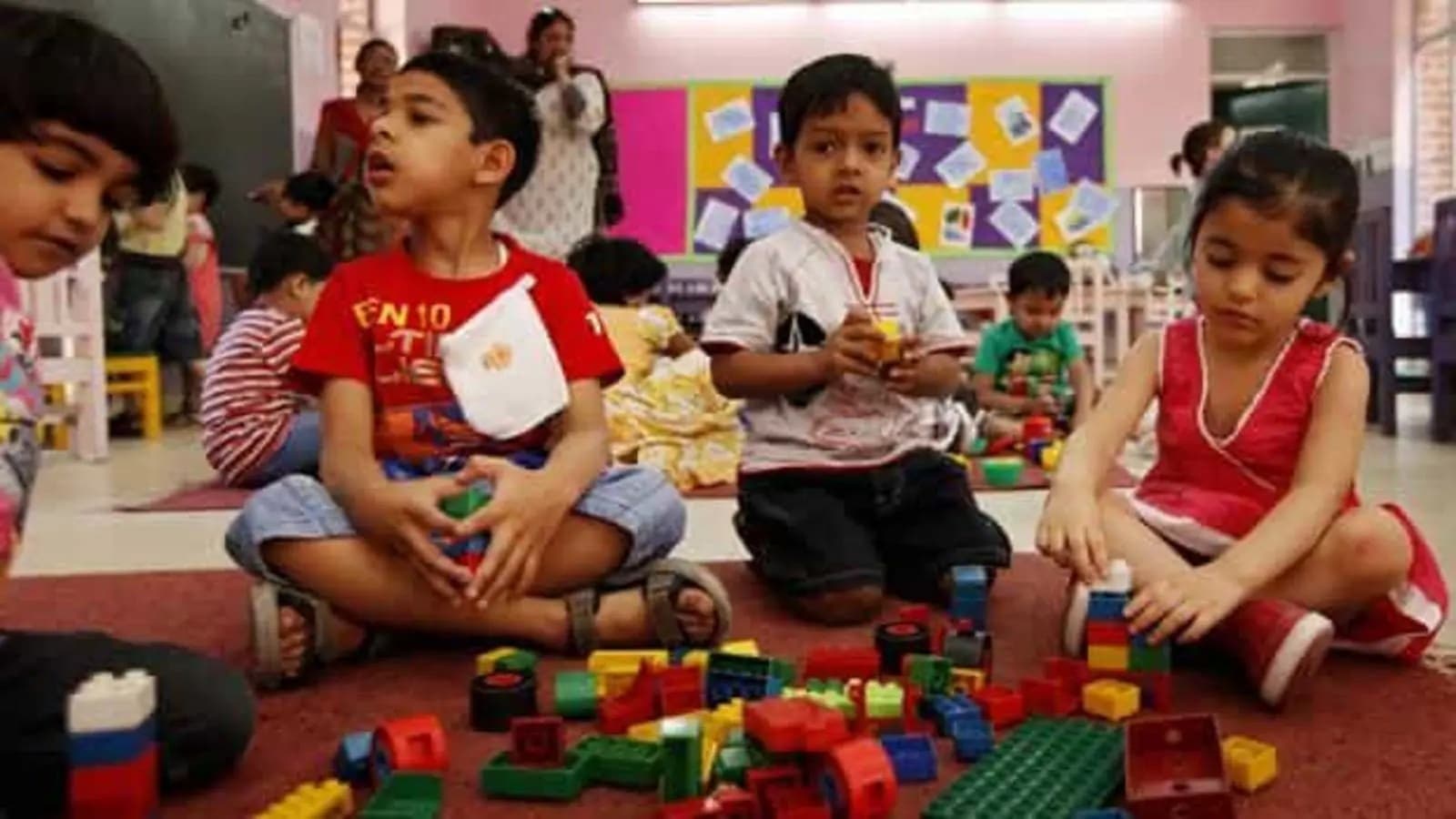
The Maharashtra government has introduced a phased age-based admission policy for nursery, kindergarten (KG) and Class 1, aiming to establish uniform eligibility criteria across schools affiliated with different education boards.
Under the new rules, children must be at least three years old for nursery admission from the 2027–28 academic year. The minimum age for Junior KG will rise to four years from 2028–29, followed by five years for Senior KG from 2029–30. The minimum age of six years for Class 1 admission will take effect from 2030–31.

The School Education Department issued a Government Resolution (GR) on October 15, 2026, setting out the new requirements. The policy aligns with the National Education Policy (NEP) 2020 and the Centre's recommendations on the appropriate age for entry into Class 1.
According to the resolution, a child's age will be calculated as of June 30 of the relevant admission year. The revised criteria will be introduced in stages to help schools and families adjust to the new admission structure.
The minimum age requirements will come into effect according to the following schedule:
| Class | Minimum admission age | Academic year of implementation |
|---|---|---|
| Nursery / Balvatika 1 | 3 years | 2027–28 |
| Junior KG / Balvatika 2 | 4 years | 2028–29 |
| Senior KG / Balvatika 3 | 5 years | 2029–30 |
| Class 1 | 6 years | 2030–31 |
The phased rollout means that the six-year minimum age for Class 1 will not become mandatory under the new schedule immediately in 2027. Instead, the policy gradually establishes the required age at each preceding stage of early education.
Under the new policy, children must have completed the prescribed minimum age by June 30 of the year in which they seek admission.
For example, a child applying for nursery in the 2027–28 academic year must have turned three by June 30, 2027, to satisfy the standard age requirement.
The common cut-off date is intended to reduce confusion arising from different admission calendars and age-calculation practices followed by schools.
Parents should check the applicable admission notice and the child's date of birth before submitting an application.
Until now, schools affiliated with different boards, including the Maharashtra State Board, Central Board of Secondary Education (CBSE), Indian Certificate of Secondary Education (ICSE) and International Baccalaureate (IB), have followed varying age requirements and cut-off dates.
The state government's new framework aims to bring greater consistency to admission eligibility across these systems, particularly at the foundational stage of education.
The policy also addresses the absence of a uniform minimum-age requirement for pre-primary classes in the earlier framework.
By establishing a common age progression from nursery to Class 1, the government aims to ensure that children enter formal schooling at an appropriate developmental stage.
The government has clarified that the revised age criteria will not apply to students already enrolled in nursery through Class 1 during the 2026–27 academic year.
Regular students who have passed the preceding class at a recognised school will also be exempt from the new age requirements when moving to the next higher class.
This provision is intended to prevent children already progressing through the school system from facing admission difficulties solely because of the revised age policy.
Parents of children currently enrolled in school should nevertheless follow the instructions issued by their respective institutions for promotion and admission formalities.
The resolution allows school heads to grant a limited relaxation of up to 15 days in the minimum or maximum age requirement for admissions from nursery through Class 1.
The provision offers some flexibility in cases where a child falls just outside the prescribed age range. However, the relaxation is limited and should not be treated as an automatic exemption for every applicant.
Parents should consult the school administration about the procedure and applicable conditions if their child narrowly misses the required age cut-off.
The revised admission framework follows the foundational-stage structure outlined in the National Education Policy 2020, which emphasises early childhood care and education and a developmentally appropriate transition into formal schooling.
The policy places nursery and kindergarten within a structured progression leading to Class 1 at the age of six.
Maharashtra's phased implementation is designed to provide schools and families with time to adapt to the revised requirements while maintaining continuity for students already enrolled.
The School Education Department has also indicated that further admission instructions will be issued through the Directorate of Primary Education in Pune.
Parents planning nursery, KG or Class 1 admission in Maharashtra should keep the following points in mind:
Check the minimum age required for the relevant class and academic year.
Calculate the child's age as of June 30 of the admission year.
Verify the school's admission notice and the documents required for registration.
Ask the school about the limited 15-day age relaxation, if applicable.
Follow official state education department notifications for further instructions.
The revised rules will affect new admissions in stages beginning in 2027–28. Families should therefore check the implementation year for their child's intended class rather than assuming that all age limits will change at once.

DU VC asks DUSU leaders to lead drug-free campus campaign, proposes wellness centers

University of Jordan retains place among Arab region’s top 10 in QS rankings 2027
.jpg&w=256&q=75)
From Class 8 to hospital owner: Rajasthan Police expose alleged fake doctor registration

Goldsmiths strike drags on for 130 days, becoming longest in UK university history

ENTOD Pharmaceuticals Partners with DPGU and BNCP to Advance Pharmaceutical Research
From Class 8 to hospital owner: Rajasthan Police expose alleged fake doctor registration

Who will lead Keralam's universities? Government begins steps to appoint permanent VCs
%20(1)%20(1).jpeg&w=256&q=75)
Why does cracking JEE Advanced depend on coaching? IIT Kanpur Director calls for a revamp
.jpg&w=256&q=75)
NEET-PG 2026 answer key row: Supreme Court seeks NBEMS response on missing question papers
.png&w=256&q=75)
42 Iraqi universities feature in QS Arab Region University Rankings 2027

DU VC asks DUSU leaders to lead drug-free campus campaign, proposes wellness centers
University of Jordan retains place among Arab region’s top 10 in QS rankings 2027
From Class 8 to hospital owner: Rajasthan Police expose alleged fake doctor registration
Goldsmiths strike drags on for 130 days, becoming longest in UK university history
ENTOD Pharmaceuticals Partners with DPGU and BNCP to Advance Pharmaceutical Research
From Class 8 to hospital owner: Rajasthan Police expose alleged fake doctor registration
Who will lead Keralam's universities? Government begins steps to appoint permanent VCs
Why does cracking JEE Advanced depend on coaching? IIT Kanpur Director calls for a revamp
NEET-PG 2026 answer key row: Supreme Court seeks NBEMS response on missing question papers
42 Iraqi universities feature in QS Arab Region University Rankings 2027
Copyright© educationpost.in 2026 All Rights Reserved.