


The HP Futures 2026 survey of 758 Indian students found that learners remain optimistic about AI-driven career opportunities but want education to continue developing critical thinking, creativity and foundational knowledge.
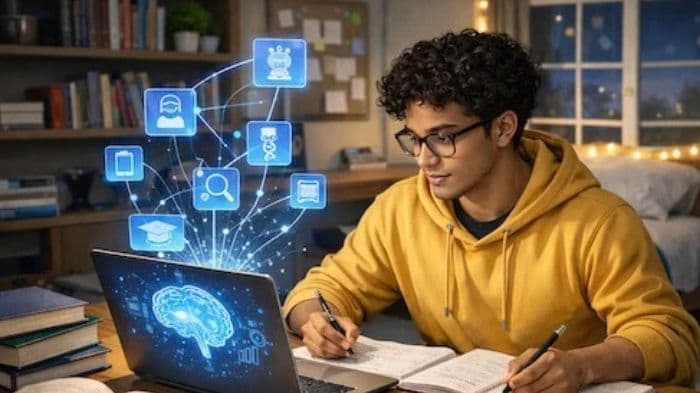
A majority of Indian students are concerned that artificial intelligence (AI) may help them complete academic tasks faster without necessarily improving how deeply they understand or retain what they learn, according to the HP Futures 2026 survey.
The survey found that 82% of the 758 Indian students surveyed were concerned about this trade-off between speed and deeper learning.

The findings form part of a global survey covering more than 6,000 students and raise questions about how schools, colleges and universities should integrate AI into teaching, learning and assessment.
The findings also point to a distinction in how students view the technology. While AI tools can help learners summarise material, explain unfamiliar concepts and retrieve information quickly, students continue to value conventional study methods when their goal is to remember what they have learned.
The survey's findings do not establish that AI use directly reduces learning or memory. They reflect students' concerns and reported preferences rather than measured changes in academic performance.
Students balance AI use with traditional study methods
The survey found that students continue to rely on methods such as handwriting notes and printing study material when they want to retain information. Separate reporting on the findings put the share preferring printed or handwritten notes at 42%, compared with 17% who preferred AI-generated summaries.
The figures suggest that students do not necessarily view AI and conventional study techniques as mutually exclusive. Digital tools can offer quick explanations or help organise large amounts of information, while reading, writing notes and practising independently remain part of students' learning routines.
However, the survey does not establish that handwritten notes automatically lead to better outcomes than AI summaries. The effectiveness of a study method can depend on how learners engage with the material, revise it and apply their understanding.
The findings nevertheless raise a challenge for educational institutions: how can AI be used to support learning without making the completion of an assignment a substitute for understanding its subject?
Indian students remain optimistic about AI and jobs
Despite concerns about learning, respondents expressed confidence about AI's role in their professional futures.
Around 78% of Indian students surveyed believed AI would create more career opportunities than it would displace. Another 87% said they were confident about their ability to use AI tools effectively and responsibly in their future careers.
The survey also found that 92% believed their education was preparing them for the workplace.
These responses indicate that concerns about AI-assisted learning do not necessarily translate into pessimism about the technology's employment potential.
Students appear to recognise both the opportunities associated with AI and the importance of retaining skills that cannot be reduced to operating digital tools.
The HP Futures initiative, led by technology company HP in collaboration with the Global Learning Council and the Education Leaders Forum, also brought together 58 leaders from education, policymaking and the future-of-work sectors to consider how education systems can prepare young people for changing career requirements.
Critical thinking and creativity remain important
The survey findings underline the need to develop technical capabilities alongside skills such as critical thinking, creativity, communication and collaboration.
AI proficiency can help students work with emerging technologies, but learners also need to assess the accuracy of information, identify gaps in an argument and make decisions using evidence. These capabilities become particularly important when students use AI-generated explanations or summaries as part of their academic work.
Mayank Dhingra, director and global head of education business and strategy at HP, said student perspectives should inform decisions about future curricula and assessment models. He highlighted the concern that students could become more efficient at completing tasks while feeling that they were not learning the material as deeply.
David McQuarrie, chief commercial officer at HP and chair of HP Futures, said educators, policymakers and employers share responsibility for preparing young people for the opportunities and challenges they will encounter throughout their lives and careers.
The report calls for education systems to help students develop lasting capabilities and ensure that these skills are not treated as secondary or extracurricular. It also recommends keeping literacy, numeracy and learning that contributes to students' developing identities at the centre of education.
Creative and hands-on approaches, it says, can help learners build foundational knowledge while developing skills needed in a changing workplace.
Implications for schools and universities
The findings add to the debate over how institutions should respond to the growing use of AI in academic work. The question is not simply whether students should be permitted to use AI, but how institutions can ensure that technology supports rather than replaces the learning process.
Curriculum design and assessment are central to this challenge. Assignments that require students to explain their reasoning, apply concepts to unfamiliar situations or demonstrate practical understanding can help educators assess more than the final output. Clear rules on AI-assisted work can also help students understand when technology may be used and when independent work is expected.
The survey does not prescribe a single model for AI use in education. Its findings instead highlight the importance of maintaining foundational learning while preparing students to use AI responsibly.
For institutions, the task is to equip students for an AI-enabled workplace without losing sight of the knowledge, judgement and independent thinking that education is expected to develop.

UAE schools tighten photo rules to protect children’s privacy
UNC settles 18 federal probes under Trump administration deal

82% of Indian students worry AI may be weakening deep learning, HP survey finds

Delhi Police may seek further custody of CJP leaders Saurav Das, Ashutosh Ranka

SBI probes data leak after personal details in 3,897 customer records surface on dark web
Delhi Police may seek further custody of CJP leaders Saurav Das, Ashutosh Ranka
SBI probes data leak after personal details in 3,897 customer records surface on dark web

Sharjah schools set boundaries for AI use in homework and exams

Former MIT scientist wins $6 million defamation verdict in misconduct dispute

McMahon highlights Trump’s push to return education powers to states

UAE schools tighten photo rules to protect children’s privacy
UNC settles 18 federal probes under Trump administration deal
82% of Indian students worry AI may be weakening deep learning, HP survey finds
Delhi Police may seek further custody of CJP leaders Saurav Das, Ashutosh Ranka
SBI probes data leak after personal details in 3,897 customer records surface on dark web
Delhi Police may seek further custody of CJP leaders Saurav Das, Ashutosh Ranka
SBI probes data leak after personal details in 3,897 customer records surface on dark web
Sharjah schools set boundaries for AI use in homework and exams
Former MIT scientist wins $6 million defamation verdict in misconduct dispute
McMahon highlights Trump’s push to return education powers to states
Copyright© educationpost.in 2026 All Rights Reserved.