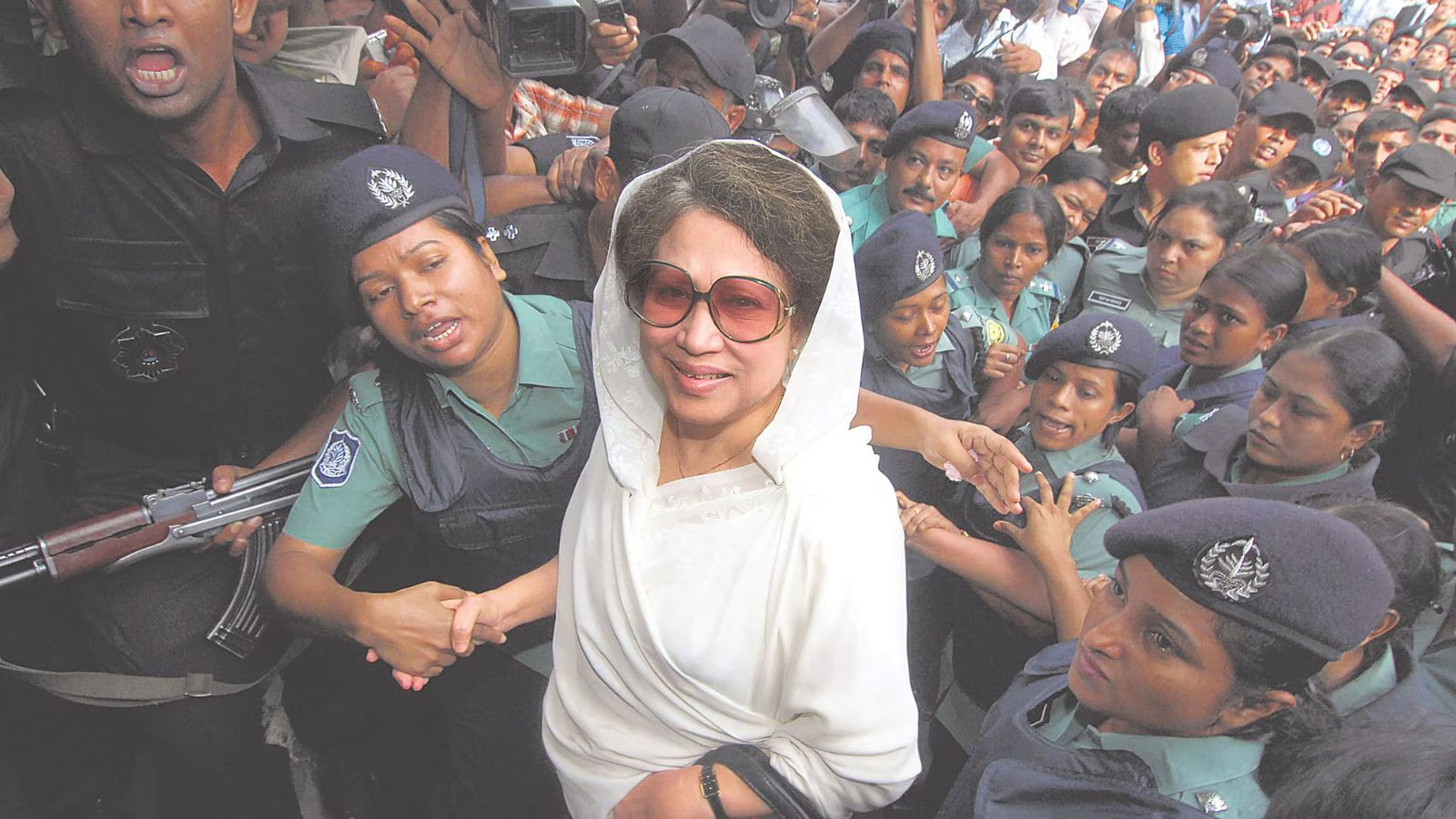
Khaleda Zia, Bangladesh’s first woman prime minister and a dominant figure in the country’s turbulent political landscape for over three decades, died in Dhaka early December 30 morning. She was 80.
The Bangladesh Nationalist Party (BNP) announced her death in a Facebook post, saying Zia passed away at 6 am after prolonged illness. She had been undergoing treatment at Evercare Hospital since November 23 and was suffering from advanced liver cirrhosis, diabetes, arthritis, and chronic heart and chest complications.

Zia’s death comes at a politically sensitive moment, just weeks ahead of Bangladesh’s February 12 national elections, and is expected to reshape the opposition’s leadership dynamics. Her son, Tarique Rahman—who returned to Bangladesh on December 25 after 17 years in exile—is widely expected to assume the BNP chairmanship on a full-time basis. Rahman currently serves as the party’s acting chairman.
A three-time premier who shaped post-military Bangladesh
Khaleda Zia served as Bangladesh’s prime minister three times—between 1991 and 1996, briefly in 1996, and again from 2001 to 2006—emerging as one of the most influential leaders of the post-military era.
Following the fall of military rule, the BNP swept the February 1991 elections, propelling Zia into office as the country’s first woman prime minister. One of her government’s most consequential moves was restoring the parliamentary system through the 12th Constitutional Amendment, reversing years of presidential rule.
Her first term was marked by a strong focus on education and economic restructuring. Primary education was made free and compulsory, schooling for girls was extended free up to Class 10, and the education budget was significantly increased. Her administration also introduced major economic reforms, including value-added tax (VAT), new banking and financial regulations, and steps toward privatization.
Under Zia, Bangladesh joined the General Agreement on Tariffs and Trade (GATT), established an export processing zone near Dhaka, and initiated administrative reforms such as direct mayoral elections and the restructuring of local government institutions.
Political turbulence and contested legacy
Zia’s second term in 1996 was short-lived, following an election boycott that triggered nationwide unrest and led to the introduction of a caretaker government system. The BNP subsequently lost power and moved to the opposition benches.
She returned to office in 2001 after the BNP, leading a four-party alliance, secured a decisive electoral victory. Her third term focused on a 100-day reform programme, infrastructure expansion, foreign investment, and sustaining economic growth. However, her tenure ended in October 2006 amid escalating political unrest over the caretaker government mechanism.
The crisis eventually paved the way for a military-backed interim administration and elections in 2008. During this period, Bangladesh topped Transparency International’s Corruption Perception Index—a statistic that continues to shadow assessments of her later years in power.
Despite the controversies, Khaleda Zia remains a central figure in Bangladesh’s political history—hailed by supporters as a reformist leader who expanded education and economic opportunity, and criticised by detractors for governance failures and political brinkmanship.
Her death marks the end of an era, even as the political forces she shaped prepare for another decisive electoral battle.