The intensifying conflict between Pakistan and Afghanistan has taken a devastating turn, with an airstrike on a Kabul hospital reportedly killing over 400 people, most of them patients undergoing drug rehabilitation.
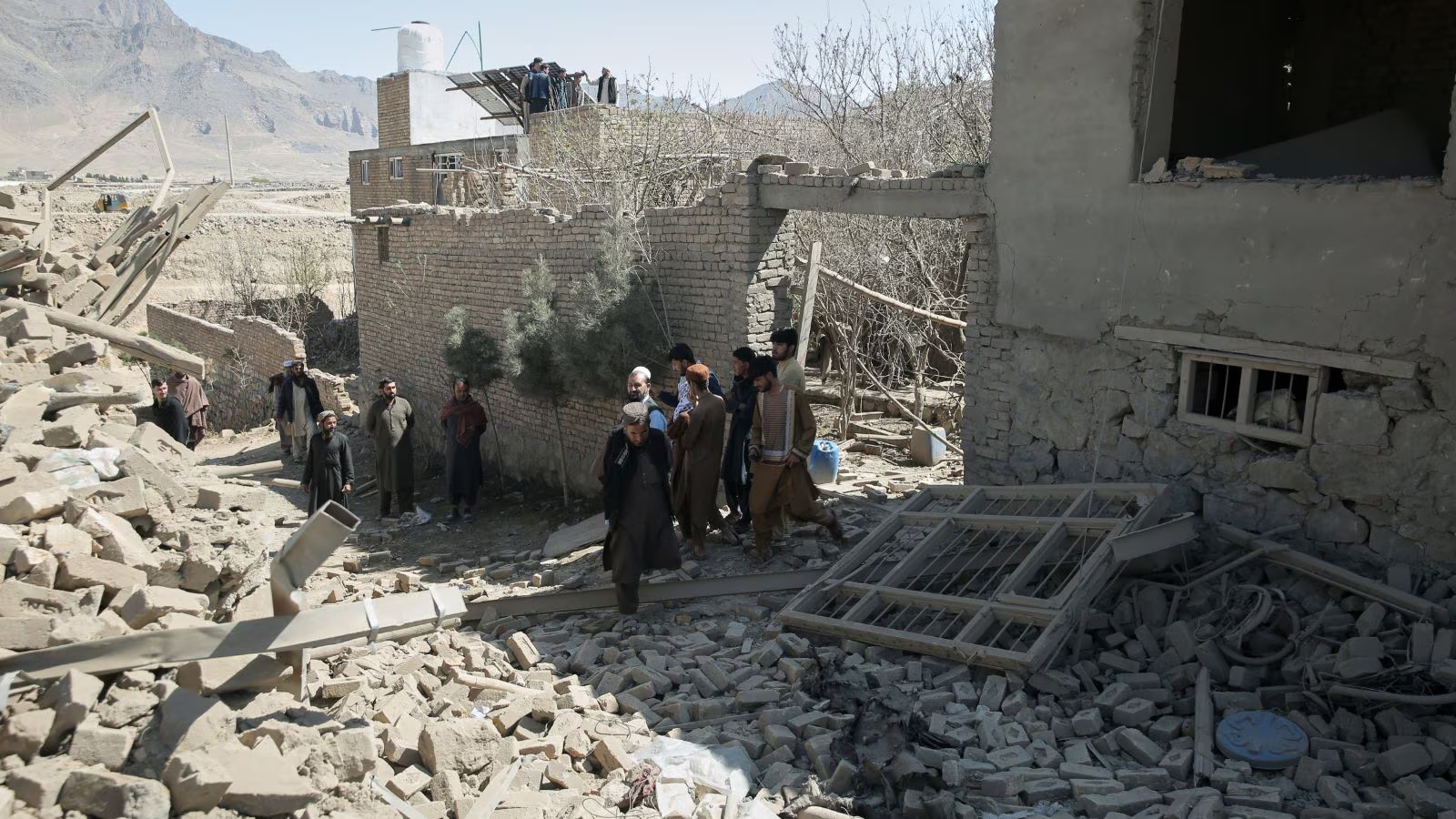
Afghan authorities have accused Pakistan of carrying out the March 16 night strike on the Omar Addiction Treatment Hospital, a 2,000-bed facility in the Afghan capital. According to officials, the attack occurred around 9 PM local time, leaving large sections of the hospital destroyed and at least 250 others injured.

Afghanistan’s deputy government spokesperson Hamdullah Fitrat described the aftermath in stark terms, calling the facility “a hospital of hope turned into a slaughterhouse of dreams,” as images of charred remains circulated online.
Islamabad, however, has firmly rejected the allegations. A spokesperson for Prime Minister Shehbaz Sharif dismissed the claims as baseless, while Pakistan’s Information Ministry maintained that its operations were “precisely targeted at military installations and terrorist infrastructure,” denying any strike on civilian facilities.
Conflict roots deepen as ceasefire collapses
The latest escalation marks a dramatic breakdown of an already fragile relationship. Fighting resumed in late February after Kabul launched cross-border attacks in response to earlier Pakistani airstrikes that Afghan officials said had killed civilians. Those clashes effectively ended a Qatar-brokered ceasefire that had briefly halted months of hostilities.
At the heart of the dispute are long-standing accusations by Pakistan that Afghanistan shelters militant groups, including the Pakistani Taliban and Baloch separatist fighters. Kabul has consistently denied offering safe haven to such groups.
Tensions escalated sharply after Pakistan’s President Asif Ali Zardari accused the Taliban-led administration of crossing a “red line” by deploying drones that injured civilians inside Pakistani territory—triggering a cycle of retaliatory strikes.
Pakistan has since declared it is in “open war” with Afghanistan, a statement that has raised alarm given its status as a nuclear-armed state.
Taliban defiant as global pressure mounts
The Taliban government in Kabul has condemned the hospital strike as a “crime against humanity.” Spokesperson Zabihullah Mujahid accused Pakistan of violating Afghan airspace and deliberately targeting a civilian medical facility.
International efforts to de-escalate the crisis have so far yielded little progress. China has attempted mediation, urging both sides to agree to an immediate ceasefire. Meanwhile, the United Nations Security Council passed a resolution condemning terrorism linked to Afghan territory and extended the mandate of the UN Assistance Mission in Afghanistan (UNAMA) for three months.
Despite these moves, hostilities continue unabated.
A conflict with far-reaching consequences
The stakes extend well beyond the two countries. The region’s instability raises concerns about the resurgence of extremist organizations such as al-Qaeda and the Islamic State, which could exploit any security vacuum created by a prolonged conflict.
Pakistan and Afghanistan share a volatile 2,600-kilometre border, with millions of Afghan refugees residing in Pakistan. A sustained escalation risks triggering a broader regional crisis with significant humanitarian and security implications.
For now, rescue teams in Kabul continue to pull bodies from the rubble of what was once a place of recovery—while calls for restraint grow louder, but remain unanswered.




.jpg&w=256&q=75)





.jpg&w=256&q=75)
