


Paris seeks Kabul’s cooperation to return Afghans living illegally in France, drawing criticism over engagement with a regime accused of systematic rights abuses against women and girls.
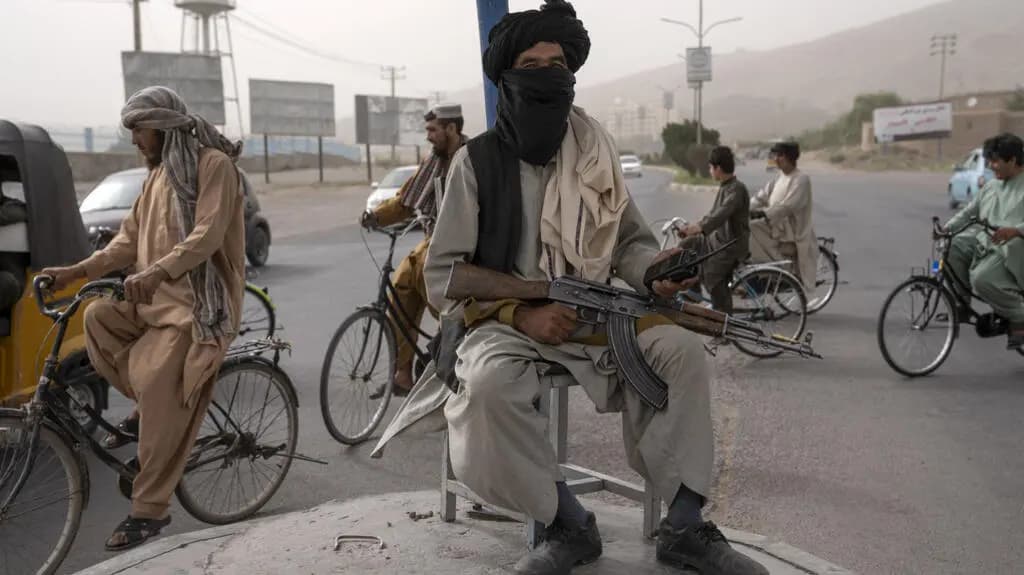
France has confirmed it is holding technical discussions with Afghanistan’s Taliban authorities to facilitate the return of Afghan nationals living illegally in the country, a move that has reignited concerns over European engagement with a regime accused of widespread human rights violations.
French Interior Minister Laurent Nunez told parliament on Monday that the government was seeking Kabul’s cooperation to deport a number of Afghans who do not have legal status in France. "We are trying to obtain the possibility to return a certain number of Afghans who are in an irregular situation. These are technical discussions," Nunez said, adding that other European countries, including Germany, were pursuing similar arrangements.

France does not formally recognise the Taliban administration, which took power in 2021, nor does it maintain diplomatic relations with the authorities in Kabul. However, it has joined around 20 European Union countries, including Germany, Belgium and Sweden, in efforts to accelerate the return of Afghan nationals, particularly those convicted of criminal offences.
Nunez said some Afghans could pose a threat to public order, making their removal a government priority. "A certain number" of Afghans "might constitute threats to public order, so it is my priority to see that we are able to deport these people," he told lawmakers.
The announcement drew sharp criticism from Lea Balage El Mariky, a lawmaker from the Ecologists party, who accused the government of moving towards normalising relations with a regime she said was committing crimes against humanity through what she described as "gender apartheid".
The controversy comes as international scrutiny of the Taliban's treatment of women and girls continues to intensify. The International Criminal Court has issued arrest warrants for the Taliban's supreme leader, Haibatullah Akhundzada, the head of Afghanistan's Supreme Court and two education ministers over alleged crimes against humanity linked to restrictions imposed on women and girls.
European engagement with Kabul has also faced criticism from human rights organisations. A meeting in Brussels in June brought together a Taliban delegation and officials from 15 EU countries to discuss curbing irregular migration and increasing deportations. The talks drew condemnation from several rights groups and leftwing members of the European Parliament.
In September, UN High Commissioner for Human Rights Volker Turk criticised what he described as a "deafening" international silence over Afghanistan's worsening human rights and humanitarian crisis. He also called for an end to forced returns to the country. Under Taliban rule, girls above the age of 12 have been barred from continuing their education, while women have been excluded from universities and higher education institutions.
France's efforts to secure Kabul's cooperation on deportations therefore place migration enforcement at the centre of a wider debate over how European governments should engage with Taliban authorities while maintaining their position on Afghanistan's human rights record.

UAE schools to begin three week winter break on December 14

UAE Indian schools light up campuses with Diwali celebrations

Dubai tightens approval rules for Islamic education teachers in early years

France holds talks with Taliban on deporting Afghan migrants

Canada finds thousands of OSAP applications linked to one IP address
UAE schools to begin three week winter break on December 14
UAE Indian schools light up campuses with Diwali celebrations

From digital pets to AI robots: How Hong Kong schools are reshaping classroom learning

Why Are Nearly 2,000 MBBS Seats Still Vacant After NEET Counselling 2026?

King's College London, Cranfield University agree to merge in August 2027

UAE schools to begin three week winter break on December 14
UAE Indian schools light up campuses with Diwali celebrations
Dubai tightens approval rules for Islamic education teachers in early years
France holds talks with Taliban on deporting Afghan migrants
Canada finds thousands of OSAP applications linked to one IP address
UAE schools to begin three week winter break on December 14
UAE Indian schools light up campuses with Diwali celebrations
From digital pets to AI robots: How Hong Kong schools are reshaping classroom learning
Why Are Nearly 2,000 MBBS Seats Still Vacant After NEET Counselling 2026?
King's College London, Cranfield University agree to merge in August 2027
Copyright© educationpost.in 2026 All Rights Reserved.