In a significant policy shift, the Ministry of Civil Aviation has withdrawn temporary caps on domestic airfares, signaling a return to normalcy in India’s aviation sector after months of disruption.
The decision, effective March 23, 2026, comes as flight operations and capacity levels have stabilized across the country. The fare caps were originally imposed on December 6, 2025, in the wake of widespread cancellations by IndiGo, which had triggered an unprecedented spike in ticket prices.

Officials said the temporary restrictions were aimed at curbing abnormal fare surges and protecting passengers during a period of constrained supply. With the situation now under control, the government has stepped back—but not without a clear warning.
The Ministry has directed airlines to act responsibly, ensuring fares remain reasonable, transparent, and aligned with market dynamics. It stressed that passenger interest must remain central to pricing decisions.
At the same time, authorities have made it clear that any excessive or unjustified increase in ticket prices—particularly during peak travel periods or operational disruptions—will invite strict scrutiny. Airfare trends will continue to be monitored in real time, with the government reserving the right to step in if necessary.
“The option to reintroduce fare controls or take other regulatory measures remains open in public interest,” the Ministry noted, underlining its readiness to intervene if market behaviour turns adverse.
The order has been issued with the approval of the competent authority and shared with the Director General of Civil Aviation, which has been tasked with closely tracking fare movements across the sector.
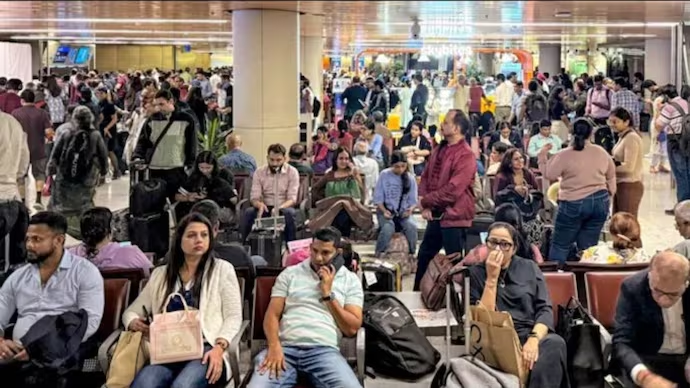
The now-withdrawn caps were part of emergency measures introduced after one of the most severe aviation disruptions in recent years. The crisis, triggered by a pilot rostering issue at IndiGo, led to thousands of flight cancellations and a sharp surge in ticket prices on key routes, prompting swift government intervention.
Under the capped regime, one-way economy fares were restricted to a maximum of ₹7,500 for routes up to 500 km. Flights between 1,000 km and 1,500 km—such as the busy Delhi–Mumbai sector—were capped at ₹15,000, while fares for routes exceeding 1,500 km could not go beyond ₹18,000.
With the caps now lifted, the spotlight shifts back to airlines—and their ability to balance commercial interests with consumer trust.



.jpg&w=256&q=75)



.jfif&w=256&q=75)