A fresh controversy has erupted around the historic Delhi Gymkhana Club after residents occupying accommodation within the club premises were issued notices to vacate, reigniting long-standing debates around privilege, public land and the role of elite institutions in modern India.
The move has sharply divided opinion in Delhi’s bureaucratic, diplomatic and social circles.

For some long-time members and families associated with the club, the notices represent the dismantling of an old institutional culture that has existed in Lutyens’ Delhi for decades. Others argue the decision was inevitable, saying residential occupation inside one of the country’s most exclusive clubs had increasingly become difficult to justify.
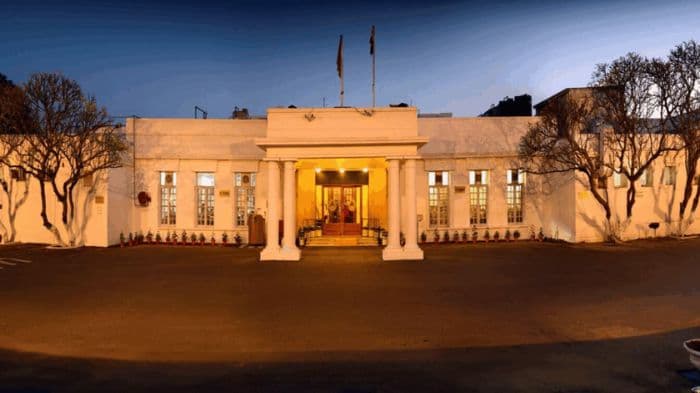
Located near India Gate in the heart of the national capital, the Delhi Gymkhana Club has historically been associated with senior civil servants, military officials, diplomats and influential political figures. Originally established during the British era as the Imperial Delhi Gymkhana Club, the institution evolved after Independence into one of the capital’s most powerful social spaces.
Over the years, however, the club has also repeatedly found itself at the centre of governance disputes, membership controversies and questions around exclusivity.
The latest flashpoint revolves around residential quarters located within the club premises. According to reports, notices were recently issued asking occupants to vacate the accommodation, triggering concern among residents who say families have lived there for decades.
Some residents described the move as “tragic”, arguing that the quarters were tied to the institution’s social history and long-standing community culture. For many associated with the club, Gymkhana has functioned not merely as a recreational institution but also as a tightly knit social ecosystem shaped over generations.
But critics see the issue very differently.
The eviction notices have also revived criticism of elite clubs occupying prime public land while operating within highly exclusive structures. Questions around access, transparency and institutional privilege have increasingly surrounded such clubs in recent years, especially as conversations around urban inequality and public accountability have intensified.
Several observers also pointed out that the controversy reflects a broader shift underway in Delhi’s power circles, where old colonial-era institutions are facing growing scrutiny over how public resources and state-linked spaces are used.
The Centre has, over the past few years, tightened oversight over multiple institutions and clubs functioning on government-controlled land in the capital. The Gymkhana Club itself has previously witnessed administrative intervention and governance-related disputes involving elections, management and operational control.
The latest development therefore goes beyond a housing dispute.
It taps into a larger tension between heritage and reform — between preserving the culture of old institutions and questioning whether those structures continue to fit within a rapidly changing urban and political environment.
So far, no detailed public statement has been issued by the club management explaining how the transition process will unfold or how many residents are expected to be affected.
But the strong reactions following the notices show that the issue has struck a nerve far beyond the club itself.
For some, it marks the slow fading of old Delhi’s elite institutional culture. For others, it represents a long-overdue correction in how privilege and public space intersect in the capital.






.png&w=256&q=75)