Bengaluru is on the cusp of a major shift in how it manages its water, with the Bengaluru Water Supply and Sewerage Board (BWSSB) set to launch one of Asia’s largest integrated command centres powered by Artificial Intelligence.
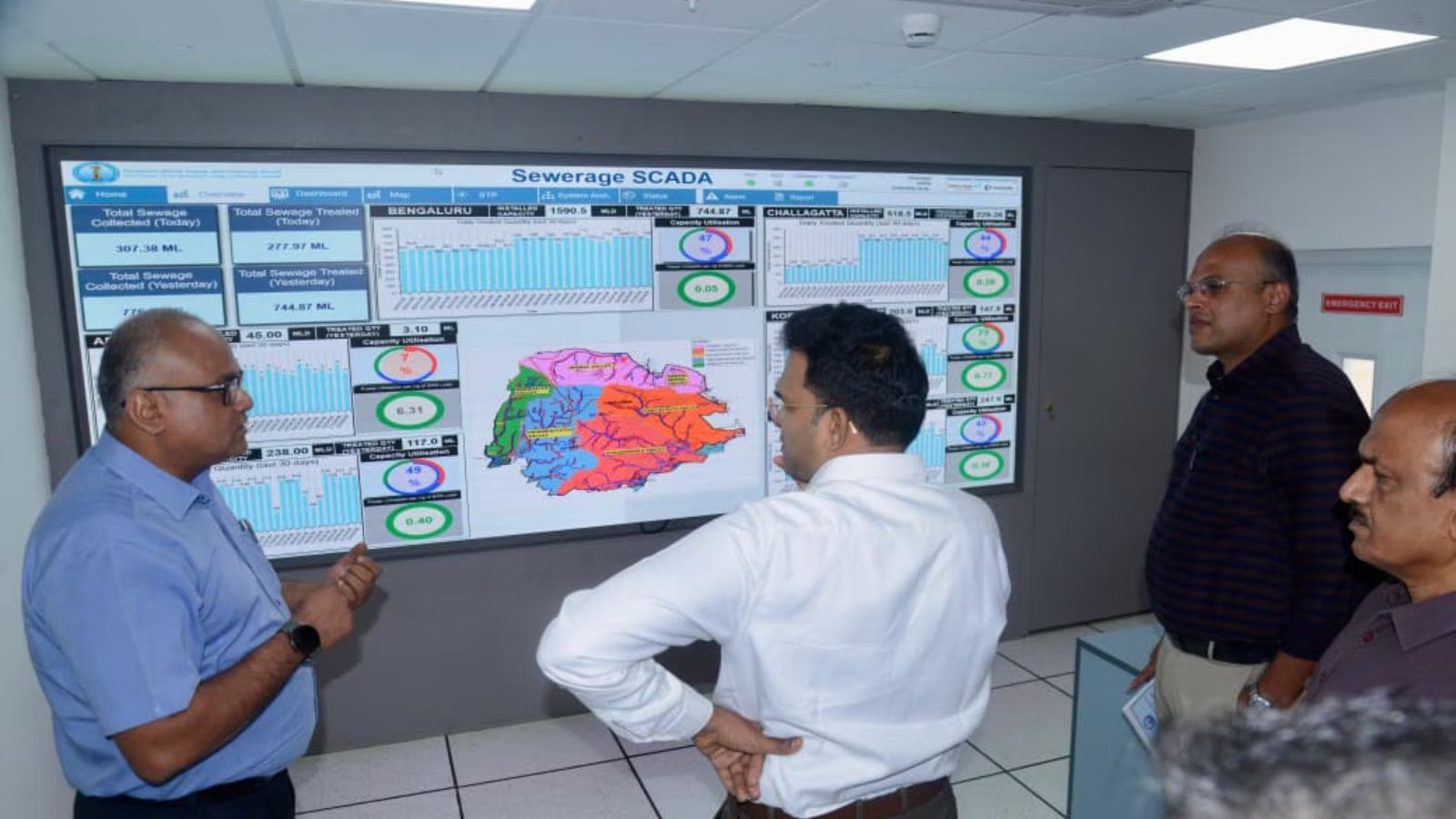
Housed at Shimsha Bhavan in Jayanagar, the Integrated Intelligent Water and Sewerage Management Centre—developed under the Supervisory Control and Data Acquisition (SCADA) system—has been built with financial assistance from the Japan International Cooperation Agency (JICA). The facility is expected to be inaugurated soon by Deputy Chief Minister D K Shivakumar.

At its core, the command centre will function as a real-time control hub, monitoring and managing the city’s drinking water and sewerage systems. It will oversee the 775 MLD supply under Cauvery Stage 5, which serves nearly 110 villages, while also integrating Bengaluru’s wider water distribution and wastewater networks.
A defining feature of the system is its use of AI to forecast water demand across different parts of the city. By analysing consumption patterns, the platform can anticipate needs and help authorities respond faster. It will also detect pipeline leakages instantly—an intervention aimed at reducing the city’s significant water losses, often termed Unaccounted-for Water (UFW) or Non-Revenue Water (NRW).
Currently, Bengaluru loses nearly 28% of its water supply to leaks and theft. Officials see the new system as a crucial step towards building a digital twin of the city’s entire water network, allowing more precise control and planning.
The command centre is linked to major water treatment plants at T K Halli, Harohalli and Tataguni, along with ground-level storage tanks across the city. It continuously tracks key water quality indicators such as chlorine levels, pH balance, total dissolved solids (TDS) and turbidity. If contamination is detected, the system triggers real-time alerts, enabling rapid response.
Beyond drinking water, the platform also integrates all sewage treatment plants in Bengaluru. It monitors compliance with National Green Tribunal (NGT) standards and keeps track of biogas generation, adding an environmental oversight layer to its operations.
The project also brings in predictive maintenance by combining data from public borewells, GIS mapping and smart meters connected through IoT technology. This allows early warnings of potential equipment failures, helping reduce downtime, operational costs and energy use.
BWSSB officials say the initiative marks a transition towards data-driven governance in urban water management—one that promises greater transparency, efficiency and reliability in a city grappling with rising demand and ageing infrastructure.
Calling it a milestone, BWSSB chairman Ram Prasath Manohar said the SCADA centre would usher in a new phase in how Bengaluru manages its water and wastewater systems, blending scale with advanced technology.