


A series of alleged assaults, vandalism and viral videos during this year's Kanwar Yatra has sparked fresh debate over public safety, with religious leaders, political figures and authorities weighing in as police take action in multiple incidents.
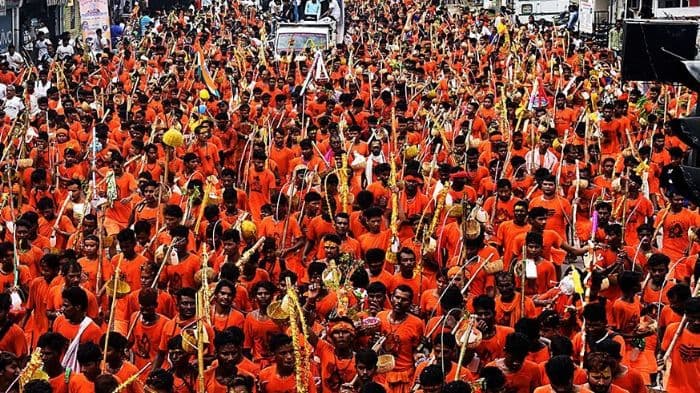
Image for Representation. (File pic)
The annual Kanwar Yatra, one of India's largest religious pilgrimages, has once again come under scrutiny after a series of alleged incidents involving violence, vandalism and public disorder during this year's procession triggered widespread debate over law and order.
While millions of Kanwariyas have been undertaking the pilgrimage peacefully across northern India during the holy month of Shravan, several isolated incidents reported over the past few weeks have dominated public discourse.

Videos circulating on social media have shown alleged assaults, damage to vehicles, altercations with police personnel and instances of unruly behaviour, prompting criticism from opposition leaders, religious figures and civil society.
The incidents have also led to police action in several cases, with authorities reiterating that unlawful behaviour will not be tolerated irrespective of religious affiliation.
Adding to the debate on Aug 6, All India Imam Association President Maulana Sajid Rashidi said those engaging in violence or unlawful activities should not be described as devotees of Lord Shiva.
Speaking to IANS, Rashidi said people consuming intoxicants on public roads, attacking police personnel, damaging public property, assaulting civilians or obstructing ambulances could not be called "Shiv Bhakts."
At the same time, he clarified that his remarks were not aimed at all Kanwariyas, acknowledging that many devotees undertake the pilgrimage with devotion and discipline.
Rashidi also questioned what he described as differing standards regarding the use of public roads for religious activities, referring to the long-running debate over offering namaz in public spaces.
His comments come amid growing attention on several incidents reported during this year's yatra. In recent weeks, videos allegedly showing Kanwariyas damaging vehicles after road accidents or disputes, confronting police personnel and engaging in unruly behaviour have gone viral, drawing criticism on social media and calls for stricter enforcement of the law.
In some cases, police have registered FIRs and arrested those accused of vandalism or assault.
The cleric also referred to a viral video that he claimed showed a Kanwariya offering a cigarette to a religious idol, calling such behaviour unacceptable and saying those involved should not be associated with the pilgrimage.
The Kanwar Yatra sees millions of devotees collect holy water from the Ganga and carry it over long distances to offer at Shiva temples.
Every year, state governments deploy extensive security arrangements, traffic diversions and emergency services to facilitate the pilgrimage, which passes through several states, including Uttar Pradesh, Uttarakhand, Haryana, Delhi and Bihar.
Authorities have repeatedly appealed to devotees to cooperate with security personnel, follow traffic advisories and ensure that the religious event remains peaceful. Police have maintained that while the pilgrimage itself is being conducted peacefully by the overwhelming majority of devotees, any incidents of violence, vandalism or disruption will be dealt with in accordance with the law.
The recent incidents have nevertheless reignited a broader conversation on balancing the facilitation of large religious gatherings with the need to maintain public order, protect commuters and ensure that isolated acts of violence do not overshadow an event attended peacefully by millions each year.
Why millions undertake the Kanwar Yatra every year
The Kanwar Yatra, observed during the Hindu month of Shravan, is one of India's largest annual religious pilgrimages, with millions of devotees, known as Kanwariyas, travel on foot to collect holy water from the Ganga and offer it at Shiva temples.
The yatra passes through major routes in Uttar Pradesh, Uttarakhand, Delhi, Haryana, Rajasthan, Bihar and Jharkhand, requiring extensive administrative coordination each year.
To ensure its smooth conduct, state governments deploy thousands of police and paramilitary personnel, strengthen CCTV and drone surveillance, establish integrated control rooms, impose traffic diversions and increase patrolling along key pilgrimage routes.
Authorities have also registered FIRs and initiated legal action in cases involving violence, vandalism, attacks on public property or obstruction of emergency services, while repeatedly urging devotees to maintain peace and comply with the law.

RMS CET 2026 Registration Closes Tomorrow; Apply for Class 6 and 9 Admissions

Supreme Court Recognises Internet Access as Fundamental Right for Children
Qatar Plans Local Defence Production Hub Amid Rising Gulf Tensions

Blackstone Plans to Double India Investment to $100 Billion

Three FLAME University Professors Feature in 2026 Stanford–Elsevier Top 2% Scientists List
.webp&w=256&q=75)
CCPA reports 3,940 delistings in crackdown on online sale of explosive substances
UGC seeks governors’ intervention as 82 Tamil Nadu institutions face 150 fee-refund complaints
Engineering Must Build Foundations, Not Chase Every Trend: Dr. Arya Kumar Bhattacharya
France protests escalate as Macron rejects minister’s resignation, students block Louvre
France protests turn violent as Paris reports 855 arrests, fresh clashes erupt

RMS CET 2026 Registration Closes Tomorrow; Apply for Class 6 and 9 Admissions
Supreme Court Recognises Internet Access as Fundamental Right for Children
Qatar Plans Local Defence Production Hub Amid Rising Gulf Tensions
Blackstone Plans to Double India Investment to $100 Billion
Three FLAME University Professors Feature in 2026 Stanford–Elsevier Top 2% Scientists List
CCPA reports 3,940 delistings in crackdown on online sale of explosive substances
UGC seeks governors’ intervention as 82 Tamil Nadu institutions face 150 fee-refund complaints
Engineering Must Build Foundations, Not Chase Every Trend: Dr. Arya Kumar Bhattacharya
France protests escalate as Macron rejects minister’s resignation, students block Louvre
France protests turn violent as Paris reports 855 arrests, fresh clashes erupt
Copyright© educationpost.in 2026 All Rights Reserved.