


After a weekend of clashes and looting that led to thousands of arrests, President Emmanuel Macron has rejected Interior Minister Laurent Nuñez’s resignation as questions mount over the police response.
French President Emmanuel Macron has rejected the resignation of Interior Minister Laurent Nuñez following a weekend of violent unrest across the country, as student protesters blocked access to the Louvre museum in Paris on Oct 19.
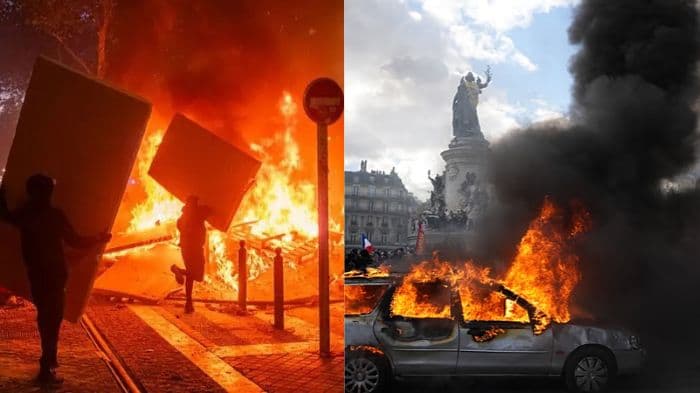
The protests, which began with students raising concerns about deteriorating school conditions, have expanded to include anger over rising living costs and the state of public services. Demonstrations on Oct 17 were followed by clashes, looting and fires in several cities, prompting criticism of the government’s handling of public order.

The Élysée Palace said Macron had declined Nuñez’s resignation and asked him to introduce new measures to tackle rioting. The president also acknowledged failures in anticipating the scale of the demonstrations and gathering intelligence ahead of the unrest.
Prime Minister Sébastien Lecornu was due to convene an interministerial crisis meeting on Monday to assess the damage and coordinate the government’s response.
Students block Louvre as school grievances persist
Student protesters blocked access to the Louvre, standing near the museum’s iconic glass pyramid with a banner highlighting the deterioration of French public services.
The protesters said their action was intended to draw attention to the government’s response to youth demonstrations and its handling of police enforcement. The blockade brought the education-related grievances back into focus as authorities dealt with the aftermath of the weekend’s unrest.
The student movement began weeks earlier, with demonstrators raising concerns about school conditions, including inadequate facilities and problems affecting everyday learning. It subsequently converged with broader protests over inflation, wages and declining public services.
The scale of the movement grew on Oct 17, when approximately 550,000 people took to the streets, according to official estimates. The CGT trade union put the turnout at around 800,000. Although many demonstrations remained peaceful, violence broke out in several cities.
The unrest has revived debate over the government’s handling of student concerns and whether the authorities have offered meaningful responses to the issues that initially brought young people onto the streets.
Nuñez faces scrutiny over police response
Nuñez told France Inter that he had offered to resign because he felt responsible for the events of the weekend. He said security officials had anticipated around 200,000 demonstrators, significantly below the eventual turnout.
The minister acknowledged shortcomings in the preparation for the protests. Macron, however, decided that Nuñez should remain in office and focus on changes to security operations.
The response has drawn criticism from local officials. In an article published by French newspaper Libération, the mayors of Paris, Marseille and Lyon called for an independent inquiry into the handling of the unrest.
Paris Mayor Emmanuel Grégoire, Marseille Mayor Benoît Payan and Lyon Mayor Grégory Doucet questioned why looting in some areas had continued for extended periods without police intervention. They also called for dialogue with protesting high school students.
The mayors said local authorities would need financial assistance to repair public facilities damaged during the violence. They also warned that proposed budget constraints could make it harder for municipalities to fulfil their responsibilities.
Their intervention adds pressure on the national government to explain both its security preparations and how it intends to respond to the grievances behind the demonstrations.
Arrests and damage spread across French cities
The violence on Oct 17 resulted in extensive damage to shops and public buildings. In Limoges, a fire severely damaged the historic city hall, while Marseille’s city hall was briefly entered by protesters. A fire also broke out at a tourist office in Lyon.
Paris experienced looting and clashes in central shopping districts. Police used tear gas and other crowd-control measures as groups of protesters clashed with officers and shops were targeted.
Authorities reported approximately 2,400 arrests nationwide in connection with this weekend's unrest. On Oct 18, fresh tensions continued in Paris, where police reported further arrests and looting.
The government has attributed some of the violence to radical far-left groups and people who joined demonstrations to loot businesses. Officials have also distinguished between peaceful protesters expressing social grievances and those responsible for destruction.
The scale of the damage has left local governments and businesses facing substantial repair costs. The mayors’ demand for a meeting with the prime minister reflects concerns that municipalities cannot shoulder the financial consequences alone.
Macron presses ahead with Gulf visit
Despite the domestic crisis, Macron has continued with a planned three-day visit to the Gulf, beginning in Kuwait on Oct 18. His itinerary also includes the United Arab Emirates, Bahrain and Qatar.
The president said the trip was intended in part to help secure fuel and gas supplies and address pressure on energy prices. The visit is taking place as the French government faces questions over both the unrest and the public services that protesters say have deteriorated.
Macron has called for those responsible for violence and looting to be held accountable while maintaining that peaceful demonstrations and legitimate public grievances must be treated separately from criminal acts.
The immediate challenge for the government is to restore public order while addressing demands that extend beyond policing to schools, living costs and local public services.
The continued student mobilisation at the Louvre suggests that the education-related grievances that helped trigger the protests remain unresolved.

Connecting Talent and Industry Will Define India’s Next Decade

UGC seeks governors’ intervention as 82 Tamil Nadu institutions face 150 fee-refund complaints

Engineering Must Build Foundations, Not Chase Every Trend: Dr. Arya Kumar Bhattacharya

Beyond Machine Intelligence: A Sanatan view of Singularity

Seven days to reopen Hormuz? Iran puts the ball in Trump's court as US standoff deepens
UGC seeks governors’ intervention as 82 Tamil Nadu institutions face 150 fee-refund complaints
Engineering Must Build Foundations, Not Chase Every Trend: Dr. Arya Kumar Bhattacharya
France protests escalate as Macron rejects minister’s resignation, students block Louvre
France protests turn violent as Paris reports 855 arrests, fresh clashes erupt

A whale’s death inspired him at four, now 11-year-old is set for Earth Medal

Connecting Talent and Industry Will Define India’s Next Decade
UGC seeks governors’ intervention as 82 Tamil Nadu institutions face 150 fee-refund complaints
Engineering Must Build Foundations, Not Chase Every Trend: Dr. Arya Kumar Bhattacharya
Beyond Machine Intelligence: A Sanatan view of Singularity
Seven days to reopen Hormuz? Iran puts the ball in Trump's court as US standoff deepens
UGC seeks governors’ intervention as 82 Tamil Nadu institutions face 150 fee-refund complaints
Engineering Must Build Foundations, Not Chase Every Trend: Dr. Arya Kumar Bhattacharya
France protests escalate as Macron rejects minister’s resignation, students block Louvre
France protests turn violent as Paris reports 855 arrests, fresh clashes erupt
A whale’s death inspired him at four, now 11-year-old is set for Earth Medal
Copyright© educationpost.in 2026 All Rights Reserved.