


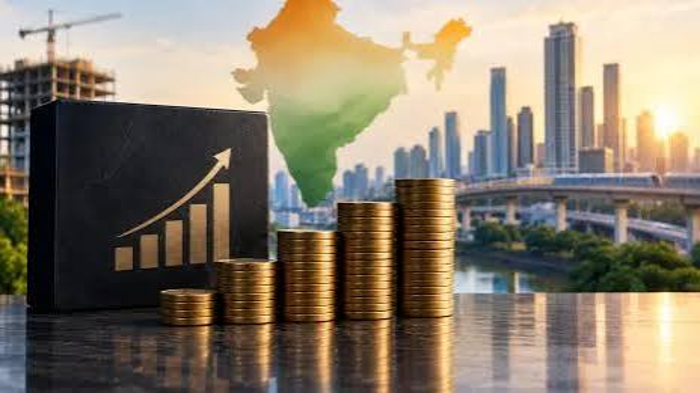
Blackstone’s plan to double its investment in India to $100 billion over the next five years reflects growing confidence in the country’s long-term economic prospects. The world’s largest alternative asset manager, with more than $1.3 trillion invested across private equity, credit, real estate and infrastructure, views India as a major growth market for the coming decades.
Blackstone Chief Operating Officer Jonathan Gray has highlighted India’s strong capital markets and liquidity, describing the country as one of the easiest places to list a company after the United States. A similar long-term outlook has influenced Fairfax Financial Holdings, led by Prem Watsa, which made a $5.6-billion bid to acquire a 60.7 per cent stake in IDBI Bank.

India’s economic formalisation, growing financialisation of household savings and investments in physical and digital infrastructure have strengthened its investment appeal. Under the Narendra Modi government, installed renewable energy capacity has expanded nearly fourfold to around 300 gigawatts. These developments have supported productivity by improving the movement of goods, services and capital.
The expansion of capital markets has also created opportunities for investors to finance startups, real estate and infrastructure projects before exiting through initial public offerings (IPOs). Funds raised by companies through new equity and bond issues increased from ₹11,681 crore in 2013-14 and ₹17,056 crore in 2014-15 to ₹2,18,339 crore in 2024-25 and ₹2,46,215 crore in 2025-26. Deeper markets and a wider investor base have made it easier for investors to enter and exit investments.
Despite its long-term growth potential, India faces immediate challenges from elevated global energy prices and rising bond yields. Foreign capital inflows have partly benefited from low interest rates in advanced economies, but the era of inexpensive global financing has largely ended.
Higher borrowing costs could make financing both the external current account deficit and the domestic fiscal deficit more difficult. This increases the importance of maintaining macroeconomic stability and pursuing unfinished reforms, particularly in agriculture and market-distorting subsidies.
Prime Minister Narendra Modi has projected India as a source of reliability and stability amid global uncertainty. Sustaining investor confidence will require consistent policies, stronger economic fundamentals and continued reforms. While India’s expanding markets and infrastructure offer significant opportunities, its ability to manage external pressures will remain essential to attracting long-term domestic and foreign investment.

RMS CET 2026 Registration Closes Tomorrow; Apply for Class 6 and 9 Admissions
Supreme Court Recognises Internet Access as Fundamental Right for Children

Qatar Plans Local Defence Production Hub Amid Rising Gulf Tensions
Blackstone Plans to Double India Investment to $100 Billion

Three FLAME University Professors Feature in 2026 Stanford–Elsevier Top 2% Scientists List

CCPA reports 3,940 delistings in crackdown on online sale of explosive substances

UGC seeks governors’ intervention as 82 Tamil Nadu institutions face 150 fee-refund complaints
Engineering Must Build Foundations, Not Chase Every Trend: Dr. Arya Kumar Bhattacharya

France protests escalate as Macron rejects minister’s resignation, students block Louvre

France protests turn violent as Paris reports 855 arrests, fresh clashes erupt

RMS CET 2026 Registration Closes Tomorrow; Apply for Class 6 and 9 Admissions
Supreme Court Recognises Internet Access as Fundamental Right for Children
Qatar Plans Local Defence Production Hub Amid Rising Gulf Tensions
Blackstone Plans to Double India Investment to $100 Billion
Three FLAME University Professors Feature in 2026 Stanford–Elsevier Top 2% Scientists List
CCPA reports 3,940 delistings in crackdown on online sale of explosive substances
UGC seeks governors’ intervention as 82 Tamil Nadu institutions face 150 fee-refund complaints
Engineering Must Build Foundations, Not Chase Every Trend: Dr. Arya Kumar Bhattacharya
France protests escalate as Macron rejects minister’s resignation, students block Louvre
France protests turn violent as Paris reports 855 arrests, fresh clashes erupt
Copyright© educationpost.in 2026 All Rights Reserved.