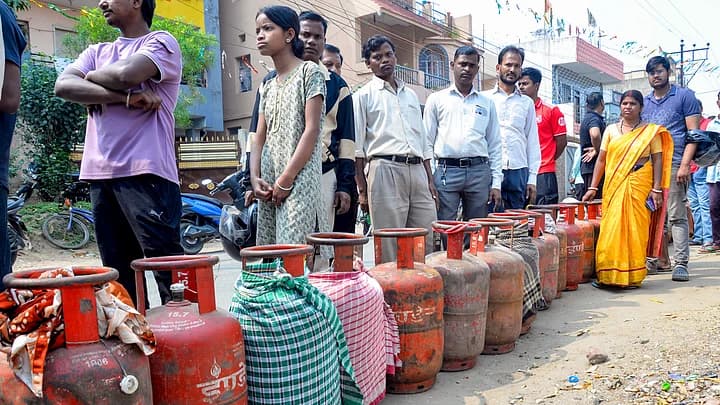
Domestic cooking gas prices have been increased by ₹29 per cylinder, marking the second hike in three months as state-owned oil marketing companies continue to face pressure from elevated global energy costs.
With effect from June 7, the price of a 14.2-kg domestic LPG cylinder in Delhi has been raised to ₹942 from ₹913, according to industry sources.

The latest revision follows a ₹60-per-cylinder increase announced on March 7 after the conflict in the Middle East disrupted global energy markets and pushed up international fuel prices. Despite that increase, oil marketing companies were reportedly unable to fully recover mounting losses on domestic LPG sales.
Industry sources said state-run fuel retailers were estimated to be losing around ₹703 on every domestic LPG cylinder sold prior to the latest price revision. The fresh hike is expected to partially offset those losses, although companies are still believed to be under financial strain due to high import and supply costs.
The LPG price increase comes amid a broader rise in fuel prices across the country. Petrol and diesel prices have been increased by a cumulative ₹7.50 per litre since mid-May, while compressed natural gas (CNG) rates have risen by around ₹6 per kg during the same period.
According to industry estimates, oil companies continue to sell petrol and diesel below cost despite the recent revisions. Retailers are reportedly incurring losses of about ₹11 per litre on petrol and ₹33.6 per litre on diesel, reflecting the impact of higher global crude oil and refined fuel prices.
The government has so far refrained from allowing a complete pass-through of international energy costs to consumers. Instead, a portion of the burden has been absorbed by state-owned fuel retailers as authorities seek to balance inflation concerns with the financial health of oil marketing companies.
Global energy markets have remained volatile in recent months, with geopolitical tensions in the Middle East continuing to influence crude oil and fuel prices worldwide.