


With the Air Quality Index reaching 350, Delhi faces another pollution challenge just days before Diwali. Authorities have tightened restrictions, while the Supreme Court has allowed the limited use of certified green crackers on November 7 and 8.
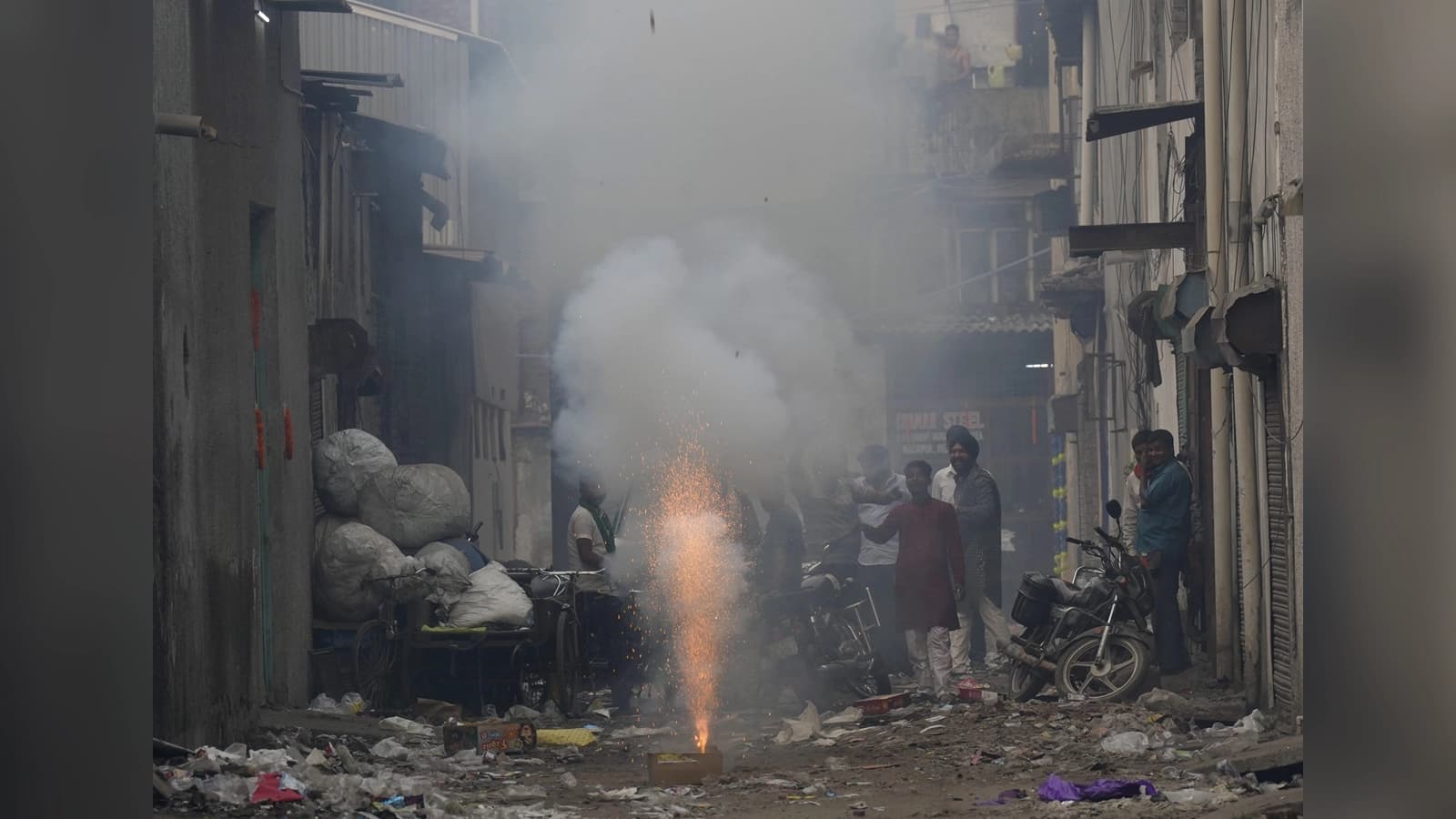
Smog and rising air pollution in Delhi
Delhi's air quality has started deteriorating sharply ahead of Diwali, raising fresh concerns about pollution and public health in the national capital. On November 3, the city's Air Quality Index (AQI) reached 350, placing it in the 'Very Poor' category, according to reports citing Central Pollution Control Board (CPCB) data.
The situation has worsened within a few days. Delhi's AQI was recorded at 117 on October 31, but rose to 261 on November 1 and crossed 300 on November 2. By November 3, pollution levels had increased further, with several monitoring stations reporting readings in the 'Severe' category. Jahangirpuri was among the worst-affected areas. The deterioration comes just days before Diwali, which falls on November 8 this year. With pollution already high, there are concerns that firecracker emissions could make the situation worse.

Delhi's pollution problem cannot be blamed on a single source. Several factors contribute to the poor air quality, including vehicle emissions, construction dust, industrial pollution, waste burning and smoke from agricultural fires in neighboring states. Weather conditions also play an important role. During the colder months, slower winds make it difficult for pollutants to disperse. As a result, smoke and dust remain closer to the ground, allowing pollution to build up over the city.
As Delhi's AQI entered the Very Poor category, the CAQM imposed Stage II restrictions under the Graded Response Action Plan (GRAP) across Delhi-NCR on November 2. The measures are intended to reduce pollution from vehicles, roads, construction sites and other local sources. Under these restrictions, authorities have been directed to increase mechanical cleaning of roads, sprinkle water to control dust, intensify inspections at construction sites and take action against open waste burning.
Parking charges may also be increased to discourage the use of private vehicles, while public transport services are expected to be strengthened. GRAP is a four-stage emergency plan. Stage I applies when AQI is between 201 and 300, Stage II between 301 and 400, Stage III between 401 and 450, and Stage IV when it crosses 450. The restrictions are meant to prevent air quality from deteriorating further. However, their success will depend on how effectively authorities enforce them.
The worsening pollution has also brought the debate over firecrackers back into focus. In an October 29 order, made public on November 2, the Supreme Court allowed the limited use of certified green crackers in Delhi-NCR on November 7 and 8. The permitted timings are 6 am to 7 am and 8 pm to 10 pm on both days. A complete ban on firecrackers will return from November 9.
The court has made it clear that only approved green crackers meeting the required certification conditions can be sold and used. Conventional firecrackers, crackers containing barium and long chains of firecrackers, commonly known as 'ladis', remain prohibited. The court has also prohibited firecrackers within 300 metres of hospitals, nursing homes, old-age homes, educational institutions and designated silence zones. Online sale and purchase are not permitted.
Green crackers are designed to produce lower emissions than conventional fireworks. However, they are not pollution-free. Their limited use may help reduce some of the pollution caused by firecrackers, but it cannot solve Delhi's overall air-quality problem. There is also a concern about enforcement. Authorities must ensure that conventional crackers are not sold or passed off as certified green products. Proper checking of manufacturers, sellers and designated markets will be essential.
Delhi faces poor air quality every year as winter approaches. While firecrackers can add to pollution during Diwali, vehicle emissions, road dust, construction, industrial activity and smoke from neighboring states continue to affect the city throughout the season. The latest situation raises a larger question about the effectiveness of the measures announced every winter. Restrictions may provide temporary relief, but lasting improvement requires consistent action throughout the year.
This year's Supreme Court directions to monitor daily AQI readings and hospital admissions could provide useful evidence about the impact of Diwali celebrations on public health. For now, Delhi's air quality remains a concern as the festival approaches. The real test for authorities will be whether they can enforce the restrictions and prevent pollution from becoming even worse after Diwali.
Bareilly Schools Closed for BJP Rally; Social Media Users Question Decision, Say Education Should Come First
GRAP Stage II Kicks In as Delhi's AQI Worsens

BSEB Sent-Up Exam 2027 Time Table Released: Class 12 Exams from November 19, Class 10 from November 23; Check Subject-Wise Schedule

NEET PG 2027: Rank-Based Merit System May Replace Percentile, NMC Proposes Major Admission Reform
SRMIST Opens SRMJEEE 2027 Applications; Check Engineering, MBA, Law and Medical Entrance Exam Dates
GRAP Stage II Kicks In as Delhi's AQI Worsens
NEET PG 2027: Rank-Based Merit System May Replace Percentile, NMC Proposes Major Admission Reform

US Midterm Elections 2026: Democrats Gain Control of Congress

Anonymous complaints, audio reports: Kerala introduces new mechanism to tackle campus ragging

Students shut down dozens of French high schools over education reforms

Bareilly Schools Closed for BJP Rally; Social Media Users Question Decision, Say Education Should Come First
GRAP Stage II Kicks In as Delhi's AQI Worsens
BSEB Sent-Up Exam 2027 Time Table Released: Class 12 Exams from November 19, Class 10 from November 23; Check Subject-Wise Schedule
NEET PG 2027: Rank-Based Merit System May Replace Percentile, NMC Proposes Major Admission Reform
SRMIST Opens SRMJEEE 2027 Applications; Check Engineering, MBA, Law and Medical Entrance Exam Dates
GRAP Stage II Kicks In as Delhi's AQI Worsens
NEET PG 2027: Rank-Based Merit System May Replace Percentile, NMC Proposes Major Admission Reform
US Midterm Elections 2026: Democrats Gain Control of Congress
Anonymous complaints, audio reports: Kerala introduces new mechanism to tackle campus ragging
Students shut down dozens of French high schools over education reforms
Copyright© educationpost.in 2026 All Rights Reserved.