Maharashtra Bal Sansad 2026: Over 100 children raise education, safety and child rights issues in Pune
Students from 102 child-friendly gram panchayats across Maharashtra questioned policymakers on water scarcity, child labour, child marriage and school infrastructure, presenting their vision for Viksit Maharashtra 2047.
Written by: EPN Desk · Updated:
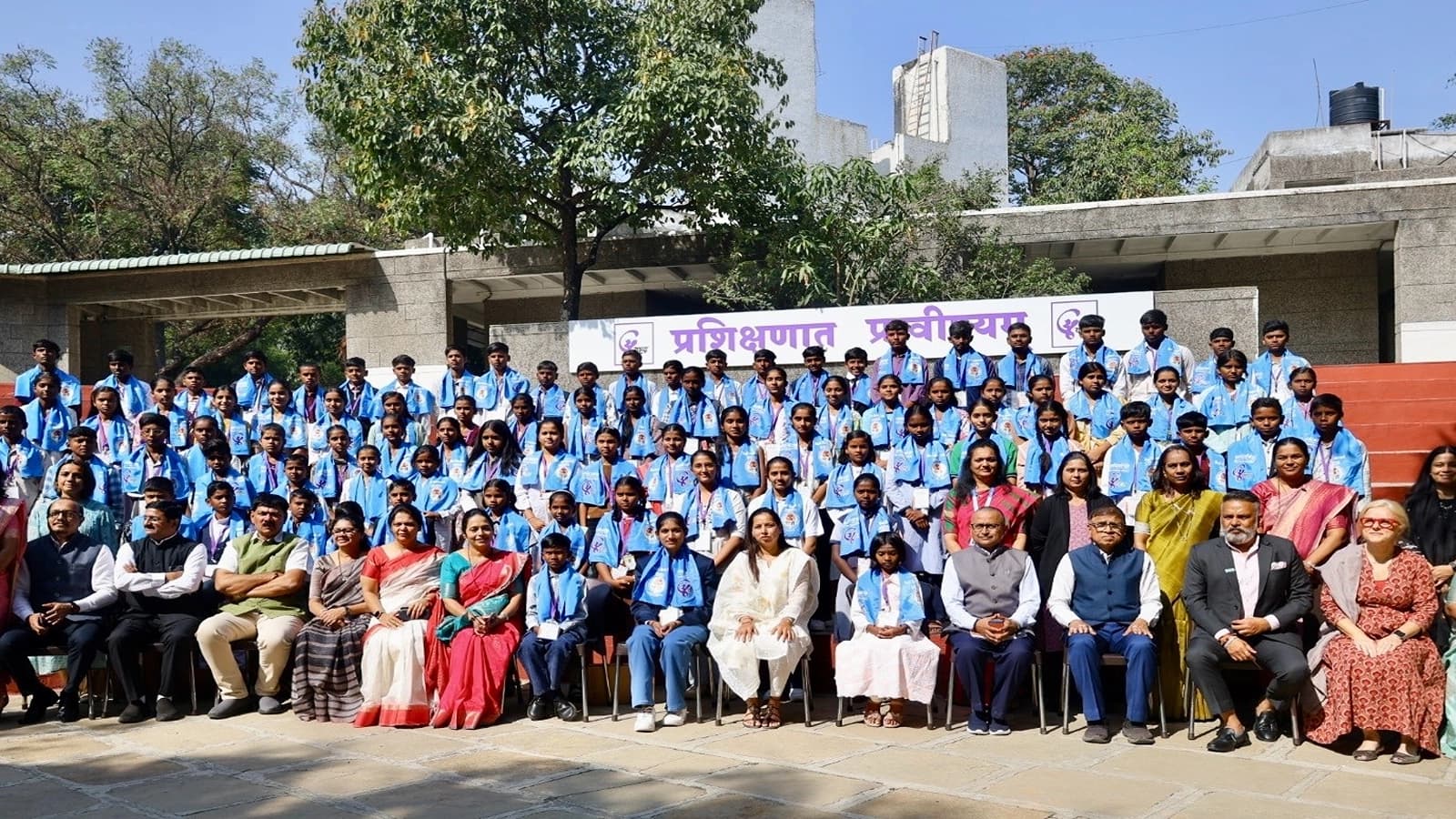
More than 100 schoolchildren from across Maharashtra came together at YASHADA in Pune on November 20 to participate in Maharashtra Bal Sansad 2026, an initiative that provided young representatives with an opportunity to raise community concerns and contribute ideas for the state's development.
Organised on the occasion of World Children's Day, the event brought together students representing 102 child-friendly gram panchayats from all 34 districts of Maharashtra. Participants engaged in a mock parliamentary session, discussing issues related to education, healthcare, drinking water, child protection, child labour, child marriage and school infrastructure.The initiative also gave children a platform to share their expectations and recommendations for achieving the vision of Viksit Maharashtra 2047.
Children question policymakers on local issues
The parliamentary exercise allowed students to take on important legislative roles, including those of Chief Minister, Speaker, ministers and Leader of the Opposition. They presented questions, sought explanations and discussed possible solutions to problems affecting their communities.The discussions highlighted the different challenges faced by children in various parts of Maharashtra.
Students from the drought-prone Marathwada region highlighted water shortages, agricultural distress and the impact of recurring droughts on children's education. They demanded financial assistance for students from drought-affected families and better hostel facilities for children belonging to sugarcane-cutting communities.
Participants from Nanded drew attention to poverty and child labour, explaining how economic difficulties can force children to leave school and work at an early age. The availability of government schools and affordable junior college education also featured in the discussions.Children from Dhule raised concerns about access to safe drinking water in schools, while students from Chhatrapati Sambhajinagar pointed to damaged school buildings and inadequate playground facilities.
Representatives from Gondia highlighted poor road connectivity in tribal areas and the safety risks children face while travelling to school, including encounters with wild animals.These discussions underlined the importance of including children's experiences in government planning and policy decisions.
Aditi Tatkare responds to children's concerns
Maharashtra Women and Child Development Minister Aditi Tatkare attended the programme as the Chief Guest and responded to questions concerning child marriage, child labour and child protection.During the interaction, she discussed government initiatives aimed at preventing child marriage, including the implementation of existing laws, awareness campaigns and the promotion of Balika Panchayats.
According to figures shared by the minister during the programme, joint efforts by UNICEF and the state Women and Child Development Department had helped prevent 2,700 child marriages.
Addressing the issue of child labour and children living or working on the streets, Tatkare referred to the monitoring activities of the Maharashtra State Commission for Protection of Child Rights (MSCPCR) and the Phirate Pathak initiative.She stated that the initiative had identified approximately 10,000 children, with around 3,000 subsequently returning to formal education.
The minister also highlighted child protection mechanisms such as Child Helpline 1098 and Child Welfare Committees. She assured participants that the concerns raised during the parliamentary session would be forwarded to the relevant government departments and ministers for further action.
Tatkare appreciated the students' understanding of democratic responsibilities and their confidence in questioning policymakers. She said the interaction offered government representatives an opportunity to understand children's problems from their perspective.
UNICEF highlights the importance of children's participation
Christina Popivanova, Chief of Social Policy at UNICEF India, praised the students for expressing their concerns confidently and presenting practical suggestions.She emphasised that every child, irrespective of whether they live in a rural or urban area, should have equal opportunities to receive education, healthcare and protection.
Popivanova encouraged children to speak up for their rights and actively participate in discussions concerning their future.Sanjay Singh, Chief of UNICEF Maharashtra, described the initiative as an important step towards strengthening children's participation in public decision-making.
He highlighted that children have the right to survival, development, protection and participation. He also underlined the importance of the Children's Charter prepared through the initiative, which reflects the priorities and aspirations expressed directly by young participants.The charter is expected to be presented to Maharashtra Chief Minister Devendra Fadnavis and the concerned government departments for consideration in future policymaking.
Children's Charter to contribute to Maharashtra's 2047 vision
In his message to the participants, Chief Minister Devendra Fadnavis appreciated the initiative and emphasised the importance of familiarising students with democratic institutions and parliamentary procedures.The proposed Children's Charter is expected to serve as a reference document highlighting children's expectations and recommendations for a more inclusive and child-friendly Maharashtra.
Sanjay Puranik, Chairperson of the Maharashtra State Commission for Protection of Child Rights, also stressed that children's participation in decisions affecting their lives is a fundamental right.He said the Bal Sansad had provided a platform for young representatives to communicate community-level problems directly to policymakers and government institutions.
Dr Mallinath Kalshetti, Deputy Director General of YASHADA, highlighted the role of such initiatives in developing leadership qualities, civic awareness, confidence and an understanding of democratic governance among students.He emphasised that listening to children is essential for building inclusive communities and responsive public institutions.
MSCPCR, YASHADA and UNICEF jointly organise the event
Maharashtra Bal Sansad 2026 was organised jointly by the Maharashtra State Commission for Protection of Child Rights (MSCPCR), YASHADA and UNICEF Maharashtra, with support from the Rural Development Department of the Maharashtra government.Several representatives of MSCPCR attended the programme, including Chairperson Sanjay Puranik, Geetanjali Buty, Shubhangi Tambat, Pravin Bhujade, Devendra Jangam, Sanjay Lakhepatil and Atul Anandrao Desai.
Chief Minister Devendra Fadnavis and Deputy Chief Minister Sunetra Pawar conveyed their best wishes for the initiative. Deputy Chief Minister Eknath Shinde sent a video message, while Minister of State for Women and Child Development Meghana Deepak Sakore-Bordikar shared an audio message appreciating the programme.The event reinforced the importance of giving children a meaningful role in democratic processes and ensuring that their concerns are reflected in decisions affecting their education, safety and overall development.
Also read