
New Zealand school wins legal challenge over nearly $11,000 optional fee
Court dismissal and Ombudsman findings uphold Whanganui Collegiate’s charging policy, raising concerns that other integrated schools could make access to regular school activities dependent on hefty payments.
Written by: Amin Masoodi · Updated:
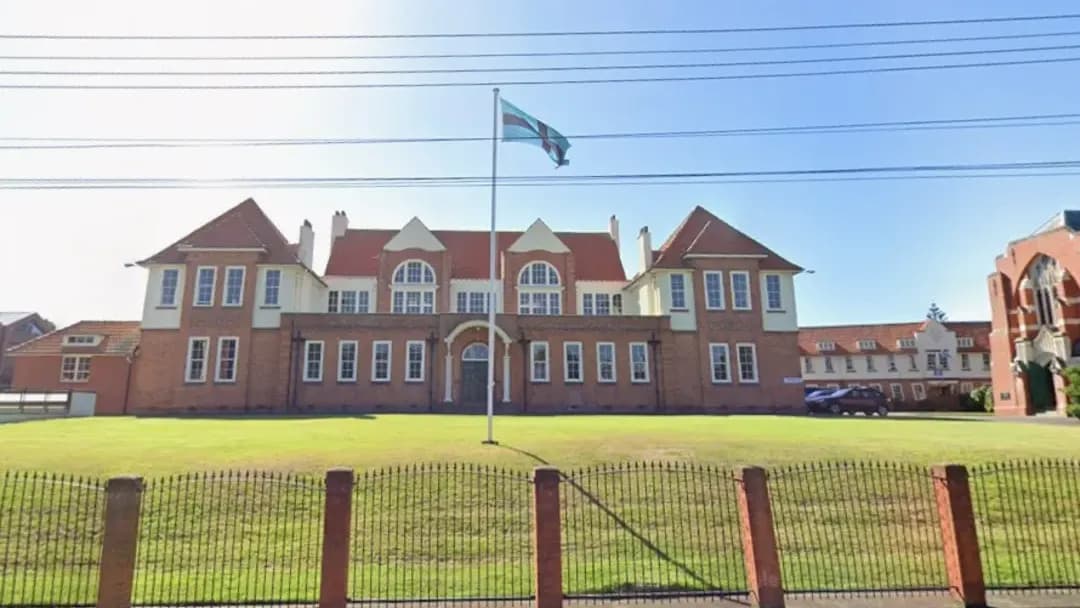
One of New Zealand’s most expensive schools can continue charging day students nearly $11,000 for access to facilities and activities, with those who decline to pay potentially missing out on significant parts of school life.
Whanganui Collegiate School has successfully defended its controversial optional fee after a District Court challenge was struck out in late October. The decision followed an investigation by the Ombudsman, which found that the school's practice did not appear to breach the law. However, the outcome has raised wider questions about whether state-integrated schools could increasingly make participation in certain school activities conditional on families paying substantial additional fees. Craig Sinclair, who brought the legal challenge, said he feared the decisions could encourage other schools to adopt similar arrangements, potentially undermining the principle of free education in New Zealand.
The school's website states that students who pay for access to its non-integrated facilities and services can use boarding houses and preparation spaces during the school day. They also receive tutor support, pastoral care through the Health Centre, Housemasters, Residential Masters and Matrons, as well as supervision during scheduled breaks.
The package also covers participation in inter-House sporting and cultural competitions, including swimming, athletics and cross-country events, House Music, Tikanga and other school-wide activities. The school says the arrangement also supports its Anglican character and chaplaincy. Sinclair argued that several activities covered by the fee were part of the school's special character and took place within regular school hours. He said students whose families could not afford the payment were effectively excluded from important aspects of the school experience.
He also questioned why the school charged a compulsory-style fee for access to these activities when other state-integrated schools sought voluntary donations from parents to meet comparable costs. "They're operating a school that's half state, half private," Sinclair said. He disputed the Education Ministry's position that the services covered by the charge amounted to a high-quality, expensive after-school programme."That is a load of nonsense," he said, pointing out that cross-country races, swimming sports and several other activities took place during normal school hours.
Sinclair was quoted as saying by RNZ that he was preparing an appeal against the court decision. His concerns extend beyond Whanganui Collegiate. He fears the outcome could encourage schools across New Zealand to introduce substantial charges for activities that families would ordinarily regard as part of a standard school education. He argued that such practices risk weakening Section 33 of the Education and Training Act, which guarantees free education for eligible students from the age of five until the end of the calendar year in which they turn 19.
Fee structure raises questions over parental rights
The case has also drawn criticism from Guy Gifford, a long-time campaigner against high fees and donations imposed by some state-integrated schools, who lodged the complaint with the Ombudsman.
Gifford said he was deeply disappointed by the outcome and argued that charging families a fee rather than seeking voluntary donations could deprive them of tax credits worth thousands of dollars. He said the rules governing integrated schools were intended to ensure that they did not provide an educational environment superior to that available in ordinary state schools through additional parental payments.
While acknowledging that many parents might willingly contribute more towards their children's education, Gifford said the legislation was designed to prevent such arrangements from creating a two-tier system. "Many of the individual parents would be happy to pay. They want to pay. They want to contribute to their children's education and get something a bit better than the state provides, but the Act is designed not to let them. You must operate at the level of a state school," he said.
Schools face growing financial pressure
The Association of Proprietors of Integrated Schools, however, defended the broader practice of charging for certain services.
Its chief executive, Kevin Shore, said schools of all types had traditionally been able to charge for specific services rather than seek voluntary donations. Overseas trips and school magazines were among the examples he cited. Shore said mounting financial pressures were making it increasingly difficult for schools to meet operating costs, potentially prompting more institutions to make access to certain optional activities and services dependent on payment.
Although he did not believe the practice was necessarily becoming more widespread, he acknowledged that some schools were already withdrawing services when families failed to pay. "Many of our proprietors would not go to that step of withdrawing services from parents for non-payment of a voluntary thing, whatever it might be, but some are," he said.
He also accepted that the Whanganui Collegiate decisions could have implications beyond the school itself. "There's no doubt this sets a precedent, and it sets a precedent for state schools as well as state-integrated schools," Shore said. Whether the ruling encourages more schools to adopt similar fee arrangements remains to be seen, he added.
Ministry confirms hockey turf lease has been corrected
Separately, the Education Ministry has confirmed that Whanganui Collegiate has addressed an earlier breach involving the lease of a hockey turf.
RNZ reported in April that the school had been paying the Whanganui Collegiate School Foundation for the use of the facility, despite rules governing integrated schools restricting them from entering into lease arrangements themselves. Such agreements must be handled by the school's proprietor.
The ministry said the school, its proprietor and the hockey turf owner reached an agreement earlier this year to amend the arrangement. "The proprietor has leased the turf for the school's use," the ministry said. It added that the revised agreement now complied with the school's integration agreement and legal requirements, which place responsibility for providing school property, whether through purchase or lease, on the proprietor.
The latest developments leave a wider debate over how state-integrated schools balance their financial needs, special character and obligations to provide access to education without creating financial barriers for families.
Also read