


Prof. Ranjit Thapa, Dean of Research, SRM University-AP, on AI-powered scientific discovery, quantum technology, advanced materials and why India must move from “Make in India” to “Discover in India”.
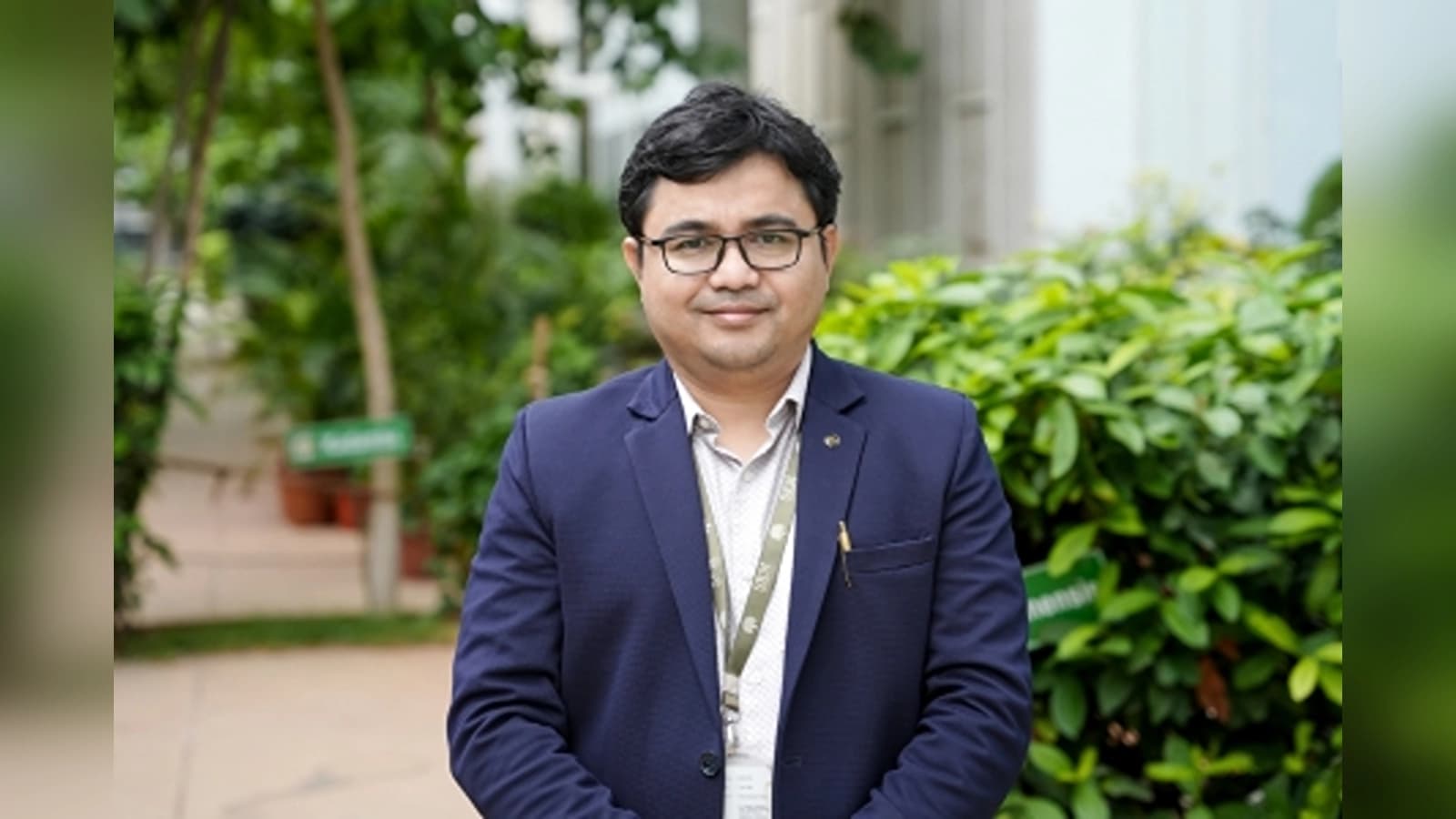
Prof. Ranjit Thapa, Dean–Research, SRM University-AP
As India looks to establish itself as a global technology and innovation leader, the next challenge is no longer simply producing skilled graduates or adopting emerging technologies, but building the capacity to discover and create them. In this cover interview, Prof. Ranjit Thapa, Professor and Dean–Research, SRM University–AP (Amaravati), tells Education Post’s Prabhav Anand, what it will take for Indian research and higher education to make that transition. A physicist and computational materials scientist, Prof. Thapa’s work spans quantum mechanics, machine learning, catalyst design, clean energy and AI-powered materials discovery. He has authored more than 265 research papers and has worked extensively on computational approaches to energy and environmental challenges.
The conversation goes beyond his own research to examine the larger transformation underway in scientific research. Prof. Thapa discusses how AI could reshape materials discovery, why India needs stronger indigenous capabilities in advanced materials and clean technologies, and how quantum technology could become a major strategic opportunity over the next 15 years. He also addresses the gaps in India’s research ecosystem—from funding and infrastructure to PhD training, technology transfer and industry-academia collaboration. At the heart of the discussion is a compelling proposition: India must move beyond being a consumer and manufacturer of technology to becoming a creator of knowledge, intellectual property and breakthrough technologies. As Prof. Thapa puts it, the future must be about not just “Make in India”, but “Discover in India.”
1. Artificial Intelligence is now accelerating scientific discovery, particularly in materials science. From your experience of integrating AI with quantum mechanical simulations, how do you see this changing the traditional research process? Can AI genuinely replace years of laboratory experimentation, or will it always remain a tool that complements human scientific intuition?
Let us first understand the paradigm of research and innovation. In principle, the evolution of research and innovation can be divided into four major paradigms: (i) Experiment (ii) Theory (iii) Computation and (iv) Data Science or Artificial Intelligence (AI).
The first paradigm is Experiment, which began with the earliest stages of human evolution from the discovery and use of fire to the development of metals, tools, medicines, and countless other innovations. Experimentation has continued to be the foundation of scientific discovery.
The second paradigm is Theory. Humans began to search for the reasons behind observed experimental phenomena and developed new ideas in the form of laws, hypotheses, theorems, and mathematical principles. Theory provided a systematic framework for understanding nature and, in many cases, predicting phenomena that had not yet been experimentally observed.
The third paradigm emerged with the birth of computers. Computers enabled scientists to solve numerical problems and complex equations much faster than was possible through analytical methods alone. With the development of quantum mechanics and many other advanced fields, analytical approaches became insufficient for solving even relatively small and complex phenomena. There was always a vision that theory could be developed first and experiments could then be performed to validate it.
The development of computers provided a major opportunity to realize this vision to perform theoretical calculations on computers, including supercomputers, and then move to the laboratory for experimental validation and discovery. To some extent, this approach has been successful, particularly in areas such as drug discovery and the prediction of new materials in few areas. However, even today, we have achieved only a small fraction of the original vision. Computational techniques are still used largely to support and explain experimental phenomena rather than to independently drive discovery.
This raises an important question: Can we perform the discovery process first on a computer and then validate it experimentally?
The answer may lie in the rapid rise of the fourth paradigm: Artificial Intelligence and Data Science. AI provides an excellent opportunity to create sophisticated workflows that combine quantum-mechanical simulations with AI/ML models, enabling us to predict, screen, and design materials before going to the laboratory for experimental validation.
There are, of course, significant challenges, and scientists across the world are actively addressing them. Nevertheless, we are moving toward a future in which AI-based simulations can be performed first, followed by targeted experiments. This approach can significantly accelerate materials discovery while reducing both time and cost.
Some important challenges include discovering suitable catalysts for converting CO₂ into C₂ products, identifying materials that can perform like rare-earth elements to reduce dependence on scarce resources, and developing catalysts for converting N₂ and CO₂ into urea. AI is not merely a tool, nor is it a replacement for experiment. AI represents a new research paradigm that has the potential to transform almost every sector of science, technology, and innovation.
Therefore, SRM University–AP (Amaravati) is taking AI very seriously and is working toward creating an AI-ready campus, preparing our researchers, infrastructure, and academic ecosystem for the next generation of research and innovation.
2. India has announced ambitious goals in green hydrogen, electric mobility and net-zero emissions. However, many of these ambitions depend on breakthroughs in catalysts, batteries and advanced materials. How close is India, scientifically, to developing indigenous technologies that can compete with global leaders rather than relying on imported innovations?
Over the past two decades, India has emerged as a strong competitor in the global technology and innovation landscape. The country is steadily moving from being primarily a technology- consuming nation toward becoming a developer, adopter, and exporter of indigenous technologies. India is making significant efforts to position itself among the top 10 countries globally in research, technology, and innovation, with a strong emphasis on self-reliance and indigenous capabilities.
One of the most remarkable achievements has been the development of UPI-based digital payment technology, which has transformed India's financial ecosystem and demonstrated the country's ability to build large-scale, secure, and accessible digital infrastructure. India has also made substantial progress in defence technology, with increasing capabilities in indigenous design, advanced materials, electronics, aerospace systems, and strategic technologies.
In medical technology and healthcare, India has developed affordable pharmaceuticals, vaccines, diagnostic technologies, medical devices, and digital healthcare solutions, demonstrating its ability to deliver high-impact technologies at scale.
Space technology is another area where India has established strong global recognition through cost-effective and increasingly sophisticated space missions, satellite technologies, and launch systems. India is also rapidly developing capabilities in electric mobility, including electric vehicles, batteries, charging infrastructure, and power electronics.
At the same time, hydrogen technology, particularly green hydrogen and electrolyser technologies, is emerging as a strategic area for India's future energy security and low-carbon development. These achievements reflect a broader transition toward technological self-reliance. However, the next challenge is to convert these capabilities into globally competitive intellectual property, products, companies, and technologies.
This requires stronger integration of fundamental research, computational science, artificial intelligence, experimentation, engineering, manufacturing, and technology transfer. India now has an unprecedented opportunity to leverage its scientific talent, digital infrastructure, entrepreneurial ecosystem, and manufacturing capabilities. The objective should not merely be to become a top-10 technology nation, but to build an ecosystem where Indian research and indigenous innovation create globally relevant technologies and solutions for humanity.
India faces a major challenge in realizing green hydrogen and smart mobility because it lacks sufficient indigenous raw materials and patents, which are critical for making these technologies truly self-reliant and cost-effective. Therefore, fundamental research to discover new materials based on resources available in Indian mines and to develop and patent indigenous technologies is extremely important.
We should not think only of “Make in India”; we should also think of “Discover in India” to build a stronger and more sustainable India. The Government of India needs to invest more in research through funding that is open to all and focused on specific, target-oriented outcomes. An important policy change should be to integrate research centres and institutes with university campuses, without separate boundaries, enabling talented young students to innovate and discover using high-end research facilities.
3. Your research has extensively focused on catalyst design for hydrogen evolution, oxygen reduction and carbon dioxide conversion. For an ordinary reader, why should research on catalysts matter? How can these microscopic discoveries eventually influence electricity prices, transportation, clean industries and everyday life?
Regarding my research, our group is focusing on developing a DFT/AI-powered materials discovery package known as “Padarth Khoj” for discovering advanced catalysts for applications in energy conversion. In simple terms, catalysts are at the heart of the energy and chemical industries. To understand their importance, we can take an example from the human body. The heart pumps blood throughout the body, while the blood contains hemoglobin, whose iron centre binds oxygen and enables its transport to different parts of the body.
In this sense, iron acts as a critical active centre for oxygen binding and transport. Similarly, catalysts contain active sites that selectively interact with molecules and help chemical reactions occur efficiently. Catalysts are therefore present everywhere and play a critical role in producing new compounds and enabling chemical transformations. They can help break down molecules, build new molecules, convert one form of energy into another, or make industrial processes faster and more efficient. The major challenge is to discover the right catalyst for a specific reaction.
Traditionally, this requires extensive experimental trial and error, which can be expensive and time-consuming. Padarth Khoj aims to change this approach by combining quantum-mechanical calculations based on DFT with artificial intelligence and machine learning. The objective is to computationally screen and design thousands of materials, identify promising catalytic candidates, and then validate the most promising materials experimentally. In this way, Padarth Khoj aims to accelerate catalyst discovery, reduce experimental costs, and contribute to the development of sustainable technologies for future energy and chemical industries. This is precisely the philosophy we drive at SRM University-AP. Through our dedicated computational chemistry and computational materials facilities, our research team is utilizing 'Padarth Khoj' to model and predict novel catalysts that directly bridge the gap between high-level quantum calculations and practical, industrial energy applications.
According to the Government of India, green hydrogen currently costs approximately ₹439–₹477 per kg to produce without incentives, of which electricity alone contributes about ₹325–₹335 per kg. If our AI/DFT-designed catalyst improves electrolyser efficiency by just 20%, and this translates into a proportional reduction in electricity consumption, the electricity component could decrease from about ₹330 to ₹264 per kg, potentially reducing the total production cost by around ₹66 per kg, from approximately ₹450 to ₹384 per kg. At 1,000 tonnes of hydrogen production, this represents a potential saving of about ₹6.6 crore per year. Thus, an atomic-level catalyst discovery can ultimately influence industrial costs, transportation, energy prices, and everyday life.
4. Despite producing a large number of engineering and science graduates every year, India still contributes a relatively modest share of globally transformative scientific discoveries. In your opinion, is the challenge primarily about funding, infrastructure, institutional culture, or our approach towards research education?
The number of graduates is one of India’s greatest strengths, but at the same time, it presents a major challenge: how do we mobilize this enormous human potential and provide the right direction and opportunities to our students? India has already made a significant contribution to global research and innovation. However, scientific leadership is a global effort, and intellectual contributions frequently originate outside India.
If India wants to become one of the world’s leading nations in research and innovation, we must build a highly competitive and performance-driven higher education and research ecosystem. The most important step is to create globally competitive universities and provide them with research funding comparable to the leading universities around the world. Universities should be given greater autonomy, resources, and responsibility, while their performance should be evaluated based on measurable outcomes in research, innovation, patents, technology transfer, entrepreneurship, and societal impact. We also need to rethink the concept of a permanent academic position. Academic freedom and stability are important, but continued academic positions should also be associated with continued contribution. If a professor chooses not to engage in research, innovation, mentoring, or other meaningful academic contributions, the system should have mechanisms for performance review and career progression rather than treating a permanent position as an entitlement irrespective of performance.
India should also significantly increase the number of PhD students, particularly in strategic areas such as artificial intelligence, advanced materials, energy, biotechnology, semiconductors, quantum technology, and computational science. PhD students are the engine of research and innovation, and universities must provide them with world-class facilities, mentorship, and opportunities.
At the same time, every major research institution should have a strong and professionally managed Technology Transfer Cell, supported by substantial funding. Discoveries should not remain as research papers. They should be converted into patents, prototypes, start-ups, licenses, and commercial technologies. Another important area is the use of CSR funding. A greater proportion of CSR investment should be directed toward fundamental and applied research rather than being limited primarily to infrastructure such as hostels and roads.
Research can create technologies with long-term economic and social impact. Finally, India should create stronger incentives for industries that develop, commercialize, and manufacture indigenous technologies. Tax policies should reward genuine innovation, research investment, technology development, and commercialization. If we can combine India’s enormous human capital with competitive universities, performance-based research, strong funding, PhD-driven innovation, effective technology transfer, and industry incentives, India can move decisively from being a large global market to becoming a global leader in research, innovation, and technology creation.
5. Machine learning has significantly reduced the time required to identify promising materials for batteries and clean energy technologies. As someone leading AI-powered materials research, what are the biggest scientific limitations that AI still struggles to overcome, and where does human creativity continue to remain indispensable?
To understand this question, let us go to a slightly deeper level. I always emphasize that AI/ML is very general and has no fixed boundary. It can be applied across almost every field, and many different approaches are available, with many more likely to emerge in the future. However, the major scientific challenge is that different scientific properties and phenomena often require different AI-based models, equations, representations, and approaches. Let us take a simple example from classical mechanics. Newton’s laws are fundamental and general. The same laws can be applied to understand the motion of a car, the flight of a kite, or a person riding a bicycle.
The underlying physical principles remain the same, even though the applications are completely different. AI is currently not always able to operate at this level of scientific generality. An AI model developed to predict one material property may not automatically predict another property with the same accuracy. A model trained for battery materials may not necessarily work for catalysts, semiconductors, or biological systems. Even within the same field, different properties may require different datasets, architectures, descriptors, physical constraints, and training strategies.
This is one of the major scientific limitations of AI in materials discovery: how do we develop AI systems that can understand general scientific principles rather than simply learn patterns from specific datasets? This is also where human creativity remains indispensable. Scientists understand physical principles, identify meaningful questions, recognize unexpected results, design new hypotheses, and decide what is scientifically important.
AI can explore enormous spaces much faster than humans, but deciding which space to explore and why still requires scientific intuition. Therefore, I believe AI will struggle with this challenge for some more years. However, this is not a permanent limitation. Scientists are already developing new generations of AI that incorporate physics, chemistry, scientific laws, causality, and human knowledge. Ultimately, the future will not be AI versus human creativity. It will be AI plus human creativity where AI provides extraordinary computational power and exploration capability, while humans provide curiosity, intuition, imagination, and scientific judgment. That combination will define the next generation of materials discovery.
6. One of your ongoing research directions involves converting carbon dioxide into useful chemicals and fuels. At a time when climate change dominates global discussions, do you believe carbon capture and utilisation technologies can realistically become commercially viable in the next decade, or are they still largely confined to laboratory success stories?
CO₂ conversion into value-added products is a long-standing research problem, but it is important to recognize that CO₂ utilization is already moving beyond the laboratory. Globally, around 45 commercial carbon-capture facilities are currently operating, capturing more than 50 million tonnes of CO₂ per year. The real challenge now is to make CO₂ conversion sufficiently efficient, selective, stable, and economical for large-scale deployment. Our focus is therefore not simply to convert CO₂, but to convert it into higher-value and higher-energy-density products, particularly C₂ and C₃ chemicals and fuels.
Our group is working on advanced catalysts, especially single-atom catalysts (SACs) and dual-atom catalysts (DACs), for converting CO₂ into products such as ethanol and ethane. Why single-atom catalysts? In conventional nanoparticles, a significant fraction of metal atoms may not participate directly as active surface sites. In SACs, individual metal atoms can be exposed as highly defined active centres, offering potentially near 100% atomic utilisation.
This is particularly important when expensive or scarce metals are involved because reducing metal loading can substantially reduce the material cost. The second advantage is the enormous design space. We can change the metal, coordination environment, support, distance between active sites, and electronic structure. With dual-atom catalysts, we can additionally exploit the interaction between two neighbouring metal centres.
Recent research specifically identifies dual-atom synergy and machine-learning-guided catalyst design as promising directions for CO₂ reduction. However, the major challenge remains achieving high selectivity, current density, energy efficiency, and long-term stability, particularly for multi-electron products such as ethanol and ethane. This is where our DFT/AI-powered “Padarth Khoj” platform becomes important. Instead of experimentally testing thousands of catalysts, we can computationally screen a very large design space, identify the most promising candidates, and then experimentally validate only the best ones. So, I believe CO₂ utilisation can become commercially important within the next decade but the transition will depend on moving from excellent laboratory catalysts to catalysts that are economically competitive at industrial scale.
7. India has made substantial investments in semiconductor manufacturing, quantum technologies and advanced computing. From a research ecosystem perspective, which of these sectors do you believe holds the greatest potential for India to emerge as a global scientific leader over the next 15 years, and why?
India has always had a clear strategic objective: to make the country more secure and increasingly self-reliant in critical technologies, particularly in areas related to energy, national security, and strategic autonomy. This is one of the reasons India invested seriously in nuclear energy. As a result, India has developed significant capabilities in nuclear science and technology and has established itself as an important country in the global nuclear ecosystem, giving India a stronger voice in international strategic and scientific discussions. India has also built strong capabilities in areas such as medical technology, pharmaceuticals, space technology, and communication technology. At the same time, we have missed opportunities in some transformative technologies, particularly semiconductor manufacturing and, historically, software technology.
The lesson from history is that we cannot afford to miss the next major technological revolution. Among semiconductor technology, quantum technology, and advanced computing, I believe quantum technology offers India perhaps the greatest opportunity to emerge as a global scientific leader over the next 15 years.
Quantum technology is not simply another emerging technology. It is a deep technology with strategic importance for computing, communication, sensing, materials science, drug discovery, defence, and cybersecurity. If India can build indigenous capabilities early, particularly in quantum materials, qubits, control systems, cryogenic technologies, quantum sensors, algorithms, and supporting electronics we can create an ecosystem rather than becoming dependent on imported components.
8. Scientific research is often measured through publications, citations and patents. However, taxpayers ultimately expect research to solve real societal problems. As Dean–Research, how do you balance academic excellence with the need to produce innovations that directly benefit industry, healthcare, sustainability and national development?
Yes, research metrics such as publications, citations, and patents were introduced for a good reason. They provide a structured way to evaluate research performance and help everyone from researchers and university administrators to policymakers and the public understand and quantify research outcomes.
However, research itself is much more versatile than these metrics suggest. When public or taxpayer money is invested in research, we have a responsibility to use it to address current problems, benefit society, strengthen industry, support national development, and ultimately contribute to global challenges. At the same time, we cannot draw a simple line and say that all research must produce an immediate benefit to the taxpayer or industry.
If we focus only on today's problems, we may fail to prepare the country for tomorrow. Some of the most transformative technologies of our time originated from fundamental research whose applications were not visible when research was initially conducted. Therefore, I believe we need to maintain a balance between immediate impact and long-term vision.
On one side, research should address real and urgent challenges in areas such as healthcare, energy, sustainability, agriculture, climate change, advanced manufacturing, and national security. We should actively encourage researchers to work with industry, develop prototypes, generate intellectual property, and translate discoveries into technologies and products. On the other side, we must strongly support fundamental and futuristic research. A country's future security, technological independence, and economic strength cannot depend only on solving today's problems. We must also ask: What will the world need 10, 20, or 30 years from now?
This is particularly important in areas such as quantum technology, artificial intelligence, advanced materials, semiconductors, biotechnology, clean energy, and space technology. As Dean–Research, my approach is therefore not to choose between academic excellence and societal impact, but to connect the two. We need excellent publications because they create knowledge. We need citations because they demonstrate influence. We need patents because they protect innovation. But ultimately, we should also ask: What problem did we solve? What technology did we create? What value did we generate? And what difference did our research make to society and the future of the country? That, for me, is the true measure of research excellence.
9. Many young researchers feel that India's academic ecosystem sometimes rewards safe and incremental research rather than high-risk, breakthrough ideas. Having mentored researchers and led multiple funded projects, do you think this perception is valid? What reforms are needed to encourage truly disruptive scientific innovation?
Yes, I believe high-risk research is now increasingly feasible in India. One of the reasons is the rapid growth of the startup and entrepreneurship ecosystem. Startups inherently involve risk: there is no guarantee that an idea, technology, or business model will succeed. Yet India has increasingly created an environment where young entrepreneurs are willing to take these risks, experiment, fail, learn, and try again.
We should bring the same culture into academic research. I believe India should create a specific category of high-risk, high-reward research, particularly in strategically important and priority areas. Such projects should receive substantial funding, greater flexibility, and institutional support, with the understanding that failure is an acceptable outcome when the research is genuinely high-risk and scientifically ambitious. These projects should not all follow the same funding model. Some may require relatively short periods to test a bold hypothesis, while others may need five, ten, or even more years to achieve meaningful outcomes. Funding mechanisms should therefore support both short-term exploratory projects and long-term transformational research.
However, high-risk research is different from a startup. In a startup, if one business idea fails, the entrepreneur can potentially move to another business. In fundamental research, failure itself can generate valuable scientific knowledge. Therefore, we need a model that combines the risk-taking culture of startups with the scientific depth and long-term vision of research. I would propose something like "BiResearch"—Business-oriented Research", or more broadly, a research model where researchers are encouraged to think simultaneously as scientists and technology creators.
The objective would be to take a high-risk scientific idea, develop the fundamental science, build a prototype, protect the intellectual property, and eventually create a technology or enterprise around it. Such a system should provide researchers with funding, infrastructure, mentorship, technology-transfer support, intellectual-property assistance, and freedom to change direction when the original hypothesis does not work. If India wants breakthrough technologies rather than incremental publications, we must create an environment where a researcher can say: “I have a high-risk idea. I may fail but if I succeed, it could change the field.” That is the culture we need to build for the next generation of Indian science and innovation.
10. Quantum computing is frequently described as the next technological revolution. Yet, much of the public conversation remains highly theoretical. From the perspective of computational materials science, what practical breakthroughs do you expect quantum computing to enable within the next decade that today's classical computing simply cannot achieve?
Quantum technology is often described as the next technological revolution, but I would like to make one point very clear: quantum computing is not merely a theory of the future; the underlying science was developed almost a century ago, and quantum computers are already becoming a technological reality.
Quantum bits, or qubits, quantum computing, quantum communication, and even concepts such as quantum teleportation have their foundations in the development of quantum mechanics nearly 100 years ago. Today, quantum computers are already available, although their capabilities are still far below what we ultimately expect them to achieve.
What makes quantum computing particularly exciting is that it is a rapidly developing deep technology. We are seeing progress in several platforms, including superconducting qubits, trapped-ion systems, diamond-based qubits, and topological approaches. Each has its own advantages and challenges, and it is still too early to say which architecture will ultimately dominate. I would compare the current stage of quantum computing with the development of GPUs. Ten or fifteen years ago, GPUs were primarily associated with graphics and specialized computing. Today, it is almost impossible to imagine modern AI and high-performance computing without them. I believe quantum processing units, or QPUs, could follow a similar trajectory.
Over the next decade, I expect QPUs to become increasingly accessible to universities, research laboratories, and technology companies. Their most important impact may initially be in areas where quantum systems have a natural computational advantage, such as cryptography, optimization, drug discovery, materials science, chemistry, finance, and complex simulations. From my perspective as a computational materials scientist, one of the most exciting possibilities is the combination of quantum computing, AI, and quantum-mechanical simulations to discover new materials and catalysts that are extremely difficult to model using classical computers. My personal prediction is that the financial and banking sector could be among the earliest major industries to adopt quantum computing, particularly for optimization, risk modelling, and cryptography-related applications.
I would expect significant developments in this direction within the next five years, although the exact timeline remains uncertain. The key message is simple: quantum computing is not replacing classical computing tomorrow. It is becoming a new layer of computing alongside CPU and GPU technologies. The organizations that begin building quantum capabilities today will be much better prepared for the technological landscape of the next decade.
11. Research today increasingly demands collaboration between physicists, chemists, computer scientists, engineers and data scientists. How should universities redesign their academic structure to encourage interdisciplinary research instead of continuing with rigid departmental boundaries that often limit innovation?
Universities should move from a department-centric model to a problem-centric research model. Major societal and technological challenges do not belong to a single discipline; they require physicists, chemists, engineers, computer scientists, data scientists, and other experts to work together.
Instead of traditional isolated departments, we need problem-centric research ecosystems. At SRM University-AP, for instance, we have actively fostered interdisciplinary research setups where physicists, chemists, data scientists, and engineers work side-by-side on common challenges—such as energy storage, clean hydrogen, and quantum materials. Giving researchers shared high-end facilities and rewarding cross-departmental patents and publications ensures that ideas, rather than departmental boundaries, drive true innovation.
Students should have the flexibility to take courses and conduct research across departments. This will create an ecosystem where ideas, rather than departmental boundaries, drive innovation.
12. Countries leading scientific innovation have built strong partnerships between academia, government and industry. In India, these collaborations often remain fragmented. What institutional changes would you recommend to ensure that university research moves faster from laboratory prototypes to commercially scalable technologies?
The first change should be to remove unnecessary boundaries between research sectors and disciplines. Any researcher with a strong idea capable of becoming a market-ready technology should receive equal opportunity and support. We need centres of Excellence within universities that bring together academia, government, industry, startups, and investors to move ideas from research to prototypes, patents, and commercialization.
High-end research facilities should be integrated with university campuses rather than operating as isolated institutions. Industry and CSR funding should be strongly encouraged toward research, innovation, and technology development, rather than conventional infrastructure. Finally, every university needs a strong technology-transfer mechanism to convert discoveries into patents, products, startups, and societal impact.
13. Looking ahead to 2047, when India aims to become a developed nation, what scientific capability do you believe the country must build urgently to become globally respected not just as a consumer of technology, but as a creator of breakthrough knowledge? And what role should research universities play in achieving that vision?
Looking toward 2047, I believe India’s most urgent requirement is to build the capability to discover and create deep technologies, rather than remaining primarily a consumer of technologies developed elsewhere. We need strong capabilities in fundamental science, advanced materials, AI for science, quantum technology, semiconductors, biotechnology, clean energy, and advanced computing. But technology alone is not enough. We need the ability to convert fundamental discoveries into intellectual property, prototypes, products, and globally competitive industries. Research- based universities will play the most important role in this transformation. Universities should become engines of discovery, where students and faculty have access to world-class infrastructure, interdisciplinary Centres of Excellence, high-end computing, and strong industry partnerships. India has talent and numbers; our challenge is to provide the right funding, freedom, infrastructure, and direction. By 2047, our ambition should be not only to “Make in India,” but to “Discover in India.” The ultimate measure of a developed India should be whether the world looks to India not only for its market and workforce, but also for its scientific discoveries, intellectual property, breakthrough technologies, and solutions to global challenges.

Hunter of Underwater Threats: Why INS Mangrol Is Important for the Indian Navy

Delhi Protests Renew Debate Over Constitutional Right to Peaceful Assembly

Household Inflation Rises to 5.54% in September as Price Pressures Spread

Delhi High Court Allows Urgent Hearing on Protest Site Guidelines

India Rejects China’s Objection to Standardised Names of Places in Ladakh

Karnataka student elections return after 37 years: Why political restrictions and university polls remain contentious
Global education is shifting from simply going abroad to creating more flexible routes to opportunity

Delhi Police files FIR against Congress MP Bimol Akoijam over JNU sexual harassment allegations

Utkal University tightens security after late-night explosions ahead of student polls

IET India Scholarship Award 2026: DTU’s Kush Garg wins top honor for AI device for neurodivergent children

Hunter of Underwater Threats: Why INS Mangrol Is Important for the Indian Navy
Delhi Protests Renew Debate Over Constitutional Right to Peaceful Assembly
Household Inflation Rises to 5.54% in September as Price Pressures Spread
Delhi High Court Allows Urgent Hearing on Protest Site Guidelines
India Rejects China’s Objection to Standardised Names of Places in Ladakh
Karnataka student elections return after 37 years: Why political restrictions and university polls remain contentious
Global education is shifting from simply going abroad to creating more flexible routes to opportunity
Delhi Police files FIR against Congress MP Bimol Akoijam over JNU sexual harassment allegations
Utkal University tightens security after late-night explosions ahead of student polls
IET India Scholarship Award 2026: DTU’s Kush Garg wins top honor for AI device for neurodivergent children
Copyright© educationpost.in 2026 All Rights Reserved.
