


“Human First, AI Next” is not a slogan, it is a sequence. The human does the thinking first; AI amplifies it second, says Chiranjeevi Maddala, Co-founder and Executive Director of AI Ready School
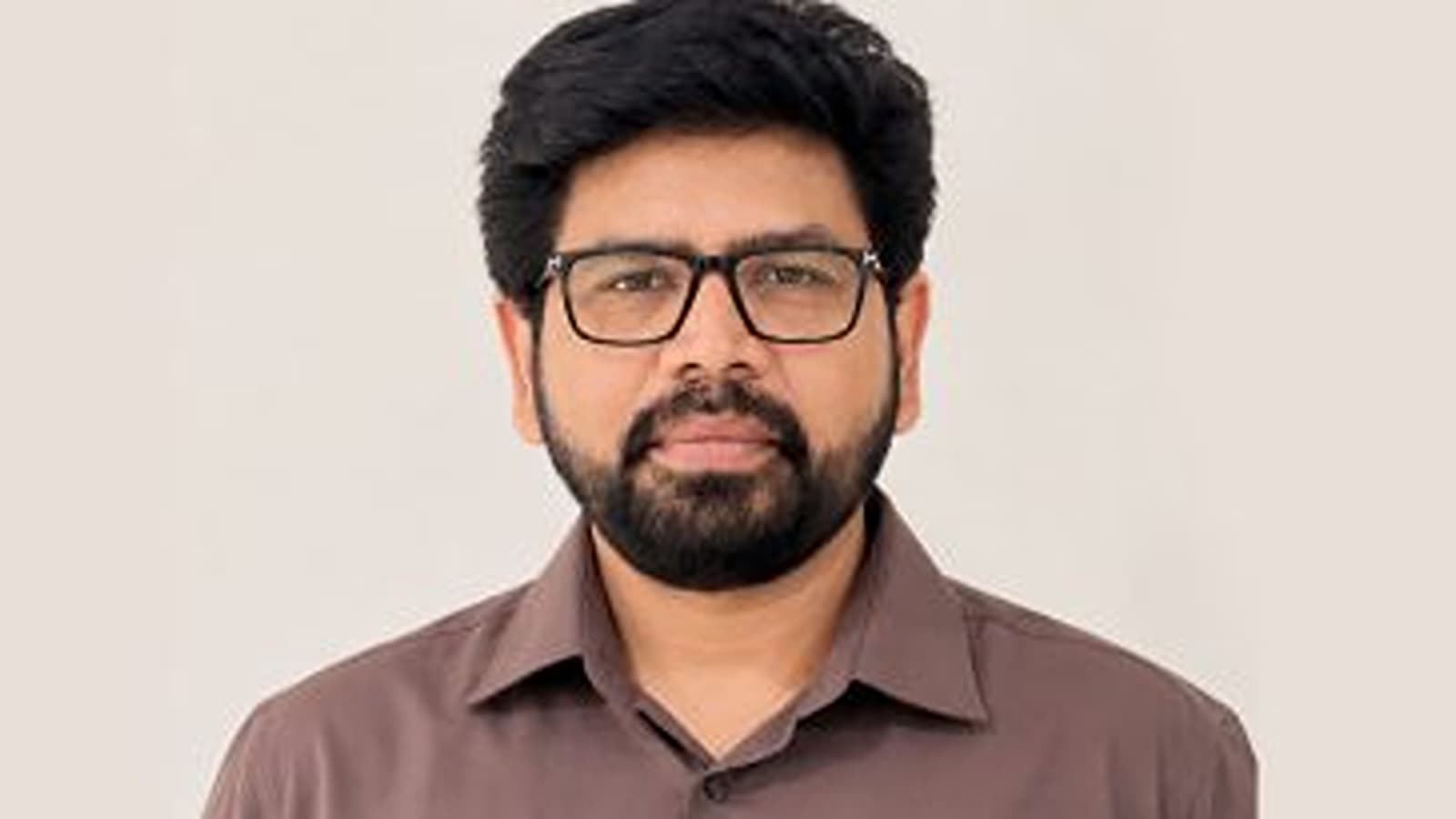
As artificial intelligence reshapes industries and automates routine technical tasks, the future of engineering is undergoing a profound transformation. In this insightful conversation, Chiranjeevi Maddala, Co-founder and Executive Director of AI Ready School, argues that the next generation of engineers must move beyond coding expertise to develop critical human capabilities such as problem-framing, systems thinking, creativity, and ethical judgment. He discusses with Education Post’s Prabhav Anand about the growing importance of Agentic Thinking, the need to introduce AI, robotics, and space technologies at an early age, and why education must shift from rote learning to project-based, multidisciplinary problem-solving. Maddala also shares his vision for ensuring AI remains a tool that amplifies human intelligence rather than replacing independent thought.
1. As artificial intelligence begins to automate many technical tasks, how do you see the role of engineers evolving over the next decade, and what skills will become most valuable?

The engineer of the next decade will spend far less time writing routine code and far more time deciding what is worth building and why. When AI can generate a function, a test, or a first pass design in seconds, the scarce skill is no longer production it is judgment. The engineer becomes an orchestrator: framing the problem, directing AI systems, and taking responsibility for the outcome.
I describe this shift as Agentic Thinking, the ability to delegate to intelligent systems while staying firmly in control of intent, quality, and consequences. The most valuable skills will be the ones AI cannot hold for you: problem framing, systems thinking, ethical reasoning, and the taste to know when an AI generated answer is good enough and when it is quietly wrong. Technical depth still matters, but it now sits on top of a layer of human agency. The engineers who thrive will be those who can move fluidly between deep specialisation and the bigger picture and who never outsource accountability to a machine.
2. India produces a large number of engineering graduates every year, yet industry often highlights a skills gap. What changes are needed in school and higher education to bridge this divide?
The gap is real, but it is not primarily a gap in knowledge, it is a gap in application. We test students on what they can recall, while industry needs people who can build, debug, collaborate, and adapt. A graduate who has memorised algorithms but has never shipped a working project arrives unprepared, no matter how high the marks.
Three changes matter most. First, learning must become project based and continuous rather than exam driven and terminal, students should leave with a portfolio, not just a transcript. Second, the curriculum has to update at the speed of the field; in AI, a syllabus that is three years old is already obsolete, which is why our programmes are refreshed monthly. Third, we must close the loop between learner and employer far earlier, so students build toward real expectations instead of discovering the gap on their first day at work. Bridging the divide is less about adding content and more about changing what we reward.
3. You often speak about a "Human First, AI Next" approach. How can engineering education use AI as a learning tool without weakening students' ability to think critically and solve problems independently?
“Human First, AI Next” is not a slogan, it is a sequence. The human does the thinking first; AI amplifies it second. The danger in education is that we invert this order and let students reach for the answer before they have wrestled with the question. When that happens, AI becomes a crutch instead of a catalyst.
The practical safeguard is to design AI tools that make students think rather than simply supply answers. In our own learning companion, the system is built to ask before it tells to prompt the learner to predict, explain, and reason before revealing a solution. Used this way, AI behaves like a demanding tutor who refuses to do your homework for you. The goal is to strengthen the muscle of independent thought, not replace it. If a tool leaves a student less capable when it is taken away, it has failed however impressive it looks in the moment.
4. Through MARS, you are exposing students to AI, robotics, and space technologies at an early stage. Why do you believe future engineering education should begin much before students enter college?
By the time most students reach an engineering college, their relationship with curiosity has often already been shaped and too frequently dulled by years of rote learning. Waiting until eighteen to introduce real problem-solving is like waiting until adulthood to teach a language. The window when the mind is most open to building, breaking, and wondering is far earlier.
MARS, our Mission for AI, Robotics and Space is built on the conviction that these are not advanced college subjects but natural extensions of childhood curiosity. A child who builds a small robot or trains a simple model in Grade 6 is not learning to be an engineer prematurely; they are learning that the world is something they can shape. Early exposure is not about producing specialists sooner. It is about preserving agency, confidence, and the habit of asking “why” and “what if,” the foundations every great engineer is built on.
5. As AI, robotics, and data science increasingly intersect with traditional disciplines, do you think the future belongs to specialised engineers or multidisciplinary problem-solvers?
The future belongs to people who can do both, go deep in one domain while moving comfortably across many. The most interesting problems today live at the intersections: AI meeting biology, robotics meeting agriculture, data science meeting public health. Pure specialists risk solving narrow problems beautifully while missing the larger system; pure generalists risk understanding everything at the surface and nothing deeply enough to build.
What I encourage is what I call T-shaped capability, genuine depth in a chosen discipline, sitting on a broad horizontal of literacy across adjacent fields. This is the heart of the Thinking 2.0 framework, which deliberately integrates computational thinking, design thinking, and agentic thinking rather than treating them as separate tracks. AI actually makes multidisciplinary more achievable, because it lowers the cost of working in an unfamiliar domain. The engineer of the future is not forced to choose between depth and breadth; they are expected to hold both.
6. Many educational institutions are introducing AI tools into classrooms. In your view, what separates meaningful AI integration from superficial adoption?
Superficial adoption asks, “How do we put AI into the classroom?” Meaningful integration asks, how do we use AI to deepen learning?” The difference shows up quickly. Superficial adoption is a chatbot bolted onto an existing process, used to generate worksheets faster or to give students quicker answers. It changes the tools but not the learning.
Meaningful integration changes the experience itself. It personalises the path for each learner, surfaces what a student actually understands rather than what they can reproduce, and frees teachers to do the deeply human work of mentoring. The test I apply is simple: does the AI make the student a more active thinker, or a more passive recipient? Does it give the teacher more insight and more time, or simply more dashboards? Technology in a classroom is only meaningful when it serves pedagogy. When the tool drives the pedagogy instead, you have adoption without transformation, motion without progress.
7. India aims to become a global technology and AI powerhouse. What is the biggest challenge currently holding back our future engineering talent, and how can the education system address it?
Our greatest challenge is not talent or ambition, India has both in abundance. It is a culture of learning that still rewards certainty over curiosity, and the right answer over the right question. We have built an education system superbly optimised for examinations and in doing so we have under-invested in creativity, risk-taking, and original problem-solving, the very traits an AI-driven economy demands.
The second challenge is access. World-class AI education cannot remain the privilege of a few metros while enormous talent in smaller cities and towns goes untapped. If we are serious about being a global AI powerhouse, we have to democratise this capability at scale.
Education addresses both by shifting from consumption to creation, and from scarcity to access. India does not lack people who can use AI, we must now produce people who can build with it, govern it, and apply it to our own civilization challenges. That is a deliberate national choice, and it begins in our classrooms.
8. In previous discussions, you have argued that students should not become passive consumers of AI-generated answers. What practical steps can educators take to ensure that AI enhances learning rather than creating dependency?
Dependency forms when the answer arrives before the effort. So the first practical step is to protect the struggle, design tasks where students must attempt, reason, and predict before any AI assistance is offered. The productive difficulty of thinking is where learning actually happens, and we must not let convenience erase it.
Second, make AI explain its reasoning, not just its conclusions, and require students to critique and verify what it produces. A learner who has to find the flaw in an AI answer is thinking harder than one who simply copies a correct one. Third, treat AI as a sparring partner rather than an oracle, use it to generate counter-arguments, alternative approaches, and questions, so the student stays in the driver’s seat.
Finally, assess the process, not just the product. When we reward how a student reasoned, collaborated, and improved, rather than only the final output, AI naturally becomes a tool for thinking better, not a shortcut around thinking at all. Used with intent, AI can be the most powerful learning amplifier we have ever had. Used carelessly, it quietly hollows out the very capability we are trying to build. The choice, as always, is a human one.

Morocco opens inclusive university for deaf and hearing students in Rabat

Kuwait University opens petroleum lab to train geology students

UP Board Extends Deadline to October 22 for 5,905 Schools to Submit Class 9, 11 Student Lists
NIOS October Exam 2026: Class 10, 12 Theory Hall Tickets Released; Download Link Here

Haryana Open School Exams 2027: BSEH Extends Application Deadline to October 31
.jpg&w=256&q=75)
From Class 8 to hospital owner: Rajasthan Police expose alleged fake doctor registration

Who will lead Keralam's universities? Government begins steps to appoint permanent VCs
%20(1)%20(1).jpeg&w=256&q=75)
Why does cracking JEE Advanced depend on coaching? IIT Kanpur Director calls for a revamp
.jpg&w=256&q=75)
NEET-PG 2026 answer key row: Supreme Court seeks NBEMS response on missing question papers
.png&w=256&q=75)
42 Iraqi universities feature in QS Arab Region University Rankings 2027

Morocco opens inclusive university for deaf and hearing students in Rabat
Kuwait University opens petroleum lab to train geology students
UP Board Extends Deadline to October 22 for 5,905 Schools to Submit Class 9, 11 Student Lists
NIOS October Exam 2026: Class 10, 12 Theory Hall Tickets Released; Download Link Here
Haryana Open School Exams 2027: BSEH Extends Application Deadline to October 31
From Class 8 to hospital owner: Rajasthan Police expose alleged fake doctor registration
Who will lead Keralam's universities? Government begins steps to appoint permanent VCs
Why does cracking JEE Advanced depend on coaching? IIT Kanpur Director calls for a revamp
NEET-PG 2026 answer key row: Supreme Court seeks NBEMS response on missing question papers
42 Iraqi universities feature in QS Arab Region University Rankings 2027
Copyright© educationpost.in 2026 All Rights Reserved.