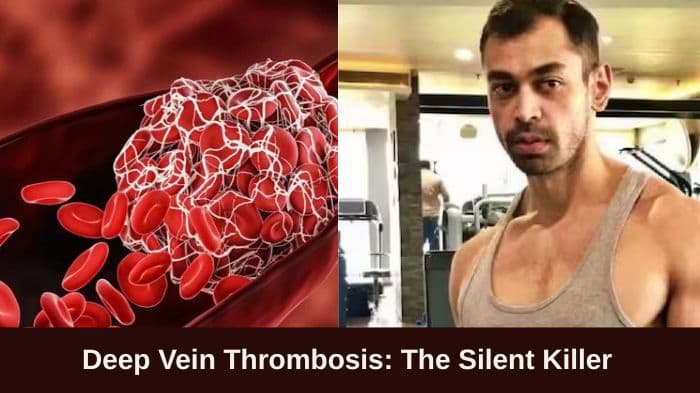
The death of Prateek Yadav, son of late Samajwadi Party founder Mulayam Singh Yadav, has brought renewed attention to Deep Vein Thrombosis (DVT), a medical condition that can turn fatal if blood clots travel to vital organs such as the lungs. Reports citing doctors involved in his treatment said the 38-year-old had been suffering from DVT for several years before dying from a massive pulmonary thromboembolism.
Doctors treating Prateek Yadav told media outlets that he had been battling DVT and related complications for nearly five years. Reports stated he had recently been hospitalised after developing pulmonary embolism, a condition caused when a blood clot blocks arteries in the lungs.

Medical experts say pulmonary embolism most commonly begins as Deep Vein Thrombosis, in which clots form in deep veins, usually in the legs. If part of the clot breaks away and travels to the lungs through the bloodstream, it can suddenly obstruct blood flow and oxygen supply, triggering collapse of the heart and respiratory system.
Cardiologists quoted in health reports following Prateek Yadav’s death said the condition is often misunderstood because it may not show dramatic symptoms initially. Swelling in one leg, unexplained pain, cramps, warmth in the limb, breathlessness, dizziness and chest discomfort are among the warning signs doctors advise people not to ignore.
The case has also challenged common assumptions around fitness and blood clot disorders. Prateek Yadav was widely known as a fitness enthusiast and gym-goer, prompting discussions online after his death.
However, doctors stressed that pulmonary embolism can affect even physically active individuals if underlying clotting disorders, prolonged inactivity, hypertension, obesity, smoking, dehydration or cardiovascular conditions are present.
According to reports, speculation on social media linking his death to steroid use was not supported by the postmortem findings. Doctors and the autopsy report reportedly found no evidence pointing towards steroid or substance abuse as the cause of death.
What is DVT?
Deep Vein Thrombosis is a condition in which a blood clot forms in a deep vein, most commonly in the legs. According to health experts, the danger arises when part of the clot breaks loose and travels through the bloodstream to the lungs, causing a pulmonary embolism, a potentially life-threatening blockage in the pulmonary arteries.
Doctors say DVT can develop silently and, in some cases, patients may not experience symptoms until complications occur. Common warning signs include swelling in one leg, pain or tenderness, skin warmth, redness or discolouration, and unexplained cramps.
Why pulmonary embolism is dangerous
When a clot reaches the lungs, it can obstruct blood flow and reduce oxygen levels in the body. Symptoms of pulmonary embolism include sudden shortness of breath, chest pain, dizziness, rapid heartbeat and fainting. Severe cases can lead to cardiac arrest or sudden death.
Medical experts note that pulmonary embolism is one of the most serious complications associated with untreated or poorly managed DVT. According to the US Centers for Disease Control and Prevention, as many as one-third of people with long-term complications from DVT may continue to experience swelling and pain even after treatment.
Who is at risk?
Health experts say prolonged inactivity is one of the biggest risk factors for DVT. People who sit for long hours during travel or desk work, remain bedridden after surgery, or have limited mobility are considered more vulnerable. Other risk factors include obesity, smoking, pregnancy, cancer, hormone therapy, genetic clotting disorders and increasing age.
Doctors also warn that intense physical strain, dehydration and certain chronic illnesses may increase clotting risk in some individuals. However, experts stress that DVT is treatable if diagnosed early.
How is DVT treated?
Treatment usually involves blood-thinning medications, also known as anticoagulants, to prevent clots from growing or moving to the lungs. In severe cases, doctors may use clot-dissolving drugs or surgical procedures to remove the clot. Compression stockings and lifestyle changes are also commonly recommended.
Health specialists advise people to seek immediate medical attention if they experience unexplained swelling, chest pain or sudden breathlessness, especially if they have known risk factors linked to clotting disorders.
Rising awareness around blood clot disorders
Cases involving pulmonary embolism and blood clot disorders have gained greater public attention globally in recent years due to growing awareness campaigns around cardiovascular health and sedentary lifestyles. Medical professionals say awareness and timely diagnosis remain critical because DVT symptoms are often ignored or mistaken for minor muscular problems





.jpg&w=256&q=75)