


At least 34 of Texas’ 45 public universities offer guaranteed-tuition programmes, with income eligibility limits rising at many institutions, although housing, food and other expenses remain barriers to college access.
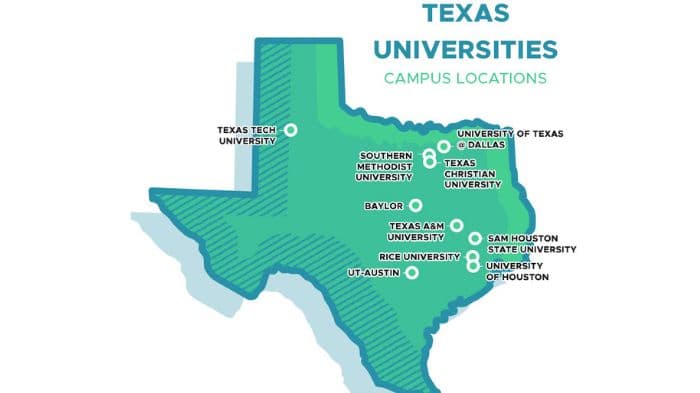
Public universities in Texas are expanding tuition assistance to reach more middle-income families as concerns about the cost of higher education continue to influence college-going decisions.
The expansion reflects a shift in how institutions define affordability. While some tuition assistance programmes were initially designed to supplement aid for lower-income students, universities are increasingly extending eligibility to families that earn too much to qualify for some federal grants but still struggle to meet the cost of college.

According to an updated directory from Trellis Strategies, a Texas-based postsecondary research and consulting firm, 34 of the state’s 45 public universities offer at least one guaranteed-tuition programme. Income eligibility limits across these programmes range from $30,000 to $130,000, with the median income cap rising from about $80,000 last year to $100,000.
Of the 32 programmes that impose income limits, 19 now cover families earning $100,000 or more annually.
Tuition assistance reaches beyond low-income households
Bryan Ashton, managing director at Trellis Strategies, said universities were responding to financial pressure among families that may not qualify for federal Pell Grants but still face difficulties managing education expenses.
The broader eligibility reflects growing recognition that college affordability is also a concern for parts of the middle class, particularly households balancing education costs against other monthly expenses.
Texas is also holding its second annual Free College Application Week, during which application fees are waived at public colleges and universities. The initiative is intended to encourage more prospective students to apply.
Promise programmes operate across the US
Tuition guarantees are part of a wider set of college-affordability initiatives across the United States. College Promise programmes provide financial assistance to make postsecondary education more accessible, with some also offering additional support services.
John Barnshaw, a senior leader at College Promise, said 475 Promise programmes had been introduced across all 50 states, involving approximately 1,850 colleges and universities. Thirty-eight states operate their own programmes, while Texas does not have a statewide Promise programme, according to Barnshaw.
He said expanding access to lower-cost or tuition-free education could help address concerns about the value of higher education while enabling more people to pursue postsecondary qualifications.
Texas has also set a goal of ensuring that at least 60% of residents aged 25 to 34 hold a postsecondary credential of value by 2030.
Universities adjust eligibility and deadlines
Some Texas institutions are changing programme requirements to reach more students. Measures include moving application deadlines to January 15, extending eligibility to transfer students and offering partial tuition assistance to families with higher incomes.
The University of Houston, the University of Texas at Austin and Texas A&M University are among the institutions cited in connection with these changes. Some programmes extend assistance to families earning as much as $130,000 a year.
Guaranteed-tuition schemes can also help students estimate their expenses before enrolling. More predictable tuition costs may allow families to plan their finances and direct other available financial aid towards living expenses.
Living costs remain a barrier
Despite the wider reach of tuition assistance, covering tuition does not remove all the financial obstacles associated with college attendance.
Housing, food, transport, course materials and programme-specific fees can add substantially to the cost of a degree. Trellis Strategies noted that tuition and fees account for about 40% of the costs at Texas public four-year institutions, leaving other expenses to be covered.
Ashton said institutions also need to consider access to food and housing support and lower-cost learning materials. These expenses can affect whether students remain enrolled and complete their qualifications, even when tuition is covered.
The expansion of guaranteed-tuition programmes therefore represents one part of the affordability response. Reaching more income groups may help students consider college, but broader financial support remains important to make attendance and completion manageable.

Hunter of Underwater Threats: Why INS Mangrol Is Important for the Indian Navy

Delhi Protests Renew Debate Over Constitutional Right to Peaceful Assembly

Household Inflation Rises to 5.54% in September as Price Pressures Spread

Delhi High Court Allows Urgent Hearing on Protest Site Guidelines

India Rejects China’s Objection to Standardised Names of Places in Ladakh
Karnataka student elections return after 37 years: Why political restrictions and university polls remain contentious

Global education is shifting from simply going abroad to creating more flexible routes to opportunity

Delhi Police files FIR against Congress MP Bimol Akoijam over JNU sexual harassment allegations

Utkal University tightens security after late-night explosions ahead of student polls

IET India Scholarship Award 2026: DTU’s Kush Garg wins top honor for AI device for neurodivergent children

Hunter of Underwater Threats: Why INS Mangrol Is Important for the Indian Navy
Delhi Protests Renew Debate Over Constitutional Right to Peaceful Assembly
Household Inflation Rises to 5.54% in September as Price Pressures Spread
Delhi High Court Allows Urgent Hearing on Protest Site Guidelines
India Rejects China’s Objection to Standardised Names of Places in Ladakh
Karnataka student elections return after 37 years: Why political restrictions and university polls remain contentious
Global education is shifting from simply going abroad to creating more flexible routes to opportunity
Delhi Police files FIR against Congress MP Bimol Akoijam over JNU sexual harassment allegations
Utkal University tightens security after late-night explosions ahead of student polls
IET India Scholarship Award 2026: DTU’s Kush Garg wins top honor for AI device for neurodivergent children
Copyright© educationpost.in 2026 All Rights Reserved.