


Constitution protects peaceful protests, but police can impose reasonable restrictions to maintain public order; the key question is whether regulation becomes an outright prohibition
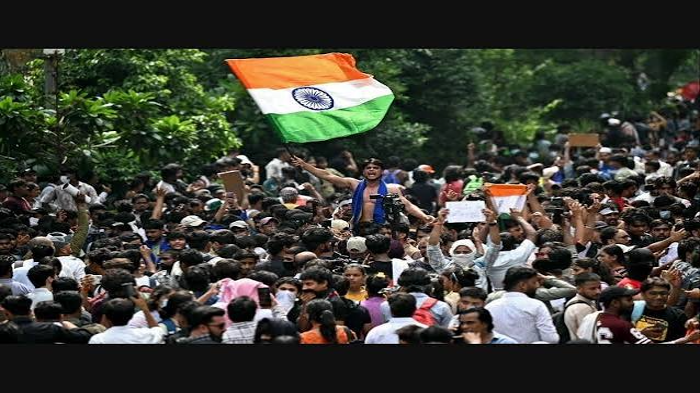
The recent protests in Delhi demanding the resignation of Chief Election Commissioner Gyanesh Kumar over alleged electoral roll irregularities have renewed debate over the constitutional right to protest and the limits of police powers.
Authorities imposed several restrictions during the demonstrations, including prohibitory orders, barricades, detentions, Metro restrictions and train cancellations. The denotification of Jantar Mantar as a designated protest site has further raised concerns about citizens’ ability to exercise their fundamental rights.

The Indian Constitution guarantees freedom of speech and expression under Article 19(1)(a) and the right to assemble peacefully and without arms under Article 19(1)(b). However, these rights are not absolute. Articles 19(2) and 19(3) allow the State to impose reasonable restrictions in the interests of public order and other specified grounds.
The central issue is whether authorities can prevent a peaceful gathering simply because permission has not been granted. While police have the power to regulate protests and take preventive action against potential disturbances, such powers cannot be exercised arbitrarily to eliminate the right to assemble.
Police authorities argue that permission to protest at a designated location does not automatically authorise demonstrators to march towards restricted areas. For instance, a peaceful march towards Parliament may still violate the conditions under which permission to assemble was granted.
The Supreme Court has recognised the need to balance public order with citizens’ fundamental rights. In Himat Lal K Shah vs Commissioner of Police (1973), the Court held that the State can regulate assemblies on public streets because these spaces serve multiple public purposes. However, it also made clear that regulatory powers cannot be used arbitrarily to prohibit public meetings altogether.
Preventive policing is an important responsibility of law enforcement agencies, as authorities need not wait for violence to occur before taking reasonable precautionary measures. Nevertheless, restrictions must have a legitimate basis and remain proportionate to the potential threat.
The Delhi protests highlight the difficult balance between maintaining public order and protecting democratic freedoms. Although authorities can regulate the location, timing and manner of demonstrations, such measures should not unnecessarily suppress peaceful dissent.
Ultimately, the right to protest is an essential feature of a democracy. Ensuring that public safety measures remain reasonable, transparent and non-arbitrary is necessary to protect both public order and citizens’ constitutional freedoms.

Hunter of Underwater Threats: Why INS Mangrol Is Important for the Indian Navy
Delhi Protests Renew Debate Over Constitutional Right to Peaceful Assembly

Household Inflation Rises to 5.54% in September as Price Pressures Spread
Delhi High Court Allows Urgent Hearing on Protest Site Guidelines

India Rejects China’s Objection to Standardised Names of Places in Ladakh
Karnataka student elections return after 37 years: Why political restrictions and university polls remain contentious
Global education is shifting from simply going abroad to creating more flexible routes to opportunity
Delhi Police files FIR against Congress MP Bimol Akoijam over JNU sexual harassment allegations
Utkal University tightens security after late-night explosions ahead of student polls

IET India Scholarship Award 2026: DTU’s Kush Garg wins top honor for AI device for neurodivergent children

Hunter of Underwater Threats: Why INS Mangrol Is Important for the Indian Navy
Delhi Protests Renew Debate Over Constitutional Right to Peaceful Assembly
Household Inflation Rises to 5.54% in September as Price Pressures Spread
Delhi High Court Allows Urgent Hearing on Protest Site Guidelines
India Rejects China’s Objection to Standardised Names of Places in Ladakh
Karnataka student elections return after 37 years: Why political restrictions and university polls remain contentious
Global education is shifting from simply going abroad to creating more flexible routes to opportunity
Delhi Police files FIR against Congress MP Bimol Akoijam over JNU sexual harassment allegations
Utkal University tightens security after late-night explosions ahead of student polls
IET India Scholarship Award 2026: DTU’s Kush Garg wins top honor for AI device for neurodivergent children
Copyright© educationpost.in 2026 All Rights Reserved.