


The new pathway aims to help academically talented refugees access higher education and resettle in the UK, with around 15 universities expected to take part in the first cohort. Participating institutions are being asked to provide year-round accommodation and additional financial support.
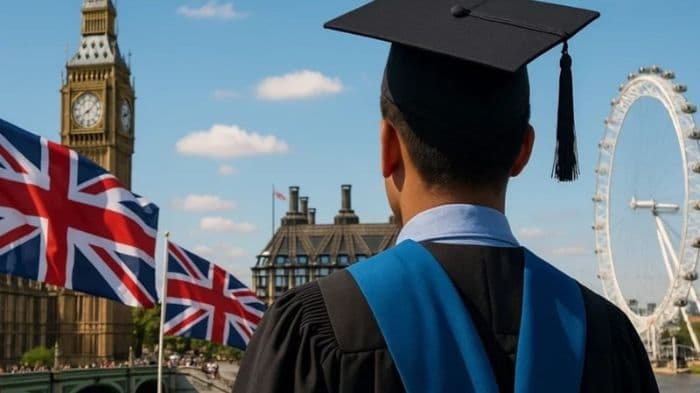
The UK’s new refugee education pathway aims to bring an initial cohort of 40 students to universities across the country in September 2027, as the government develops a route combining access to higher education with refugee resettlement.
Katherine Gladwell, chief executive of Refugee Education UK, outlined the plans at an All-Party Parliamentary Group (APPG) for International Students event. Around 15 universities are expected to participate in the first cohort, with each institution anticipated to offer places to between two and five students.

The government announced the new route in June 2026 as part of its plans to establish additional safe and legal pathways for refugees. Refugee Education UK is working with the government, the United Nations High Commissioner for Refugees (UNHCR), universities and other partners to develop the scheme.
The first cohort’s target of 40 students is intended to reflect the practical capacity to process applications and prepare participating institutions for the September 2027 academic year. Gladwell said it was not an official cap on the number of students the pathway could eventually support.
How the refugee education pathway will work
Under the proposed arrangement, refugee status determination will be conducted with UNHCR before applicants leave their first country of asylum.
Successful applicants are expected to arrive in the UK with refugee status and be treated as home students for university fee purposes, making them eligible for student finance.
The route is intended to provide an education opportunity alongside resettlement. It is being developed for academically talented refugees who may otherwise face significant barriers to entering higher education.
The precise eligibility requirements, including which countries of first asylum will be covered, have not yet been confirmed. Gladwell said the scheme would be based on countries where refugees first seek asylum, rather than nationality alone.
The application process is also being developed. Refugee Education UK has been asked to help universities prepare and establish a process that can work within the timetable for the 2027 academic year.
The pathway will use a lead-sponsor model, under which approved organisations are expected to play a role in coordinating participation and supporting the process. The accreditation process for lead sponsors was expected to conclude in the weeks following Gladwell’s remarks.
Universities to provide accommodation and financial support
Participating universities are being asked to provide students with accommodation throughout the year and a bursary of approximately £3,500 per student, in addition to student finance.
The accommodation requirement is significant because students arriving through the route will need support beyond the academic term. Year-round housing and financial assistance are intended to help them establish themselves while pursuing their studies.
Universities will also need to determine whether they have the capacity to take part. Gladwell acknowledged that financial pressures on higher education institutions could limit participation, and said she hoped universities with a range of entry requirements would join the programme.
The initial target will therefore depend not only on identifying eligible students but also on securing enough universities willing and able to provide places and the required support.
UK builds on international refugee education models
Gladwell pointed to Australia and Canada as examples of countries with education pathways for refugees. Canada’s programme, she said, currently supports around 170 students and has operated for decades.
The UK initiative builds on Refugee Education UK’s earlier pilot supporting academically talented refugees to access higher education. The new pathway is intended to establish a more formal route through which universities can participate in refugee resettlement.
Gladwell described the programme as an opportunity for students, universities and the communities in which they will study. Students would gain access to higher education and a route to resettlement, while participating institutions could welcome students whose educational opportunities have been disrupted by displacement.
The scheme’s initial scale remains limited, and its development will depend on universities joining, sponsor arrangements being completed and eligibility and application procedures being finalised.
Student visa restrictions raise wider questions
The plans come amid wider debate over the UK’s approach to migration and access to protection. The government’s visa restrictions affecting nationals of Afghanistan, Cameroon, Myanmar and Sudan have raised concerns, alongside questions about students who seek asylum after arriving in the UK.
Deepa Chadha, policy adviser at the UK Council for International Student Affairs (UKCISA), argued that a student’s subsequent asylum claim should not automatically be treated as evidence that the person had misused the student visa route. She said a person could have a genuine intention to study while also having a legitimate need for protection.
Chadha criticised blanket visa restrictions for failing to account adequately for individual humanitarian circumstances and called for a more predictable and proportionate response that would allow students to continue their education when their circumstances changed.
The refugee education pathway is being developed as a separate, planned route for eligible refugees, rather than as a general student visa option. Its eligibility rules and implementation arrangements are still being worked out.
With applications for prospective lead sponsors expected to progress during autumn 2026 and the first student arrivals targeted for September 2027, the next stage will involve finalising the scheme and securing university participation. The initial cohort of 40 is a starting point for the programme, with its eventual scale dependent on operational capacity and institutional involvement.

Dundee University calls off strike as compulsory redundancies are paused

Telangana SSC Exams 2027: Fee Payment Dates Announced, Check Late Fees and Deadlines

UNESCO seeks $1.5 billion to rebuild Sudan’s shattered scientific research system
CHSE Odisha Plus Two Exams 2027: CCTV Mandatory at Exam Centres, Deadline November 30

Bob Cryan to step down as Huddersfield vice-chancellor after 20 years

Abu Dhabi aims to bring 2,000 Emirati teachers into private schools within five years

Australian schools record thousands of student sexual misconduct reports as child safety concerns grow

Egypt insists international schools include Arabic, history in final scores

China’s Chery unveils AI companion robot designed to ease loneliness

New Zealand reforms could leave more students without school qualifications

Dundee University calls off strike as compulsory redundancies are paused
Telangana SSC Exams 2027: Fee Payment Dates Announced, Check Late Fees and Deadlines
UNESCO seeks $1.5 billion to rebuild Sudan’s shattered scientific research system
CHSE Odisha Plus Two Exams 2027: CCTV Mandatory at Exam Centres, Deadline November 30
Bob Cryan to step down as Huddersfield vice-chancellor after 20 years
Abu Dhabi aims to bring 2,000 Emirati teachers into private schools within five years
Australian schools record thousands of student sexual misconduct reports as child safety concerns grow
Egypt insists international schools include Arabic, history in final scores
China’s Chery unveils AI companion robot designed to ease loneliness
New Zealand reforms could leave more students without school qualifications
Copyright© educationpost.in 2026 All Rights Reserved.