


With 124 educational and scientific institutions damaged by war, UNESCO calls for urgent investment to restore research, support displaced scientists and safeguard Sudan’s knowledge for future generations.
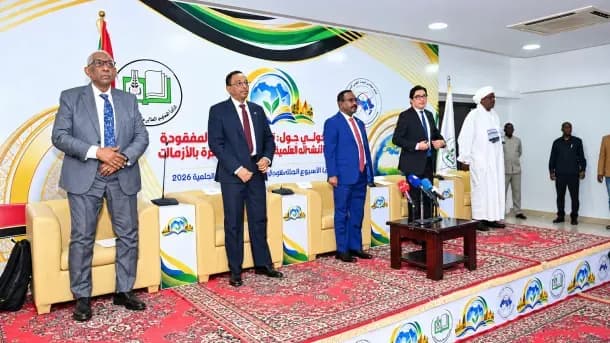
Sudan’s war has inflicted deep damage on its scientific and higher education sectors, threatening not only universities and research facilities but also years of accumulated knowledge and the future of an entire generation of researchers. UNESCO is calling for urgent investment to rebuild the country’s scientific capacity and ensure that its expertise remains central to national recovery.
The United Nations Educational, Scientific and Cultural Organization (UNESCO) has proposed a five-year recovery plan worth approximately $1.5 billion to rehabilitate scientific infrastructure, support researchers, restore institutional capacity and rebuild a more resilient science, technology and innovation system.

The initiative took centre stage at the International Forum on the Cost of Lost Knowledge, held recently at Africa International University in Khartoum. The gathering brought together more than 100 participants, including university vice-chancellors, researchers, experts and national stakeholders, to discuss ways to restore scientific activity in countries affected by conflict.
Junaid Sorosh-Wali, head of office and UNESCO representative to Sudan, attended the opening alongside Justice Minister Abdullah Mohamed Daraf, Higher Education and Scientific Research Minister Ahmed Musa Madawi, and Federal Governance and Rural Development Minister Mohamed Kartikala Saleh.
Organised by the Federation of Arab Scientific Research Councils (FASRC) and Sudan’s Ministry of Higher Education and Scientific Research under the initiative “Solidarity for the Future – Scientific Research Cannot Wait”, the forum focused on the urgent need to protect research institutions, retain scientific expertise and prevent further losses to Sudan’s knowledge base.
War leaves a devastating mark on science
Since the conflict erupted in April 2023, Sudan’s universities and research institutions have suffered extensive damage. The displacement of scientists, disruption of academic activities and destruction of research facilities have weakened the country’s ability to sustain scientific work at a time when it is urgently needed.
Figures presented at the forum indicate that 124 educational and scientific institutions have been damaged, with estimated restoration costs approaching $870 million.
But the consequences extend far beyond damaged buildings and laboratories. Interrupted research can set back scientific progress for years, while the displacement of researchers threatens to sever professional networks and deprive institutions of expertise that took decades to develop.
For students and early-career researchers, the disruption also risks closing pathways to scientific training, innovation and professional advancement.
“The war has caused extensive destruction to higher education institutions and research centres,” said Madawi, Sudan’s minister of higher education and scientific research.
Justice Minister Daraf described wars as among the most serious threats to education and scientific research, underlining the wider consequences of conflict for the country’s intellectual and institutional foundations.
Addressing the forum, Sorosh-Wali stressed that restoring scientific activity must be treated as an essential part of Sudan’s recovery. He highlighted the country’s longstanding contributions to knowledge and innovation, describing its researchers, scientists and academic institutions as vital national assets.
“The cost of lost knowledge goes far beyond damaged buildings and laboratories. It is also measured in interrupted research, displaced expertise and opportunities that future generations may never recover. Restoring scientific activity is therefore an investment in Sudan’s future,” Sorosh-Wali said.
$1.5 billion recovery plan targets research revival
At the heart of UNESCO’s engagement is a comprehensive assessment of the conflict’s impact on Sudan’s science, technology and innovation system, alongside a proposed recovery framework to guide reconstruction and future investment.
Developed in close collaboration with national stakeholders, the five-year plan envisages an investment of approximately $1.5 billion. Its priorities include rehabilitating scientific infrastructure, supporting researchers, rebuilding institutional capacity and reconnecting Sudan’s research system with international scientific networks.
The proposed investment is intended not simply to restore what existed before the conflict but to strengthen the foundations of a scientific system capable of responding more effectively to Sudan’s long-term development needs.
During the two-day forum, UNESCO presented findings from its assessment of the country’s science, technology and innovation sector, alongside the proposed recovery plan and a monitoring dashboard developed through a project nearing completion.
The tools are intended to help national institutions and development partners identify urgent priorities, coordinate financial and technical assistance, and monitor progress as recovery efforts advance.
“Rebuilding Sudan’s scientific capacity is not simply about restoring what existed before the conflict. It is an opportunity to strengthen institutions, reconnect researchers and create a scientific system that can better respond to the country’s development needs,” Sorosh-Wali said.
Displaced scientists emerge as a key priority
Beyond infrastructure and institutional rehabilitation, the recovery effort faces another pressing challenge: ensuring that Sudan does not lose the scientists and researchers forced to abandon their workplaces and relocate because of the conflict.
Many researchers have had to interrupt their work, leave their institutions or rebuild their professional lives elsewhere. Without sustained support, these disruptions could weaken Sudan’s scientific community long after the fighting ends.
UNESCO is leading dedicated sessions at the forum to examine ways to assist displaced Sudanese scientists, preserve professional and academic connections, and create opportunities for them to continue contributing to research.
The discussions reflect a broader recognition that rebuilding laboratories and university facilities will not, by itself, restore the country’s scientific capacity. Recovery also depends on retaining skilled professionals, sustaining research networks and enabling scientists to resume their work despite displacement.
Maintaining these connections could help preserve institutional knowledge, support collaboration with international research communities and ensure that displaced experts remain part of Sudan’s future scientific development.
The forum is providing a platform for government institutions, scientific organisations and development partners to explore coordinated measures to protect the country’s research capacity and prevent further erosion of its expertise.
Science must be part of Sudan’s national recovery
UNESCO’s call places scientific research at the centre of Sudan’s wider recovery agenda, linking the restoration of universities and research institutions to the country’s future prospects in education, healthcare, environmental resilience, innovation and economic development.
The proposed recovery framework offers a basis for directing investment towards the institutions, researchers and scientific networks needed to rebuild that capacity. Turning the plan into action, however, will require sustained funding, coordination among national authorities and development partners, and continued support for researchers affected by the war.
For Sudan, the challenge is not only to repair damaged institutions but also to protect the knowledge and expertise that will shape the country’s future.
Every disrupted research project, displaced scientist and weakened academic institution represents a potential loss that may take years to reverse. UNESCO’s appeal underscores the urgency of acting before those losses become permanent.
Safeguarding Sudan’s scientific knowledge is ultimately an investment in its people, its recovery and the generations that will inherit the task of rebuilding the country.

Dundee University calls off strike as compulsory redundancies are paused
Telangana SSC Exams 2027: Fee Payment Dates Announced, Check Late Fees and Deadlines
UNESCO seeks $1.5 billion to rebuild Sudan’s shattered scientific research system
CHSE Odisha Plus Two Exams 2027: CCTV Mandatory at Exam Centres, Deadline November 30

Bob Cryan to step down as Huddersfield vice-chancellor after 20 years
Abu Dhabi aims to bring 2,000 Emirati teachers into private schools within five years

Australian schools record thousands of student sexual misconduct reports as child safety concerns grow
Egypt insists international schools include Arabic, history in final scores

China’s Chery unveils AI companion robot designed to ease loneliness

New Zealand reforms could leave more students without school qualifications

Dundee University calls off strike as compulsory redundancies are paused
Telangana SSC Exams 2027: Fee Payment Dates Announced, Check Late Fees and Deadlines
UNESCO seeks $1.5 billion to rebuild Sudan’s shattered scientific research system
CHSE Odisha Plus Two Exams 2027: CCTV Mandatory at Exam Centres, Deadline November 30
Bob Cryan to step down as Huddersfield vice-chancellor after 20 years
Abu Dhabi aims to bring 2,000 Emirati teachers into private schools within five years
Australian schools record thousands of student sexual misconduct reports as child safety concerns grow
Egypt insists international schools include Arabic, history in final scores
China’s Chery unveils AI companion robot designed to ease loneliness
New Zealand reforms could leave more students without school qualifications
Copyright© educationpost.in 2026 All Rights Reserved.