


The UKRI-funded DICE Network+ has awarded more than £430,000 to projects exploring how artificial intelligence, digital twins and data tools could support food redistribution, material reuse and more sustainable digital technologies.
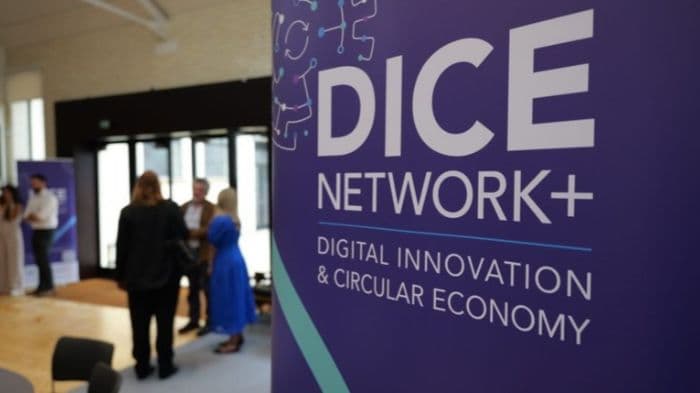
A research network led by the University of Exeter has awarded more than £430,000 to projects exploring how digital technologies can support a circular economy, including the reuse of building materials and the redistribution of surplus food.
The funding was announced by the University of Exeter on Oct 26. The Digital Innovation & Circular Economy (DICE) Network+ is a three-year programme funded by UK Research and Innovation’s Engineering and Physical Sciences Research Council (EPSRC), with researchers from nine UK universities collaborating on the initiative.

The projects examine how digital tools could help reduce waste, keep materials in use for longer and embed sustainability into the development of technology. The university’s announcement did not provide a project-by-project breakdown of the total funding.
Projects explore AI, food redistribution and material reuse
The funded work includes research into using buildings as “materials banks”, allowing components to be recovered and reused in future construction rather than discarded.
Another project explores how digital twins and artificial intelligence could help distribute surplus food in London. Digital twins are virtual representations of physical systems that can be used to model and assess different scenarios.
Other projects focus on digital product passports, which can provide information about a product and its materials, and on improving digital-platform exchanges through machine learning that predicts which items are likely to be desirable.
The projects address different parts of the circular economy, a model that aims to keep products and materials in use through reuse, repair, recovery and recycling instead of relying on a take-make-dispose approach.
Network combines digital innovation and sustainability
DICE Network+ works across two broad areas. One examines how digital innovation can enable circular-economy practices across sectors, while the other looks at how sustainability and circularity can be incorporated into the design and development of digital technologies themselves.
Professor Fiona Charnley, co-director of the Exeter Centre for Circular Economy at the University of Exeter Business School, said the projects would help researchers and industry partners develop evidence, tools and collaborations to address sustainability challenges.
The network has already supported an initial round of three feasibility studies, which began in January 2026. A second round, comprising three further feasibility studies and two demonstrator projects, began in October. Ten knowledge-exchange placements are also complete or under way.
The funding supports research and demonstration work rather than confirming that the proposed approaches have already reduced waste or improved resource efficiency at scale.
The university’s announcement did not specify individual project budgets, whether the tools would be open source or when measurable environmental outcomes would be reported. Those details will be important in assessing the projects’ progress and eventual impact.
The initiative forms part of wider efforts to examine how digital technologies can help businesses and public services make better use of resources. Its results will depend on whether the approaches can be tested, adopted and shown to deliver practical benefits.

Syria school curriculum changes spark backlash over altered images, historical figures
University of Lincoln makes lecture recordings compulsory, sparking staff union dispute

11-year-old Egyptian girl beats 40 million students to win Dh500,000 in Dubai

UN highlights need for media literacy as AI reshapes how young people access information

Canadian university graduates retain wage advantage as full-time job prospects soften
11-year-old Egyptian girl beats 40 million students to win Dh500,000 in Dubai

South Korea's student suicide toll nears 1,000 in four years, with India's figures also drawing attention

Want to explore the world without leaving your classroom? Seoul students show how

When smart glasses become cheating tools: South Korea draws tougher exam rules

Jeans out, formals in: Bihar rolls out stricter rules for government school staff

Syria school curriculum changes spark backlash over altered images, historical figures
University of Lincoln makes lecture recordings compulsory, sparking staff union dispute
11-year-old Egyptian girl beats 40 million students to win Dh500,000 in Dubai
UN highlights need for media literacy as AI reshapes how young people access information
Canadian university graduates retain wage advantage as full-time job prospects soften
11-year-old Egyptian girl beats 40 million students to win Dh500,000 in Dubai
South Korea's student suicide toll nears 1,000 in four years, with India's figures also drawing attention
Want to explore the world without leaving your classroom? Seoul students show how
When smart glasses become cheating tools: South Korea draws tougher exam rules
Jeans out, formals in: Bihar rolls out stricter rules for government school staff
Copyright© educationpost.in 2026 All Rights Reserved.