


The chief minister has outlined curriculum revisions, NEP 2020 implementation and annual student activities focused on nationalism, while proposing education-oriented tablets instead of mobile phone grants.
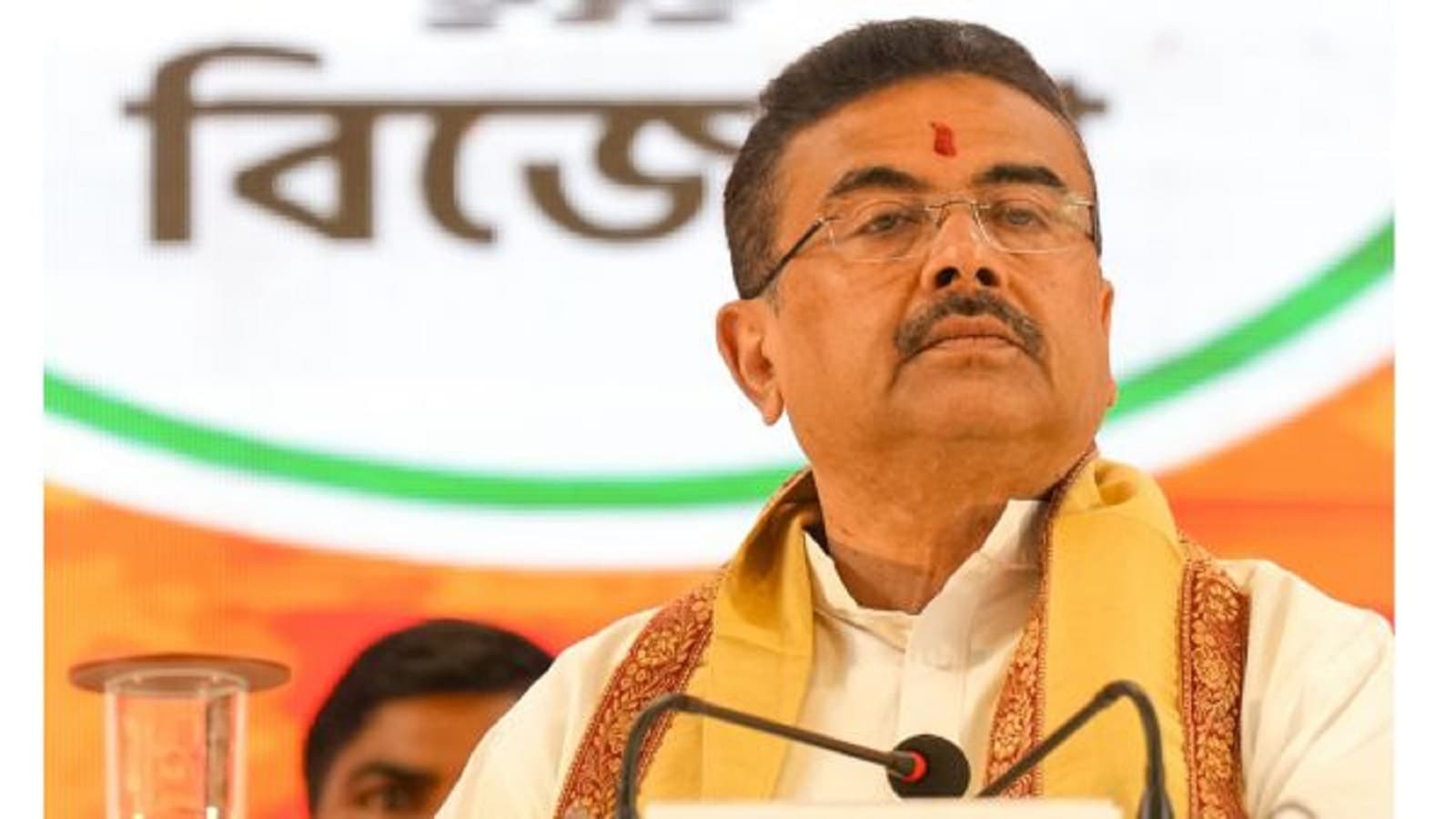
West Bengal Chief Minister Suvendu Adhikari has announced plans to revise school syllabuses from the next academic year and reiterated his government's commitment to implementing the National Education Policy (NEP) 2020. He also proposed annual programmes featuring elocution, quizzes and debates to encourage nationalism among students.
Adhikari made the remarks while criticising the previous Trinamool Congress (TMC) government and the Left parties over what he described as their handling of the state's cultural heritage and education policies.

According to reports published by Careers360 and The Telegraph, the chief minister also opposed the use of mobile phones by students up to Class 12 and said the government was considering providing educational tablets instead of the ₹10,000 assistance previously offered to Class 11 students for purchasing mobile phones.
Adhikari said changes to school syllabuses would become visible from the next academic year and asserted that the state would implement NEP 2020.
The announcement follows the West Bengal government's earlier decision to establish a committee to review the curriculum, syllabuses and textbooks for Classes 1 to 12. The committee was formed in July 2026 to recommend changes in line with the national education policy and the latest National Curriculum Frameworks.
According to a report by Akashvani News, the state education department has indicated that revisions are expected in 2027, while the new syllabus is scheduled to come into force in 2028. The proposed reforms will cover Classes 1 to 12.
The curriculum review is expected to examine teaching methods, textbooks, examinations and assessment practices, with the aim of aligning school education with the national framework.
The final details of the revised syllabus will depend on the recommendations of the committee and subsequent government decisions.
The chief minister called for educational institutions to organise three-day programmes every year featuring elocution, quizzes and debates.
He said such activities would help students develop a sense of nationalism and encourage them to engage with questions concerning the country, its culture and its heritage.
During his remarks, Adhikari also took aim at the Cockroach Janta Party (CJP), using derogatory comparisons while criticising groups he accused of promoting divisive ideas. He also targeted the Left parties and the previous TMC government, alleging that their policies had undermined Bengal's cultural heritage.
These statements formed part of his broader political criticism and were not announcements of a separate academic examination or compulsory curriculum component.
Adhikari also discussed a possible change to the financial assistance previously provided to Class 11 students for purchasing mobile phones.
Under the earlier arrangement, students received ₹10,000 to help them buy a phone. The chief minister said his government was considering replacing this support with assistance for purchasing tablets intended for educational use.
He has expressed concern about excessive mobile phone use among school students, arguing that it could negatively affect their development and learning.
The proposed change would shift the emphasis towards digital devices intended to support education. However, the announcement does not by itself establish the final eligibility criteria, grant amount, application process or implementation date for a tablet scheme.
Students and parents should wait for an official government notification before relying on any revised benefit or payment arrangement.
Adhikari also criticised the previous government over its handling of school textbooks and student participation in educational activities.
He alleged that the earlier administration had attempted to reduce participation in the National Cadet Corps (NCC) and had promoted an alternative initiative called Jai Hind Vahini. He further questioned the portrayal of the Singur land acquisition movement in school history textbooks.
The claims were made as part of his criticism of the former TMC administration. The announcement of syllabus changes does not, on its own, establish which specific textbook chapters will be revised or removed.
The state government's curriculum committee is expected to play a key role in reviewing the existing material and recommending changes.
West Bengal's proposed education changes involve curriculum revision, alignment with NEP 2020 and a possible shift from mobile phone assistance to educational tablets.
For now, students should distinguish between announced policy intentions and measures that have received formal implementation guidelines. The revised syllabus, any new student-device assistance scheme and the details of the proposed annual programmes will depend on further decisions and official notifications from the state government.

Centre Amends Motor Vehicle Rules to Allow E100 Ethanol Fuel in Flex-Fuel Vehicles
West Bengal CM Suvendu Adhikari Announces School Syllabus Changes, Tablet-Based Learning Plan

Study in Malaysia for Indian Students 2026: Universities, Fees, Scholarships, Visa and Career Opportunities
Delhi BS6 Entry Ban From November 1 Could Affect Over 10 Lakh NCR Vehicles

Study in Indonesia for Indian Students 2026: Top Universities, Fees, Scholarships, Visa and Career Opportunities
Centre Amends Motor Vehicle Rules to Allow E100 Ethanol Fuel in Flex-Fuel Vehicles
Study in Malaysia for Indian Students 2026: Universities, Fees, Scholarships, Visa and Career Opportunities
Delhi BS6 Entry Ban From November 1 Could Affect Over 10 Lakh NCR Vehicles
Study in Indonesia for Indian Students 2026: Top Universities, Fees, Scholarships, Visa and Career Opportunities

Study in China 2027: Top Universities, Fees, Scholarships, Visas and Career Options for Indian Students

Centre Amends Motor Vehicle Rules to Allow E100 Ethanol Fuel in Flex-Fuel Vehicles
West Bengal CM Suvendu Adhikari Announces School Syllabus Changes, Tablet-Based Learning Plan
Study in Malaysia for Indian Students 2026: Universities, Fees, Scholarships, Visa and Career Opportunities
Delhi BS6 Entry Ban From November 1 Could Affect Over 10 Lakh NCR Vehicles
Study in Indonesia for Indian Students 2026: Top Universities, Fees, Scholarships, Visa and Career Opportunities
Centre Amends Motor Vehicle Rules to Allow E100 Ethanol Fuel in Flex-Fuel Vehicles
Study in Malaysia for Indian Students 2026: Universities, Fees, Scholarships, Visa and Career Opportunities
Delhi BS6 Entry Ban From November 1 Could Affect Over 10 Lakh NCR Vehicles
Study in Indonesia for Indian Students 2026: Top Universities, Fees, Scholarships, Visa and Career Opportunities
Study in China 2027: Top Universities, Fees, Scholarships, Visas and Career Options for Indian Students
Copyright© educationpost.in 2026 All Rights Reserved.