African Union adopts 10-level qualifications framework to improve cross-border education mobility
The framework is part of a wider package of measures aimed at making qualifications more comparable across African countries, strengthening higher education quality assurance, retaining skilled talent and expanding regional research collaboration.
By Fatima hasan · Updated
The African Union (AU) has adopted a 10-level continental qualifications framework aimed at making academic and professional qualifications more transparent and comparable across member states, in a move intended to improve the movement of students and skilled workers across Africa.
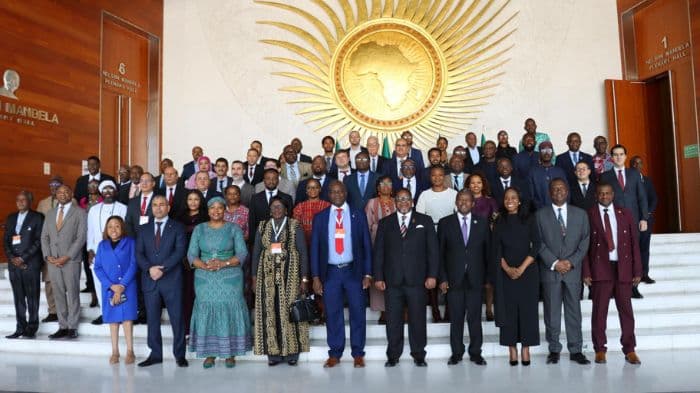
The African Continental Qualifications Framework (ACQF) was among several education and research measures endorsed by ministers from 32 AU member states during the sixth ordinary session of the bloc's Specialized Technical Committee on Education, Science and Technology in Addis Ababa, Ethiopia, on November 6. The African Union Commission announced the decisions on Nov 9.
The framework is intended to provide a common reference for comparing qualifications awarded by different countries and education systems. This could make it easier for universities, employers and national authorities to understand the level and learning outcomes associated with qualifications obtained elsewhere on the continent.
The decision forms part of a broader effort to develop an integrated African higher education and skills area. Ministers also endorsed a declaration establishing the African Common Higher Education and Skills Area (ACHEA), approved the statutes of the Pan-African Quality Assurance Alliance (PAQAA) for submission to AU policy organs, and endorsed a declaration on reversing brain drain and retaining African talent.
The measures reflect the bloc's effort to connect education systems more closely with regional labour markets, research priorities and economic development.
A common reference for qualifications across Africa
African countries have different education structures, qualification titles, assessment systems and quality assurance arrangements. These differences can make it difficult to establish how a degree, diploma or professional qualification obtained in one country compares with a qualification issued elsewhere.
A common qualifications framework is designed to address this problem by providing shared reference levels against which learning outcomes, knowledge, skills and competencies can be compared.
The 10-level ACQF is intended to improve transparency and recognition without requiring countries to replace their national qualifications systems with a single continental system. National authorities and institutions would continue to award qualifications under their own frameworks, while the continental reference would help establish equivalence and comparability.
For students, this could support applications to universities in other African countries and make it easier for institutions to evaluate previous learning. For workers, improved comparability could help employers and professional bodies understand qualifications acquired in different national systems.
However, adoption of the framework does not automatically mean that every African country will recognise every qualification issued elsewhere. Its effectiveness will depend on national implementation, alignment of qualification systems and cooperation among recognition and quality assurance authorities.
The framework is therefore an important step towards regional mobility, rather than an immediate guarantee of automatic admission or employment across borders.
African Common Higher Education and Skills Area
Alongside the qualifications framework, ministers endorsed a declaration establishing the African Common Higher Education and Skills Area.
The proposed area is intended to strengthen cooperation among higher education systems and improve the movement of learners, graduates and skilled professionals across the continent.
The initiative is linked to the AU's wider ambition to develop an integrated higher education space in which qualifications are more easily understood, academic standards are strengthened and universities can collaborate across national boundaries.
Ministers also approved the statutes of the Pan-African Quality Assurance Alliance. The statutes are to be submitted to AU policy organs, meaning the alliance's approval at the ministerial meeting should not be confused with full operational establishment.
The proposed alliance is expected to support cooperation among quality assurance bodies and strengthen the credibility of higher education qualifications across different countries.
Quality assurance is particularly important as cross-border education expands. Greater student mobility and collaboration between universities require confidence that institutions and programmes meet recognised academic standards.
Together, the qualifications framework, the proposed higher education area and the quality assurance alliance are intended to address different parts of the same challenge: making African higher education systems more connected and qualifications more widely understood.
African Union calls for action to reverse brain drain
The ministerial session also endorsed the African Declaration on Reversing Brain Drain and Fostering Talent Retention, highlighting concerns about the movement of skilled professionals and researchers away from the continent.
African countries invest in educating and training doctors, engineers, scientists, academics and other professionals, but many subsequently seek employment and research opportunities abroad. Limited research infrastructure, funding constraints, fewer specialist career opportunities and differences in remuneration can influence these decisions.
The declaration seeks to promote conditions that allow African professionals to build careers and contribute to research and innovation within the continent.
The AU's position links talent retention with the need to strengthen research institutions, create employment opportunities and improve the environment for scientific work.
The meeting also urged member states to allocate 1% of gross domestic product to research and development, positioning national Science Granting Councils as key mechanisms for implementing research priorities.
This is a call for member states to increase domestic research investment, not a report that African countries have already reached the 1% target.
The ministers also recommended the adoption of an African Declaration on Transformative Research Collaboration, which would promote equitable, African-led research partnerships aligned with the continent's priorities.
Wider reforms target education quality and skills development
The decisions taken at the meeting extended beyond higher education mobility and research funding. Ministers endorsed implementation plans for the Continental Education Strategy for Africa (CESA) 2026–2035 and the Continental TVET Strategy 2025–2034. The plans are intended to guide improvements in foundational learning, technical and vocational education, skills development and the alignment of education with employment needs.
The session also endorsed 60 standardised indicators aligned with Sustainable Development Goal 4, which focuses on inclusive and equitable quality education and lifelong learning opportunities for all.
The African Union Commission was asked to establish a continental digital reporting portal and a CESA Policy Dashboard in collaboration with the UNESCO Institute for Statistics and the Global Education Monitoring Report team. The proposed system is intended to improve education data collection and reduce reporting burdens on member states.
Ministers also endorsed the Bujumbura Declaration from the second Pan-African Conference on Girls' Education and adopted a gender framework for CESA 2026–2035. These measures seek to strengthen the integration of gender equality into education planning and budgets.
The wider package reflects an approach that connects access to education with the quality of learning, relevance of skills, research capacity and the ability of education systems to respond to labour-market needs.
Africa's education and innovation agenda
The ministerial meeting was held under the theme, 'Accelerating Africa's Human Capital and Innovation: Resilient Education, Science, and Technology Systems for the AU Decade of Accelerated Action for Education Transformation and Skills Development (2025–2034)'.
Opening the session on behalf of the African Union Commission chairperson, Professor Gaspard Banyankimbona, commissioner for Education, Science, Technology and Innovation, emphasised the need to translate continental commitments into adequately financed national action.
“Africa's socio-economic transformation under Agenda 2063 hinges fundamentally on our ability to build resilient, adaptive, and inclusive education and innovation systems,” Banyankimbona said.
He outlined five priority areas for collective action: strengthening foundational learning and teacher development; linking skills and research to productive employment; establishing an integrated African higher education space; promoting African scientific leadership; and securing sustainable domestic financing.
The session also addressed emerging technologies and research infrastructure. Ministers cleared five sectoral publications on responsible artificial intelligence governance for national adaptation and called for greater digital literacy and youth participation in AI and robotics.
They also requested the development of a continental semiconductor strategy and endorsed a two-pronged approach towards an African-owned synchrotron light source facility, alongside an African beamline at the SESAME facility. The latter initiative is intended to support scientific training, with the AU announcement referring to more than 200 scientists annually.
From continental commitments to national implementation
The decisions taken in Addis Ababa provide a framework for greater cooperation among African education systems, but their impact will depend on how member states translate the commitments into national policies and institutional practices.
For the qualifications framework, this will involve aligning national systems with the continental reference levels and strengthening the authorities responsible for recognising qualifications. For the proposed higher education area and quality assurance alliance, further institutional arrangements and implementation steps will be necessary.
The call for greater research investment also presents a challenge for governments facing competing demands on public finances. Retaining skilled professionals will require more than declarations: universities and research institutions need adequate funding, modern facilities, competitive career opportunities and stronger links with employers.
The African Union's decisions bring these issues together within a wider education and innovation agenda. If implemented effectively, the measures could help make qualifications easier to compare, strengthen academic cooperation and create more opportunities for students, researchers and skilled workers to build careers across the continent.
Also read