


The University of the Witwatersrand's new centre will focus on nine areas, including generative AI in teaching, university governance, inclusion and global research partnerships, with an emphasis on perspectives from the Global South.
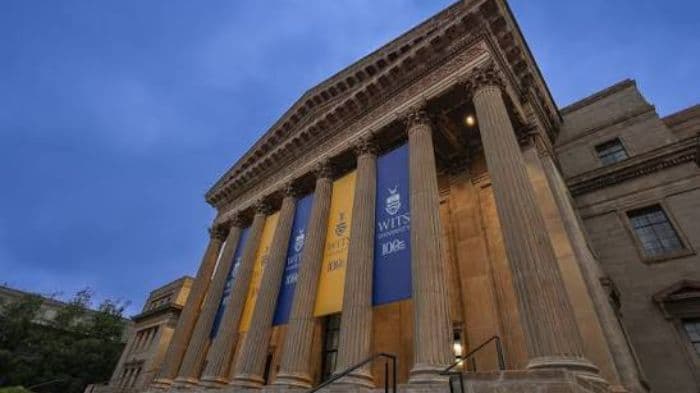
The University of the Witwatersrand (Wits) in South Africa has formally opened a research centre dedicated to examining how higher education systems should respond to emerging challenges, including artificial intelligence, inequality, geopolitical tensions and changing economic conditions.
The Global Higher Education Futures (GHEF) Centre will work across nine interconnected thematic areas, bringing together researchers, policymakers, university leaders, practitioners and community representatives to explore possible directions for higher education.

Announced on Nov 9, the centre is intended to serve as a national resource, a regional hub and an international platform for research and dialogue. Its work will place particular emphasis on knowledge production from the Global South and approaches that account for the needs and experiences of developing countries.
The centre's inaugural webinar, held on Sep 30, brought together more than 170 educators, institutional leaders, policymakers and private-sector higher education practitioners.
Nine research areas include AI, governance and inclusion
Professor Nicole De Wet-Billings, Wits' Senior Director for Academic Planning, outlined the centre's nine thematic hubs. These cover multilogues, critical higher education studies, entrepreneurship, generative AI pedagogy, political economy and governance, public trust in science, inclusivity, heritage digitisation and global partnerships.
The research agenda will examine how universities can respond to technological disruption and social inequalities while strengthening their ability to adapt to changing conditions.
Upcoming public seminars will address AI and inequality, locally relevant artificial intelligence research and development for the Global South, multilingual AI tools and AI-enhanced learning.
The centre will also offer seed funding opportunities and create two new postdoctoral positions to support research and engagement.
Wits calls for greater representation of Global South perspectives
Professor Ruksana Osman, Wits' Senior Deputy Vice-Chancellor for Academic Affairs and founder of the centre, said higher education discussions had often been shaped by the assumption that universities should prepare students for one predetermined future.
She argued that institutions need to recognise different forms of knowledge and consider whose interests and experiences are represented when education systems are designed.
The centre will use a transdisciplinary approach, combining academic research with the perspectives of practitioners and communities to address complex issues.
De Wet-Billings said global challenges had exposed structural weaknesses in higher education systems, particularly in low- and middle-income countries. She added that relying on imported models or incremental changes would not be sufficient to address these challenges.
Private higher education also part of the discussion
The centre's inaugural webinar also included perspectives from the private higher education sector through Professor Linda Meyer, Managing Director and Principal of Rosebank International, formerly Rosebank College.
Meyer argued that private institutions should be included in national higher education planning, pointing to their role in expanding access and their contribution to student learning and employment outcomes.
She also highlighted the need to reconsider assessment methods in the AI era, improve recognition of prior learning and strengthen lifelong learning opportunities.
The centre is positioned within Wits' 2033 Strategic Framework and aims to connect research with policy discussions and practical developments across higher education systems.
UAE science festival to feature 80 workshops in Al Ain

Facing risk of losing ancient knowledge, China establishes rare disciplines school
From smart classrooms to surveillance concerns: Why China's Nanjing University rolled back AI feature

Screen time concerns shape Japan's digital textbook policy, printed books to remain primary

Black holes: Where space, time and the laws of physics break down
Facing risk of losing ancient knowledge, China establishes rare disciplines school
From smart classrooms to surveillance concerns: Why China's Nanjing University rolled back AI feature
Screen time concerns shape Japan's digital textbook policy, printed books to remain primary

From admissions to employment, J&K brings private universities under 25% domicile quota

After NEET paper leak row, NTA moves to expand examination center network

UAE science festival to feature 80 workshops in Al Ain
Facing risk of losing ancient knowledge, China establishes rare disciplines school
From smart classrooms to surveillance concerns: Why China's Nanjing University rolled back AI feature
Screen time concerns shape Japan's digital textbook policy, printed books to remain primary
Black holes: Where space, time and the laws of physics break down
Facing risk of losing ancient knowledge, China establishes rare disciplines school
From smart classrooms to surveillance concerns: Why China's Nanjing University rolled back AI feature
Screen time concerns shape Japan's digital textbook policy, printed books to remain primary
From admissions to employment, J&K brings private universities under 25% domicile quota
After NEET paper leak row, NTA moves to expand examination center network
Copyright© educationpost.in 2026 All Rights Reserved.