


Kenya’s higher education regulator has called on universities to incorporate bio-economy knowledge into existing courses, encouraging students and researchers to turn agricultural waste and other biological resources into commercially useful products.
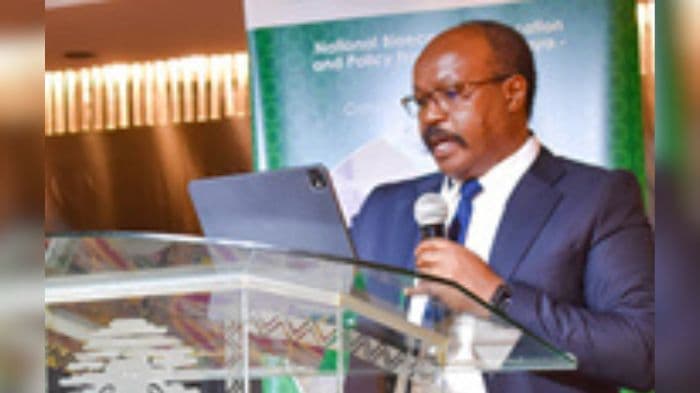
Kenya’s Commission for University Education (CUE) has urged universities to integrate bio-economy knowledge and skills into their teaching, research and innovation programmes, as the country seeks to develop industries based on the sustainable use of biological resources.
The call was made during a meeting of university vice-chancellors and management representatives convened by CUE in Nairobi on Nov 9. The commission published its account of the meeting on Nov 10.

The initiative encourages universities to use their existing academic programmes, research facilities and expertise to develop practical solutions from locally available resources, including agricultural residues, food waste and other organic materials.
CUE chief executive officer Prof Mike Kuria said universities already had the expertise and resources needed to contribute to the transition towards a bio-based economy. He urged institutions to bring together departments such as agriculture, engineering, chemistry, biology, environmental sciences and business rather than treating bio-economy as the responsibility of a single discipline.
Turning agricultural waste into economic opportunities
Agricultural waste was identified as one area where universities could contribute through research and innovation. Kuria cited an estimated 30% to 40% of agricultural produce being lost after harvesting in Kenya, arguing that some of these resources could instead be converted into useful products.
Universities were encouraged to work with farmers, industries and other partners to develop technologies that turn agricultural residues into energy, fertiliser and other marketable products.
Examples discussed at the meeting included Maasai Mara University’s use of biogas for cooking and Strathmore University’s electricity generation, which the CUE chief executive said exceeded its consumption.
Participants also heard from Prof Irini Angelidaki of Denmark’s Technical University of Denmark about research that converts biological waste into industrial inputs. Examples included using wastewater to grow microalgae for products in the food, cosmetics, biofuel and fertiliser industries, and converting coffee and sisal processing residues into mushrooms, enzymes and fibres.
The discussions also highlighted the potential for universities to establish living laboratories on their campuses, allowing students and researchers to test ways of using resources generated by their institutions and surrounding communities.
Curriculum changes and research collaboration
The commission said universities would be encouraged to review existing academic programmes and identify where bio-economy competencies could be incorporated, rather than necessarily introducing entirely new courses.
For example, agricultural programmes could cover the conversion of crop residues into organic fertiliser or animal feed, while engineering students could explore biomass-based energy technologies. Business students could examine how bio-based products can be commercialised.
Prof Henry Mutembei of Chuka University called on institutions to identify students and graduates with the potential to turn research ideas into viable products and businesses. He emphasised the need for practical training in innovation, entrepreneurship and commercialisation.
The meeting also called for stronger collaboration between Kenyan universities and international partners, including the development of an African Bio-Economy University Alliance to support joint research, knowledge-sharing and curriculum development.
The discussions form part of the National Bio-economy Education and Policy Framework in Kenya project, known as BIO-KE, which runs from 2025 to 2029. The initiative aims to strengthen institutional capacity, develop relevant curricula, support policy engagement and promote bio-enterprise development.
The project brings together higher education institutions, government agencies, research organisations and industry partners to build the skills and institutional capacity needed for Kenya’s bio-economy sector.
CUE said it was ready to work with universities to identify relevant programmes, expertise and resources for incorporating bio-economy competencies into higher education.

Delhi Launches First Yamuna River Cruise: Check Route, Ticket Price and Facilities

Mumbai Local Trains to Get Automatic Doors: New Non-AC Train Arrives for Safety Trials

Lockdown lifted at New Zealand school after police respond to threat
New Zealand university staff withhold grades in pay dispute
New Zealand school apologises after NCEA English exam disrupted by computer failure
Mumbai Local Trains to Get Automatic Doors: New Non-AC Train Arrives for Safety Trials
New Zealand university staff withhold grades in pay dispute
New Zealand school apologises after NCEA English exam disrupted by computer failure

Indian Rupee Rises 7 Paise to ₹93.70 Against US Dollar as Foreign Investments Return
ICSE Class 10 Timetable 2027: Subject-Wise Exam Dates and Timings Announced

Delhi Launches First Yamuna River Cruise: Check Route, Ticket Price and Facilities
Mumbai Local Trains to Get Automatic Doors: New Non-AC Train Arrives for Safety Trials
Lockdown lifted at New Zealand school after police respond to threat
New Zealand university staff withhold grades in pay dispute
New Zealand school apologises after NCEA English exam disrupted by computer failure
Mumbai Local Trains to Get Automatic Doors: New Non-AC Train Arrives for Safety Trials
New Zealand university staff withhold grades in pay dispute
New Zealand school apologises after NCEA English exam disrupted by computer failure
Indian Rupee Rises 7 Paise to ₹93.70 Against US Dollar as Foreign Investments Return
ICSE Class 10 Timetable 2027: Subject-Wise Exam Dates and Timings Announced
Copyright© educationpost.in 2026 All Rights Reserved.