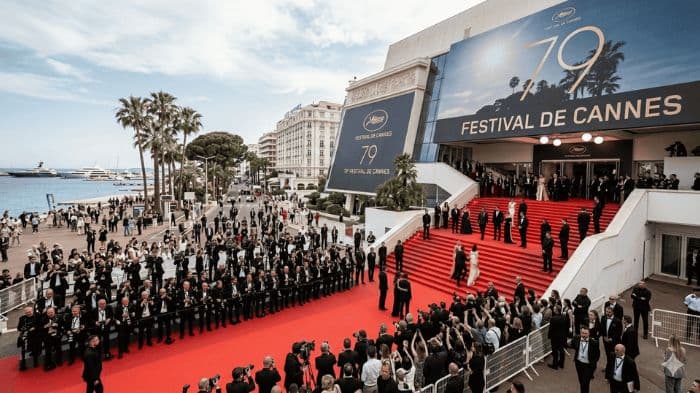
The Cannes Film Festival has long been regarded as one of the world’s most prestigious celebrations of cinema. But in recent years — and especially during the 2026 edition — a familiar criticism has resurfaced with renewed intensity: has Cannes become more about fashion, influencers and viral red carpet moments than films themselves?
The debate gained traction online after a widely circulated video criticised the festival’s growing obsession with celebrity appearances, designer outfits and social media visibility, arguing that Cannes increasingly resembles a “luxury branding event” rather than a platform for global cinema.

Over the years, Cannes has evolved far beyond a traditional film festival. While the event continues to premiere major international films and host acclaimed directors, much of its global online attention now revolves around red carpet appearances, fashion statements and influencer culture.
This year too, social media feeds were flooded with coverage of gowns, jewellery brands, beauty looks and viral celebrity entrances, often overshadowing discussions around competing films, directors and cinematic achievements.
The rise of influencer culture at Cannes
One of the biggest shifts at Cannes has been the growing presence of digital creators and influencers.
Luxury brands increasingly invite influencers to attend screenings, walk red carpets and create content from the festival. For fashion and beauty companies, Cannes offers unmatched global visibility through Instagram reels, TikTok clips and paparazzi coverage.
Critics argue this has diluted the festival’s artistic identity.
Many online users pointed out that relatively unknown influencers often receive more digital attention than filmmakers whose films are actually competing at the festival.
Supporters of this transformation, however, argue that Cannes has always been tied to glamour. Since its early decades, the festival has blended cinema with celebrity culture, fashion and international prestige. They say social media has merely amplified an existing aspect of Cannes rather than fundamentally changing it.
Fashion now dominates headlines
Coverage patterns around Cannes increasingly reflect this shift.
Global entertainment media today often prioritise “best dressed” lists, red carpet controversies and viral fashion moments over film reviews or artistic discussions.
Search trends and online engagement metrics also heavily favour celebrity fashion content. A single viral red carpet appearance can generate far more visibility than an award-winning independent film premiere.
This year, several fashion moments from Cannes generated millions of views online within hours, while many critically acclaimed films received comparatively limited mainstream attention outside film journalism circles.
Filmmakers have raised concerns before
The criticism is not entirely new.
Several filmmakers and cinema critics over the years have expressed discomfort with what they see as the “commercialisation” of film festivals. Some argue that media attention around festivals increasingly prioritises visibility, sponsorships and celebrity optics over artistic conversations.
At the same time, Cannes remains one of the most influential film festivals globally. Winning awards such as the Palme d’Or can still significantly boost a film’s international distribution, awards-season prospects and critical reputation.
The festival also continues to attract some of the world’s biggest auteurs, independent filmmakers and production houses.
Why the criticism is growing louder now
The tension has intensified mainly because of social media.
Earlier, red carpet moments existed alongside film coverage. Today, algorithms heavily reward visually striking content — fashion, glamour, celebrity interactions and viral moments — making them far more dominant online than nuanced discussions about cinema.
As a result, many younger audiences now engage with Cannes primarily as a fashion and celebrity event rather than a film festival.
This transformation reflects a broader shift across entertainment culture, where visibility and virality increasingly shape public attention.
Cannes’ balancing act
Despite the criticism, Cannes continues attempting to balance prestige cinema with global entertainment appeal.
Festival organisers still maintain rigorous film selection standards, while luxury sponsorships and celebrity-driven publicity help sustain the festival’s global profile and commercial ecosystem.
For some, Cannes represents the perfect fusion of cinema, fashion and culture.
For others, the growing influencer-driven spectacle risks overshadowing the very films the festival was created to celebrate.