South Korea’s experiment with AI-powered textbooks has come to an abrupt halt just months after its launch, highlighting the challenges of integrating artificial intelligence into national classrooms.
The digital textbooks, developed by around a dozen publishers, were introduced earlier this year with the promise of personalized lessons, reduced teacher workloads, and additional support for struggling students.

The government invested over 1.2 trillion won ($850 million) into the project, with publishers also committing significant resources in anticipation of a new national market for digital learning materials.
The initiative, which began in March, quickly ran into problems. Software glitches caused class delays, and the AI-generated content often proved generic or mismatched for students’ needs.
Students working independently on laptops reportedly struggled to focus, according to interviews conducted nationwide.
Teachers warned that the textbooks contained factual errors, inconsistent quality, and complicated progress tracking. Many said the program increased their workload instead of easing it.
Parents and advocacy groups also raised concerns about excessive screen time, privacy gaps, and the potential for AI materials to widen educational inequalities.
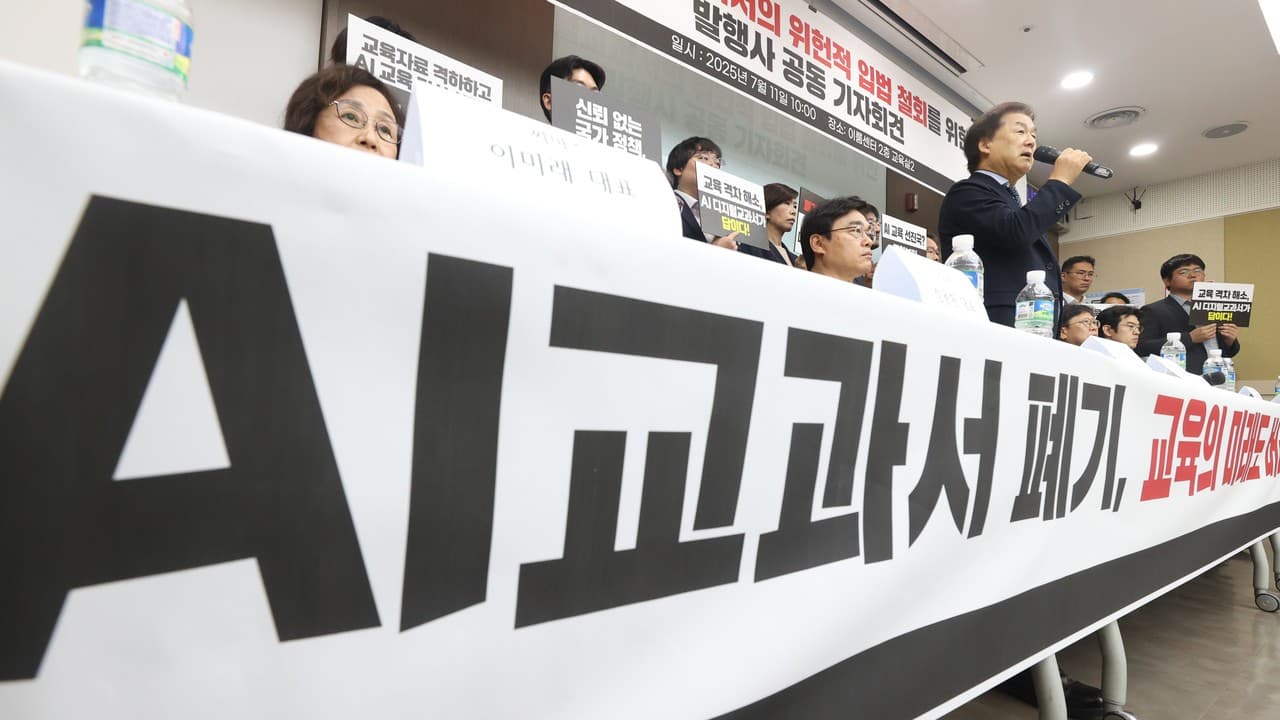
The backlash escalated into a legal challenge, with a major teachers’ union and parent groups accusing the education ministry of implementing AI textbooks without adequate testing or consultation.
Political changes added to the uncertainty. Former President Yoon Suk Yeol, a strong supporter of the initiative, was impeached, and his successor, Lee Jae Myung, opposed the project and moved to reassess it.
By August, lawmakers downgraded the AI textbooks from mandatory to optional, and adoption rates dropped from 37% in the first semester to 19% in the next.
Publishers defended their work, citing adherence to national data protection rules and the benefits the textbooks provided for multilingual students and those in underserved areas.
They acknowledged, however, that the rollout had been rushed and insufficiently tested, and many are now seeking compensation for financial losses.

Classroom reactions remain mixed. Some educators valued the gamified features for engaging weaker learners, while others criticized the product as unfinished and error-prone.
As one teacher reflected, the program has led to “a deep loss of trust.”
Once promoted as a national leap into AI-enabled learning, the textbooks now serve as a cautionary tale about moving too quickly and expecting AI to solve systemic educational challenges.