


The bench said the revised consent form must clearly provide parents the choice to refuse participation, while directing CBSE to examine privacy and data protection concerns.
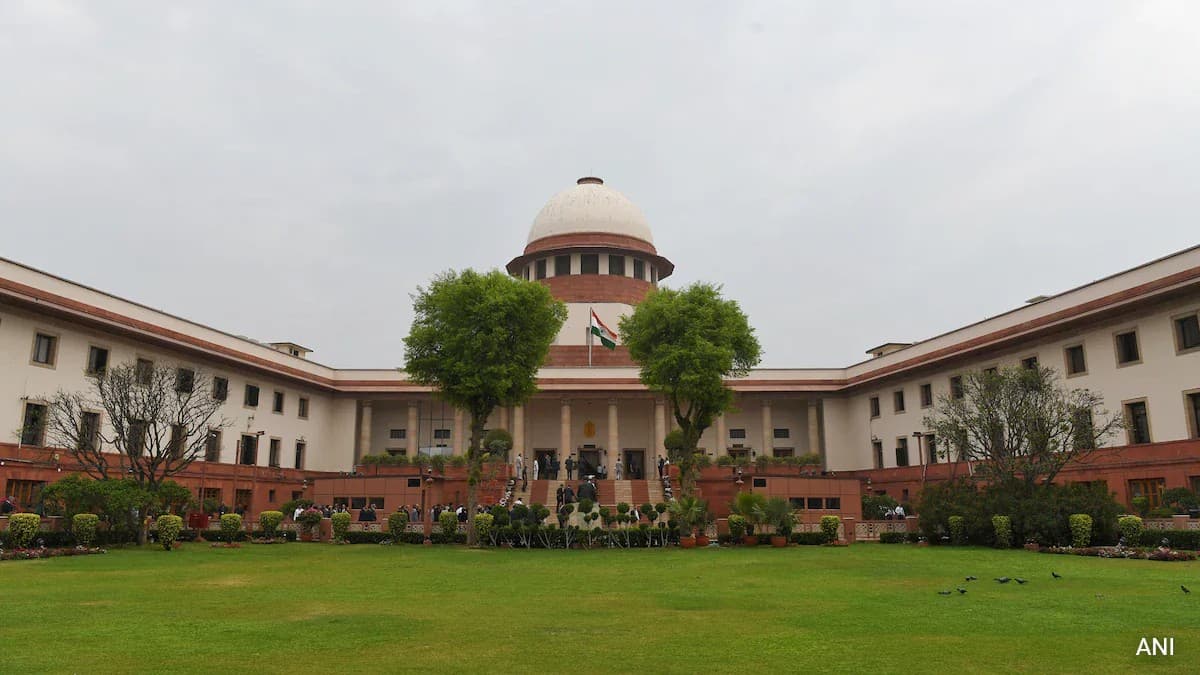
The Supreme Court has indicated that CBSE will be required to implement across the country a key safeguard introduced by the Orissa High Court for the APAAR ID scheme, ensuring that parents are explicitly given the choice to refuse consent or withdraw from participation.
The observation came during the hearing of a petition challenging the legality of the Automated Permanent Academic Account Registry (APAAR), a student identification system linked to academic records.

The petition was filed by the parents of four students, who argued that the scheme raises constitutional concerns related to privacy, consent, and the handling of children's personal information.
A Bench comprising Chief Justice of India Surya Kant, Justice Joymalya Bagchi, and Justice V Mohan said CBSE would be directed to implement the Orissa High Court's consent-related directions nationwide. The court also indicated that the education board should examine the issues raised by the petitioners.
At the center of the challenge is the claim that the APAAR framework indirectly compels students to obtain Aadhaar numbers despite being described as voluntary.
The petitioners argued that access to educational processes is increasingly tied to the scheme, making participation difficult to avoid in practice.
Representing the parents, Senior Advocate Indira Jaising told the court that a student's right to education cannot be made dependent on enrollment in a non-statutory identification system.
Referring to the Supreme Court's Puttaswamy judgment, she argued that children cannot be forced to obtain Aadhaar and questioned whether the government's characterization of APAAR as voluntary reflects how it operates on the ground.
"Right to education is not a targeted service. The right to education is a Constitutional right. Therefore, asking a child to get an Aadhaar and an APAAR for being sent up to exams is against the Constitution," she submitted.
The Chief Justice, however, expressed support for the broader objective behind the initiative.
"Let us not doubt everything in the country with a suspicious eye; it is a welcome step," he said.
The bench noted that the scheme is intended to create a unique academic identity for each student, allowing educational records to be maintained more efficiently while helping authorities plan educational resources and teacher deployment.
While acknowledging that the objective may be legitimate, Jaising argued that the method of implementation must satisfy legal standards relating to necessity, proportionality, and informed consent. She also alleged that the current rollout fails to adequately comply with the Digital Personal Data Protection (DPDP) Act, 2023.
The court observed that CBSE's administrative circulars cannot override statutory protections and emphasized that the APAAR scheme must function within the framework of existing data protection laws.
A major issue raised during the hearing concerned the design of the consent forms used by schools. Jaising argued that the current format does not provide a meaningful opportunity for parents to reject participation or later withdraw consent.
To support her argument, she cited a December 2025 ruling of the Orissa High Court in Rohit Anand Das & Anr. v. State of Odisha & Ors., which directed authorities to revise the consent format and include clear opt-out provisions.
When informed that the High Court's ruling had not been challenged, the Supreme Court said the directions would be adopted on a nationwide basis through CBSE.
"We will direct CBSE to implement this judgment on a pan-India basis... as the High Court order has been accepted. We are directing CBSE to examine the issues as well," the Chief Justice said.
The petition also seeks stronger safeguards for the collection, storage, and processing of children's personal data and calls for strict adherence to the provisions of the DPDP Act during the implementation of the APAAR scheme.

Jammu and Kashmir Unemployment: Economic Growth Has Yet to Resolve Job Crisis

China’s Chery unveils AI companion robot designed to ease loneliness

Varanasi Air Show 2026: Schools in Two Chandauli Blocks to Hold Online Classes on October 22, 24

India AI Fellowship 2026: UG Students to Get ₹1 Lakh, PG Students ₹2 Lakh

New Zealand teachers work nearly five hours more than OECD average
China’s Chery unveils AI companion robot designed to ease loneliness
.jpg&w=256&q=75)
New Zealand reforms could leave more students without school qualifications

Alfred Nobel’s will created one of the world’s most recognised prizes. Here’s how

Pepperdine University earns Google recognition and Digital Education Council membership for AI initiatives
Dhirubhai Ambani International School breaks into global top 10 with record IB score

Jammu and Kashmir Unemployment: Economic Growth Has Yet to Resolve Job Crisis
China’s Chery unveils AI companion robot designed to ease loneliness
Varanasi Air Show 2026: Schools in Two Chandauli Blocks to Hold Online Classes on October 22, 24
India AI Fellowship 2026: UG Students to Get ₹1 Lakh, PG Students ₹2 Lakh
New Zealand teachers work nearly five hours more than OECD average
China’s Chery unveils AI companion robot designed to ease loneliness
New Zealand reforms could leave more students without school qualifications
Alfred Nobel’s will created one of the world’s most recognised prizes. Here’s how
Pepperdine University earns Google recognition and Digital Education Council membership for AI initiatives
Dhirubhai Ambani International School breaks into global top 10 with record IB score
Copyright© educationpost.in 2026 All Rights Reserved.