

Under the ‘Namma Shaale Namma Javabdari’ initiative, the state aims to improve rural education through private-school partnerships, CSR funding, teacher support and better infrastructure.
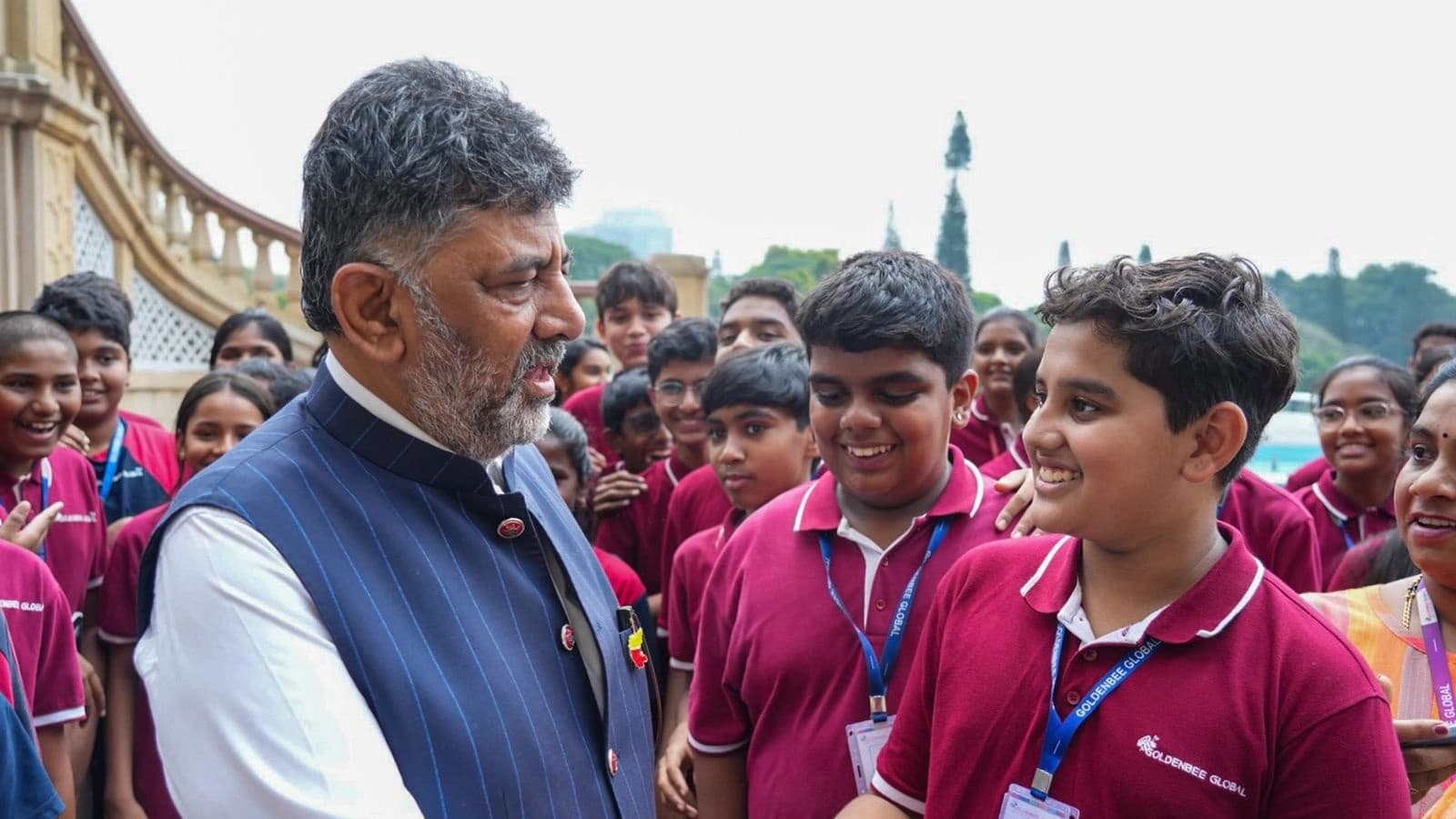
Karnataka Chief Minister D K Shivakumar has urged private school managements across the state to join hands with the government to improve rural government schools. He made the appeal while launching the ‘Namma Shaale Namma Javabdari’ (Our School, Our Responsibility) programme at Vidhana Soudha in Bengaluru on Wednesday, November 4.
The initiative aims to connect 1,000 government schools with private institutions in its first phase. The state has a longer-term target of bringing 2,000 government schools under such partnerships, Shivakumar said.

Addressing representatives of private school managements and corporate social responsibility (CSR) organisations, the Chief Minister said private schools should either adopt government schools in rural areas or contribute to their development through different forms of support.
The programme also saw the signing of 15 memorandums of understanding (MoUs) worth Rs 206.10 crore for the development of 56 government schools, according to reports.
Earlier in 2026, the state had signed 18 MoUs worth Rs 85 crore for improving 33 schools. Another 12 agreements, involving Rs 64 crore and covering 23 schools, were at an advanced stage of finalisation.
Together, these agreements and proposals cover 112 government schools and involve a proposed investment of Rs 355.10 crore from 45 organisations.
Shivakumar said private institutions could select government schools based on their preferences and financial capacity. He clarified that contributions need not be restricted to constructing buildings or developing infrastructure.
Private schools could deploy experienced teachers to government institutions, pay their salaries, provide laboratory equipment and computers, or make their unused school buses available to government school students.
The Chief Minister described this exchange of resources and expertise as a way to improve learning opportunities for children in rural areas. He also encouraged private school managements to work with government institutions to bring their educational standards closer to those of established private schools.
The Chief Minister said Karnataka generates around Rs 8,800 crore in CSR funds annually and has urged companies operating in the state to give priority to the development of rural primary schools.
He also raised concerns about CSR contributions generated by companies in Karnataka being spent outside the state. According to reports, Shivakumar said he had discussed the issue with Union Finance Minister Nirmala Sitharaman and sought steps to address the matter.
The state has already initiated CSR-supported school development work in Bengaluru South district. Shivakumar said work had started in 30 schools, with development completed in some and underway in others.
He also cited Toyota's support for the construction of 23 schools in Ramanagara district, with an investment estimated at Rs 10 crore to Rs 15 crore per school. The Chief Minister said institutions contributing to government school development could be allowed to have their names associated with the schools.
Shivakumar said better educational facilities in villages could reduce the need for families to move to cities in search of quality schooling. He linked the pressure on Bengaluru's infrastructure, including traffic congestion, partly to the movement of families towards the city for employment and education.
He also referred to the state's plan to improve infrastructure in Karnataka Public Schools (KPS) with the support of a Rs 2,000-crore World Bank loan.
The Chief Minister said improving school facilities, strengthening teaching standards and encouraging collaboration between public and private institutions would help rural students access better educational opportunities. He called on private school managements, companies and other contributors to participate in the programme.

Anthropic’s Mythos AI Model: How Artificial Intelligence Is Transforming Cybersecurity

Democratic Control of Congress Raises Hopes of Iran Deal and Lower Crude Prices

Market Rally Follows Three Years of Weak Performance Amid Global Uncertainty and High Valuations
Supreme Court Reconsiders 2003 Two-Child Norm Ruling, Questions Its Relevance Amid Changing Demographics

SC Says Police Cannot Delay Constitutional Safeguards Through Searches and Questioning

Nepali students form Japan's second-largest international academic community: Foreign Minister

'Mogging' explained: How bodybuilding term became Collins Word of the Year 2026

‘It’s actually very cut-throat’: 13-year-old wins New Zealand spelling bee title
Schoolchildren join desperate effort to save stranded whales on New Zealand coast
New Zealand school hostel shut down after damning inspection raises concerns over student welfare
Anthropic’s Mythos AI Model: How Artificial Intelligence Is Transforming Cybersecurity
Democratic Control of Congress Raises Hopes of Iran Deal and Lower Crude Prices
Market Rally Follows Three Years of Weak Performance Amid Global Uncertainty and High Valuations
Supreme Court Reconsiders 2003 Two-Child Norm Ruling, Questions Its Relevance Amid Changing Demographics
SC Says Police Cannot Delay Constitutional Safeguards Through Searches and Questioning
Nepali students form Japan's second-largest international academic community: Foreign Minister
'Mogging' explained: How bodybuilding term became Collins Word of the Year 2026
‘It’s actually very cut-throat’: 13-year-old wins New Zealand spelling bee title
Schoolchildren join desperate effort to save stranded whales on New Zealand coast
New Zealand school hostel shut down after damning inspection raises concerns over student welfare
Copyright© educationpost.in 2026 All Rights Reserved.