Nobel Prize Chemistry 2026: Henri Kagan, Kenso Soai win for solving mystery of life’s molecular ‘handedness’
Their discoveries show how chemical reactions can produce one mirror-image form of molecules, with major implications for pharmaceutical manufacturing and understanding the origins of molecular asymmetry in life.
Pragya Kumari07 October 2026 16:41
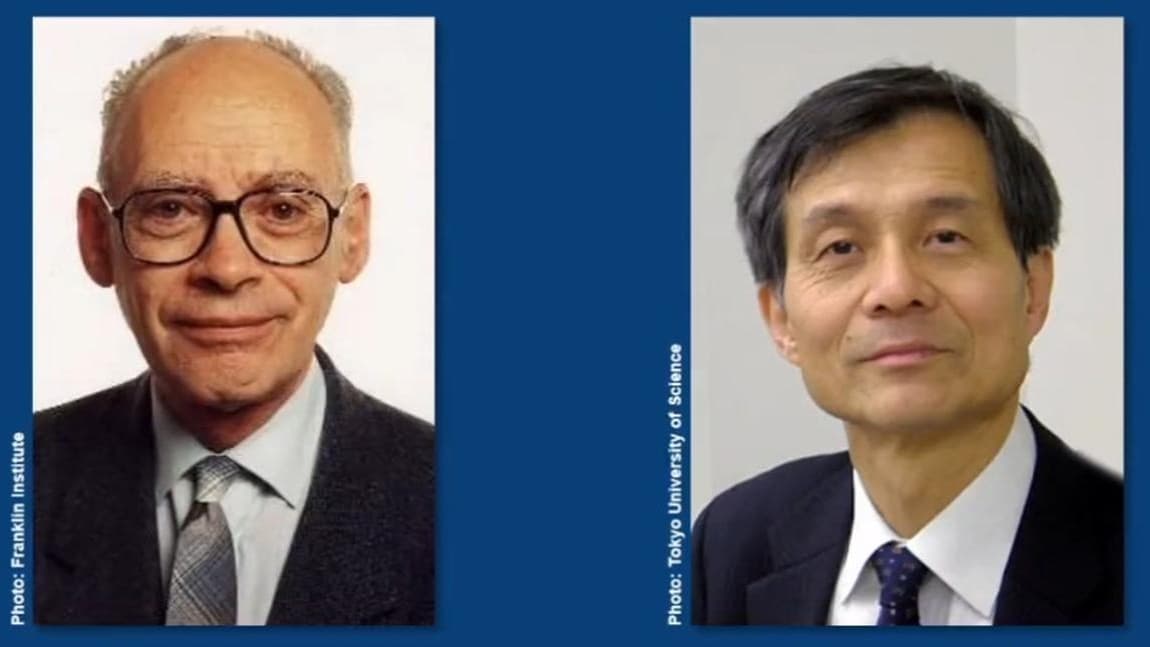
Left: Henri B Kagan | Right: Kenso Soai
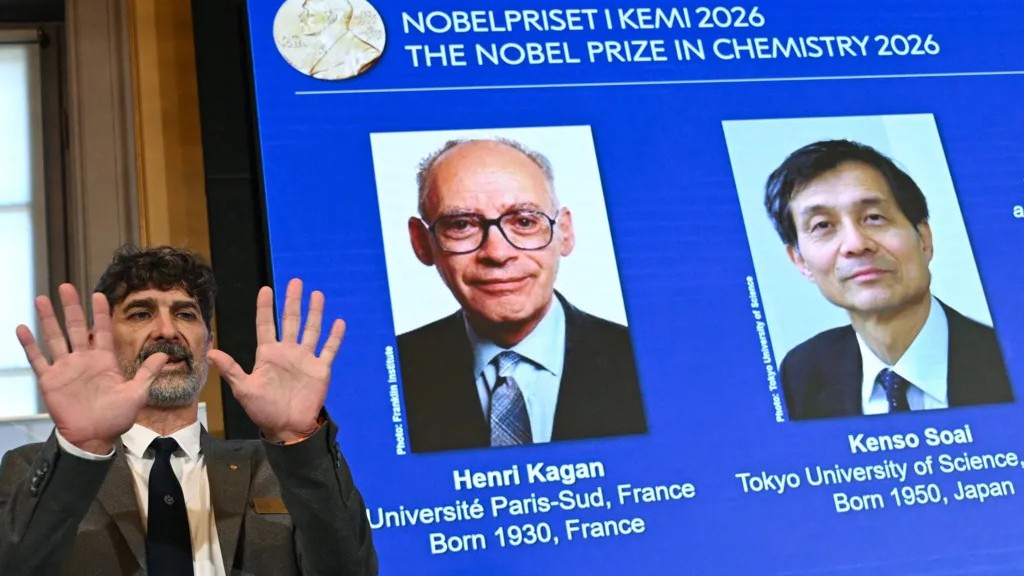
The Royal Swedish Academy of Sciences has awarded the 2026 Nobel Prize in Chemistry to Henri B Kagan of Université Paris-Sud, France, and Kenso Soai of Tokyo University of Science, Japan, for their discovery of non-linear effects and autocatalysis in asymmetric organic synthesis.
The laureates were recognized for solving a long-standing question in chemistry: how homochirality, the spontaneous emergence of one mirror-image form of a molecule over the other, can occur.
The Nobel Committee said Kagan and Soai’s work has enabled chemists to design reactions that selectively produce one of two mirror-image molecules.
Their discoveries have become particularly important in the development and manufacture of pharmaceuticals, where different forms of the same molecule can have very different effects in the human body.
“Henri Kagan and Kenso Soai have provided a solution to a chemical mystery that is over a century old: how homochirality can emerge spontaneously. The chemical reactions they have developed are spectacular,” says Heiner Linke, chair of the Nobel Committee for Chemistry.
Kagan’s breakthrough in 1986
Kagan was born in 1930 in Boulogne-Billancourt, France. He received his PhD from the Collège de France in 1960 and later became Professor Emeritus at the then Université Paris-Sud, France.
Henri B Kagan made the first decisive contribution recognized by this year's Nobel Prize in 1986, when he discovered a new method for manipulating chemical reactions.
His work demonstrated that it was possible to generate a substantially greater excess of one mirror-image form than chemists had previously believed possible. This breakthrough became important for researchers seeking to control asymmetry in organic synthesis.
Kagan’s discovery has since influenced the development of chemical reactions used to produce pharmaceuticals as well as other products, including flavors, scents and new materials.
Soai achieves selective molecular synthesis
Soai was born in 1950 in Hiroshima, Japan. He received his PhD from the University of Tokyo in 1979 and is Professor Emeritus at Tokyo University of Science, Japan.
Kenso Soai took the next major step in the development of asymmetric chemical synthesis.
In 1995, Soai designed and published a chemical reaction with the potential to become homochiral. His research was described in a key publication in the journal Nature and demonstrated a pathway toward producing a single mirror-image form through a chemical process.
Soai ultimately achieved the result in 2003, when he demonstrated a reaction in which only one of the two possible mirror images was formed. The Nobel Committee described this as an unprecedented achievement in the laboratory at the time.
“Other than life itself,” the Nobel Committee said in a statement, “no one had previously achieved this feat.”
The resulting Soai reaction has been described as one of the most striking experiments in chemistry because it demonstrated how a chemical reaction could amplify molecular asymmetry and ultimately produce a single chiral form.
The Nobel Committee said the work of Kagan and Soai has provided an explanation for how homochirality can emerge spontaneously, offering scientists a way to reproduce a phenomenon associated with the chemistry of life in the laboratory.
Peter Somfai, a member of the Nobel Committee for Chemistry, said the research recognized by this year's award has become part of "our basic understanding of how chemistry functions.”
He said demonstrating how a mirror image is created is "probably the most fundamental question in life - because somehow that happened four billion years ago when life was created. And now we have, for the first time, mimicked that in the lab.”
Implications for medicines and scientific research
The discoveries recognized by the 2026 Nobel Prize have practical implications for chemists developing methods to manufacture molecules with specific structures.
Because different molecular forms can have different biological and physical effects, controlling chirality is an important part of developing effective medicines. The work of Kagan and Soai has therefore been particularly influential in pharmaceutical manufacturing.
Professor Robert Mokaya, president of the UK's Royal Society of Chemistry, described the research as a "powerful example of how fundamental chemistry can underpin solutions to some of the biggest challenges facing society.”
"Different isomers (or versions of molecules) can have completely different biological and physical effects, so they are crucial in finding effective medicines to treat all sorts of illnesses," he added.
Prof Angus Davison of the University of Nottingham, who studies the biology of chirality, said the research could also help scientists understand why life developed a preference for "one-handedness.”
"In ways that we don't yet quite understand, the chirality of the basic building blocks of life ends up making bodies that are themselves also chiral," he told BBC News.
He explained that this principle is reflected in biological features such as the position of the human heart on the left side of the body and the direction in which snail shells coil.
The Nobel Committee said the discoveries made by Kagan and Soai were decisive in helping chemists understand and reproduce selective molecular formation, while also providing new insight into one of the fundamental asymmetries associated with life.
Prize amount and Nobel ceremony
The 2026 Nobel Prize in Chemistry carries a prize amount of 12 million Swedish kronor, which will be shared equally between Kagan and Soai.
The laureates will receive their Nobel medals from Sweden's King Carl XVI Gustaf at a ceremony in Stockholm on Dec 10, the anniversary of Alfred Nobel's death. The ceremony will be followed by the traditional Nobel banquet at Stockholm City Hall.
The chemistry prize is awarded annually as part of the Nobel Prizes established under the will of Swedish inventor and industrialist Alfred Nobel.
Nobel, who made his fortune through inventions including dynamite, directed that prizes should recognize individuals who had made the “greatest benefit to humankind” in five fields: Physics, Chemistry, Physiology or Medicine, Literature and Peace.
Chemistry was included because of its central role in Nobel’s own scientific and industrial work.
The Nobel Prize in Chemistry was first awarded in 1901, when Dutch chemist Jacobus Henricus van ’t Hoff became the inaugural recipient for his work on chemical dynamics and osmotic pressure. The Royal Swedish Academy of Sciences is responsible for selecting the chemistry laureates.
The Nobel Prizes for achievements in science, literature and peace have been awarded since 1901, apart from a few interruptions, mostly during the world wars. The economics prize is a later addition funded by Sweden's central bank and is not part of Alfred Nobel's original will.
The Royal Swedish Academy of Sciences, founded in 1739, is an independent organization whose overall objective is to promote the sciences and strengthen their influence in society. The Academy has a particular responsibility for the natural sciences and mathematics while also promoting the exchange of ideas across disciplines.
2025 Nobel Prize in Chemistry
The 2026 chemistry award follows last year's Nobel Prize in Chemistry, which was jointly awarded to Susumu Kitagawa, Richard Robson and Omar M Yaghi for the development of metal-organic frameworks.
Metal-organic frameworks are highly porous crystalline structures that link metal ions with organic molecules. Their properties allow scientists to trap and manipulate molecules for applications including carbon capture, green hydrogen storage and the production of fresh drinking water from desert air.
The chemistry Nobel is traditionally the third Nobel Prize announced during Nobel week, following the awards in Physiology or Medicine and Physics.
The Peace Prize is the only Nobel award presented outside Sweden and is awarded separately in Oslo.
The Nobel Prize in Chemistry continues to recognize discoveries and advances that have significantly expanded scientific knowledge and contributed to applications with implications for society.
The 2026 award to Kagan and Soai highlights how fundamental research into molecular asymmetry has helped explain a key feature of life's chemistry while providing tools for producing molecules with greater precision.