


The panel is examining whether question papers can be generated shortly before exams using large question banks, alongside expanding computer-based testing to reduce the risk of leaks.
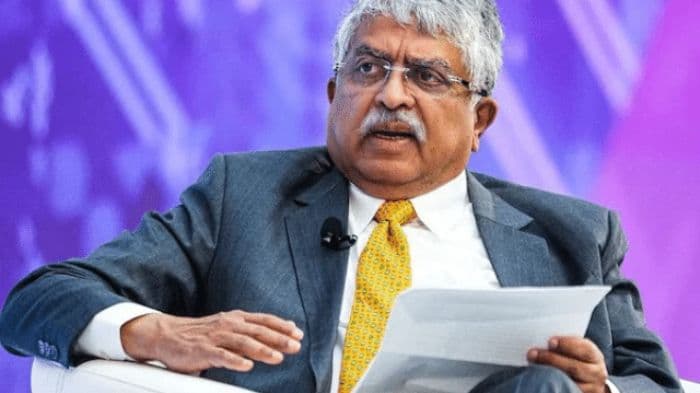
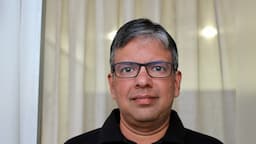
The Centre’s examination reform task force, led by Infosys co-founder Nandan Nilekani, is considering generating question papers shortly before examinations to reduce the risk of leaks and the illegal sale of papers in advance.
Speaking at the Bloomberg New Economy Forum 2026 in New Delhi on Oct 13, Nilekani questioned the need to prepare a fixed question paper well before an examination. He suggested building a large question bank and assembling the paper only at the last moment, reducing the opportunity for advance access.

Nilekani also said artificial intelligence (AI) could be used to generate question papers on the day of an examination. The proposal is among the technology-led approaches being considered as the task force examines systemic weaknesses in India’s examination process.
Large question banks could reduce advance leaks
Under the proposed approach, examination authorities would maintain a substantial pool of questions and generate a paper close to the test date. This could make it harder for individuals to obtain the exact paper in advance and sell it to candidates.
Nilekani argued that the existence of a fixed paper creates a financial incentive for people to acquire and distribute it illegally. Generating papers at the last minute could help reduce that incentive.
However, the proposal remains under consideration. The task force has not yet announced a final framework explaining how the question bank would be developed, how questions would be selected or how the system would be secured against manipulation.
AI-generated papers under consideration
Nilekani indicated that AI could help create examination papers on the day of the test. Such a system would require safeguards to ensure that questions accurately reflect the prescribed syllabus and appropriate difficulty levels.
It would also need mechanisms to maintain consistency between different versions of a paper, particularly in high-stakes entrance examinations where candidates’ results determine access to limited seats.
The use of AI would therefore need to be supported by reliable question banks, assessment standards and security checks. The task force has not yet released detailed operational guidelines for such a system.
Panel calls for wider computer-based testing
The task force is also examining the expansion of computer-based testing (CBT) across examinations.
Nilekani said India currently has around 150,000 locations where candidates can take tests, but the network needs to be expanded. A wider network would be necessary if more examinations move away from conventional paper-based formats.
Expanding CBT would require adequate examination infrastructure, including reliable internet connectivity, secure systems and sufficient capacity to accommodate large numbers of candidates across different regions.
A broader shift to computer-based examinations could reduce reliance on the physical printing, transportation and storage of question papers. However, it would also require measures to ensure that candidates have fair access to test centres and that technical failures do not disadvantage them.
Recommendations expected within three months
The task force was formed on July 28 to examine systemic reforms following the NEET-UG paper leak controversy. It is expected to submit its recommendations within three months of its formation.
The controversy renewed concerns about examination security and the procedures used to conduct high-stakes tests. The panel is examining ways to address vulnerabilities through changes in technology and examination management.
Nilekani said the issues would be addressed as part of the committee’s work and indicated that the government was keen to implement its recommendations.
The proposals are not yet adopted policy. Their impact will depend on the final recommendations, the safeguards built into any new system and the infrastructure available to implement changes across examinations.

Hunter of Underwater Threats: Why INS Mangrol Is Important for the Indian Navy

Delhi Protests Renew Debate Over Constitutional Right to Peaceful Assembly

Household Inflation Rises to 5.54% in September as Price Pressures Spread
Delhi High Court Allows Urgent Hearing on Protest Site Guidelines
India Rejects China’s Objection to Standardised Names of Places in Ladakh
Karnataka student elections return after 37 years: Why political restrictions and university polls remain contentious
Global education is shifting from simply going abroad to creating more flexible routes to opportunity

Delhi Police files FIR against Congress MP Bimol Akoijam over JNU sexual harassment allegations
Utkal University tightens security after late-night explosions ahead of student polls

IET India Scholarship Award 2026: DTU’s Kush Garg wins top honor for AI device for neurodivergent children

Hunter of Underwater Threats: Why INS Mangrol Is Important for the Indian Navy
Delhi Protests Renew Debate Over Constitutional Right to Peaceful Assembly
Household Inflation Rises to 5.54% in September as Price Pressures Spread
Delhi High Court Allows Urgent Hearing on Protest Site Guidelines
India Rejects China’s Objection to Standardised Names of Places in Ladakh
Karnataka student elections return after 37 years: Why political restrictions and university polls remain contentious
Global education is shifting from simply going abroad to creating more flexible routes to opportunity
Delhi Police files FIR against Congress MP Bimol Akoijam over JNU sexual harassment allegations
Utkal University tightens security after late-night explosions ahead of student polls
IET India Scholarship Award 2026: DTU’s Kush Garg wins top honor for AI device for neurodivergent children
Copyright© educationpost.in 2026 All Rights Reserved.