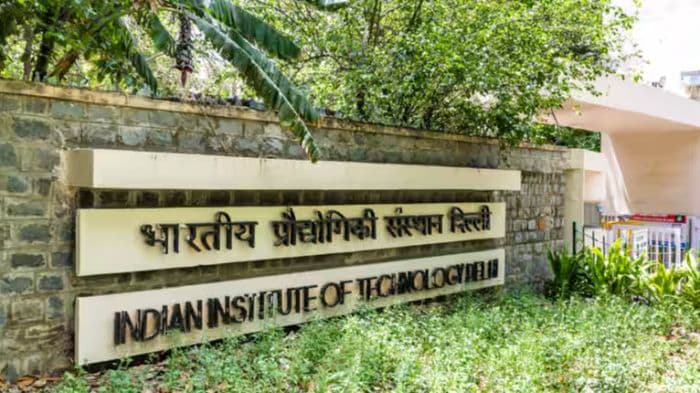
Despite the introduction of supernumerary seats aimed at increasing gender diversity, the representation of women in the Indian Institutes of Technology (IITs) has remained largely unchanged over the past six years.
According to the Joint Implementation Committee (JIC) report for 2025, women constituted 20.15% of the total 18,188 seats allotted, a marginal increase from 19.90% in 2020.

While the absolute number of women admitted has risen due to an overall increase in IIT intake — from 16,053 seats in 2020 to 18,168 in 2025 — the proportion of female students has remained nearly flat.
At individual IITs, female representation has shown only marginal shifts over the years. For instance, IIT Bombay's female representation decreased from 20.04% in 2020 to 19.57% in 2025, while IIT Delhi's remained relatively stable, fluctuating between 20.25% and 20.7% during the same period.
Meanwhile, IIT Madras saw a marginal increase in female enrollment, from 19.70% in 2020 to 20.40% in 2025. Across other IITs, numbers reflect similar patterns, indicating that while absolute numbers of women admitted have risen due to the expansion of seats, the gender ratio remains largely unchanged.
The data suggests that while initiatives like supernumerary seats have helped prevent a decline in female representation, they have not significantly increased the proportion of women in IITs.
This indicates that additional measures may be necessary to address the underlying factors contributing to the stagnation in female admissions.
The stagnation persists despite the implementation of supernumerary seats for women, a policy introduced to encourage higher female enrollment.
The policy guarantees additional seats beyond the regular intake if female applicants meet the minimum eligibility criteria, but its impact on overall percentages has been minimal.
The report suggests that systemic challenges, including the gender gap in engineering entrances, continue to limit substantial improvements in female representation.
Analysis of JEE Advanced and JEE Main data shows that female candidates continue to be underrepresented among top performers.
While the number of female applicants has increased over the years, a majority of seats in the top-ranking brackets are still occupied by male candidates. This aligns with the broader trend of gender disparity observed in technical education across the country.
The JIC report concludes that while policies like supernumerary seats have prevented a decline in female representation, additional measures may be necessary to substantially improve the gender balance.
These could include targeted outreach programs, mentorship for female students, and initiatives to encourage girls to pursue science and engineering from an early stage.