Academics, school leaders, and policy experts praised the emphasis on workforce readiness and technology-driven learning while raising concerns about execution, funding efficiency, and translating policy intent into measurable outcomes.
Pragya Kumari02 February 2026 08:47
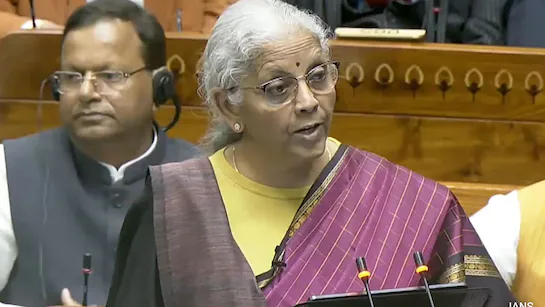
The Union Budget for 2026–27, presented by Finance Minister Nirmala Sitharaman on Sunday, increased the education ministry’s allocation to ₹1.39 lakh crore, an 8.27% rise over the previous fiscal year.
Education spending accounts for about 2.6% of the total estimated expenditure of ₹53.5 lakh crore for 2026–27.
Of the total outlay, ₹83,562.26 crore has been allocated for school education and ₹55,727 crore for higher education, reflecting growth of 6.35% and 11.28%, respectively.
Union Education Minister Dharmendra Pradhan welcomed the increase, describing it as aligned with the government’s long-term development goals.
“Last year’s budget allocation was ₹1 lakh 28 thousand 650 crore, which has now been increased to ₹1 lakh 39 thousand 299 crore,” he said.
The education-focused provisions of the budget drew wide reactions from academic leaders, policy experts, and industry stakeholders, particularly around skilling, artificial intelligence, healthcare training, and employment readiness.
Vijay Talreja, Managing Trustee of Vivekanand Education Society, said the budget places young people at the center of national development.
“The 2026-2027 Union Budget is clearly focused towards building a strong ecosystem of future-ready professionals and we at Vivekanand Education Society see it as a refreshing and crucial development in this country’s dedication to its youth,” he said.
Referring to the proposed committee on employment and emerging technologies, Talreja added that “embedding AI in teacher training and making sure that students have exposure to it from the school level is on-par with the path towards Viksit Bharat 2047.”
He also welcomed the proposal to invest in hostels for female students, calling it “a progressive and student-focused budget for fostering an innovative workforce.”
Jayalekshmi Nair, Principal of Vivekanand Education Society Institute of Technology, highlighted the continuity of support for strategic sectors.
“The Vivekanand Education Society's Institute of Technology did their part in India Semiconductor Mission (ISM) 1.0 Programme. The ISM 2.0 is instrumental for us and India’s Atmanirbhar Bharat and Viksit Bharat missions,” she said.
She added that initiatives such as the SME growth fund and entrepreneurship-focused measures would help nurture innovation-driven engineers.
Anita Kanwar, Principal of Vivekanand Education Society College of Arts, Science and Commerce, welcomed the emphasis on allied health professionals, psychology, and astrophysics infrastructure.
“Recognition of AI as technical skill course will give us opportunity to train our students and staff under Skill enhancement vertical of NEP 2020,” she said.
While noting that the Maharashtra budget showed only a marginal increase in education allocation, she said continued investment in higher education and skills would help harness India’s demographic dividend. She also described girls’ hostels as “a good move towards women empowerment and safety.”
Offering a more cautious assessment, Rohit Kumar, Founding Partner at public policy firm The Quantum Hub, said higher education funding had not risen significantly.
“While the skilling ministry’s budget has jumped sharply… the increase does not inspire full confidence given significant underspending last year,” he said, pointing to the gap between budgeted and actual expenditure and the need to strengthen skilling efforts amid AI-driven workforce transitions.
From the financial education and BFSI perspective, Aatash Shah, SVP and Business Head at Manipal Academy of BFSI, said the budget adopts a stable and reform-oriented approach.
“It emphasizes on stronger banks, better asset quality and efficiency improvement through system reviews and NBFC consolidation,” he said, adding that a high-level banking committee would support long-term confidence in the sector.
Ramya Venkataraman, founder and CEO of CENTA, welcomed the reference to AI-aligned teacher training. “While almost 70% of teachers are using AI in some form, there are several misconceptions regarding it and 40% of teachers are unable to answer even basic questions regarding AI,” she said, citing findings from a large-scale assessment.
She also noted that content creator labs could align education with employment, provided quality standards and industry partnerships are enforced.
Highlighting teaching as a potential export profession, she said India could leverage global teacher shortages, especially in STEM and English.
“The focus on Content Creation Labs in 15,000 schools resonates deeply with our belief in nurturing creativity, communication skills and digital confidence among students,” said Vinod Sharma, Chief Operating Officer of Ryan Edunation, describing the budget as learner-centric.
He added that AI-enabled learning and the reduction in TCS on education expenses from 5% to 2% would benefit students and families.
Shri Mahavir Goel, Chairman of Venkateshwar International School, said the budget adopts a system-level approach. “By bringing schools, colleges and careers into closer alignment, the Budget positions education as a practical, outcome-driven system equipped to support India’s evolving economic and workforce needs,” he said.
Prof MA Venkataramanan, Pro Vice-Chancellor of FLAME University, said the budget marks a shift toward education as a growth engine.
“By strengthening education-to-employment alignment through a high-powered standing committee, investing in university townships near industry corridors, and empowering City Economic Regions, the government is building ecosystems where learning, research, and enterprise reinforce each other,” he said.
He also welcomed investments in research infrastructure and girls’ hostels, calling them critical to access, safety, and retention in STEM fields.
Niyati Handa, Co-founder and Director of Eklavya School, said the budget supports educational equity beyond metropolitan areas.
“The 5,000 crore capital investment for each City Economic Region, along with university townships near industrial corridors, is an indication of providing quality education beyond metro cities,” she said.
Jeel Gandhi, CEO of Under25, said youth empowerment was a central theme. “Initiatives like the Khelo India Mission will create interlinking pathways for multiple means of employment and skill development opportunities,” he said, adding that the reduction in TCS on education and overseas packages reflects Gen Z’s global aspirations.
Commenting on the biopharmaceutical push, Dr Supriya Shidhaye, Principal of Vivekanand Education Society College of Pharmacy, said the Biopharma SHAKTI Mission marked a turning point.
“The focus on biologics and biosimilars, establishment of three new NIPERs, and upgradation of seven existing institutes will significantly strengthen academic capacity, advanced research, and industry-ready talent development,” she said, adding that the reforms signal a shift toward innovation-driven pharmaceutical production.
Overall, stakeholders broadly welcomed the education and skilling thrust of the Union Budget 2026–27, while also flagging the need for effective implementation, sustained funding, and stronger alignment between policy intent and on-ground outcomes.